Home / News / How to Choose a Solar Insect Killer Lamp for Your Farm
How to Choose a Solar Insect Killer Lamp for Your Farm
August 8, 2026
Buying guide for orchards, tea plantations, open fields and distributors — by Shandong FOSIBO Energy Technology Co., Ltd.
If you are losing 10–30% of your crop to flying pests every season, a solar insect killer lamp is one of the most cost-effective, chemical-free investments you can make. But with so many models on the market, how do you pick the right one? This guide walks you through the six decisions that matter — and shows which FOSIBO model fits each scenario.
1. Know Your Pest and Your Farm Type
Different pests respond to different lure wavelengths and capture methods:
Moths, beetles, leafhoppers, fruit flies — attracted to UV/blue light; common in orchards and tea plantations.
Mosquitoes and small flying insects — better handled by courtyard/ambient models in residential or resort settings.
Large flying insects in open fields — need a high-voltage grid for a quick kill.
Start by listing the top 2–3 pests in your fields, then match them to the capture method below.
2. Choose the Capture Method: Electric Grid vs Wind Suction
Method How it works Best for FOSIBO series
Electric grid UV light lures insects to a 4800V high-voltage grid; instant kill. Large flying insects, orchards, farms needing high kill rate. FBD Series
Wind suction Eco UV lure + high-speed fan draws insects into a collection box (no electric shock). Organic farms, tea, areas where chemical-free/low-noise matters. FBF Series
3. Coverage Area: How Many Lamps per Hectare?
A typical solar insect killer covers 1–2 hectares (2.5–5 acres) depending on terrain and insect pressure. As a rule of thumb:
Open flat field: 1 lamp per 1.5–2 hectares
Orchard with trees: 1 lamp per 1 hectare (denser canopy blocks light)
Hilly or irregular terrain: increase density by ~30%
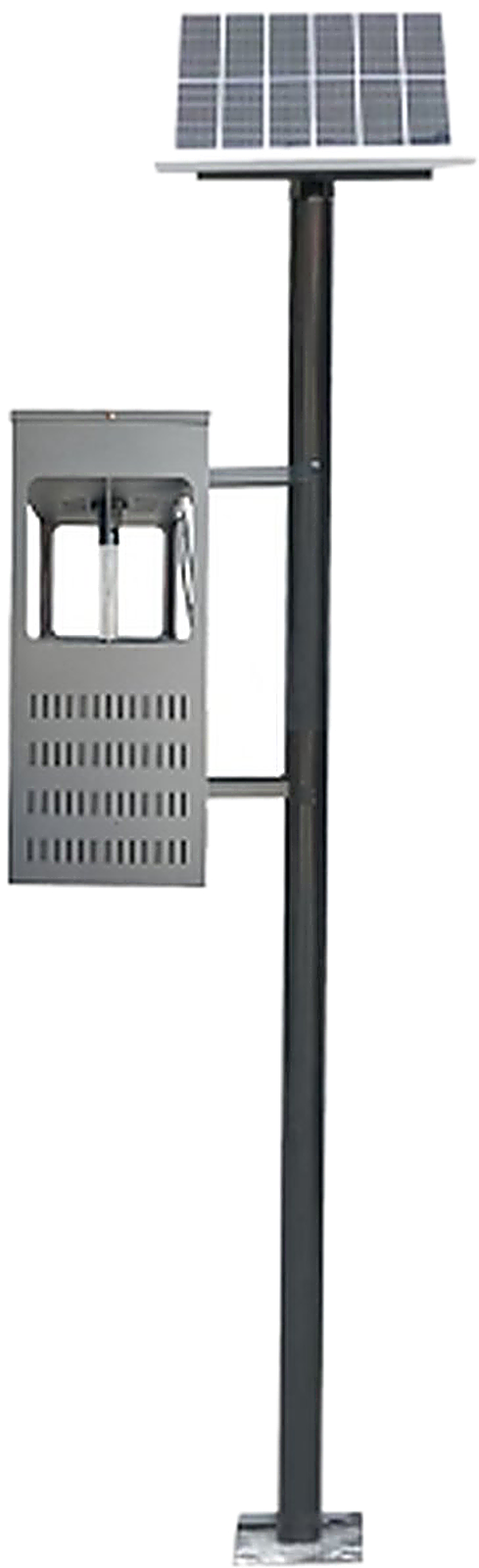
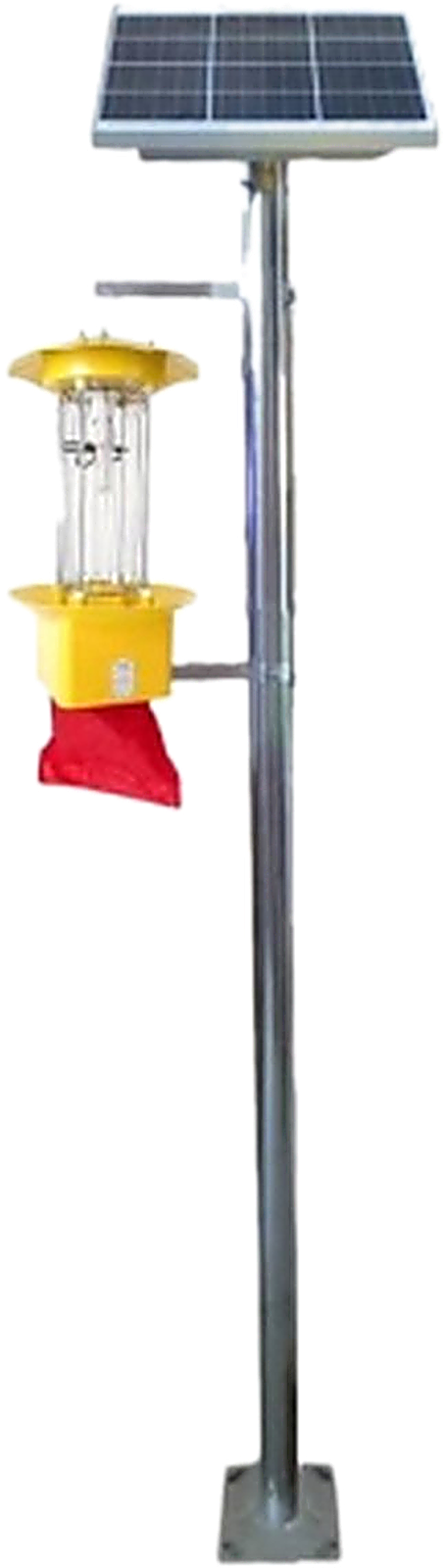
Mounting height also matters — most FBD/FBF models use a 3-meter pole so the UV light clears the crop canopy.
4. Power and Battery: Will It Survive a Rainy Week?
Solar lamps live or die by their panel and battery. Check three numbers:
Solar panel: 30W/6V (FBD) up to 40–50W (FBF) — bigger panel = more charge on cloudy days.
Battery: 15Ah (FBD) to 40Ah (FBF) — larger capacity keeps the lamp running 2–3 nights without sun.
Runtime: quality units run 6–10 hours/night on a full charge.
For regions with long rainy seasons, choose the FBF Series (40Ah battery) for the longest backup.
5. Weatherproofing: IP Rating for Your Climate
If your farm is near water (fish ponds, rice paddies) or gets heavy dew, pick a model with IP55 rating:
FBA Series (courtyard/mosquito) — IP55, ideal for humid and waterside areas.
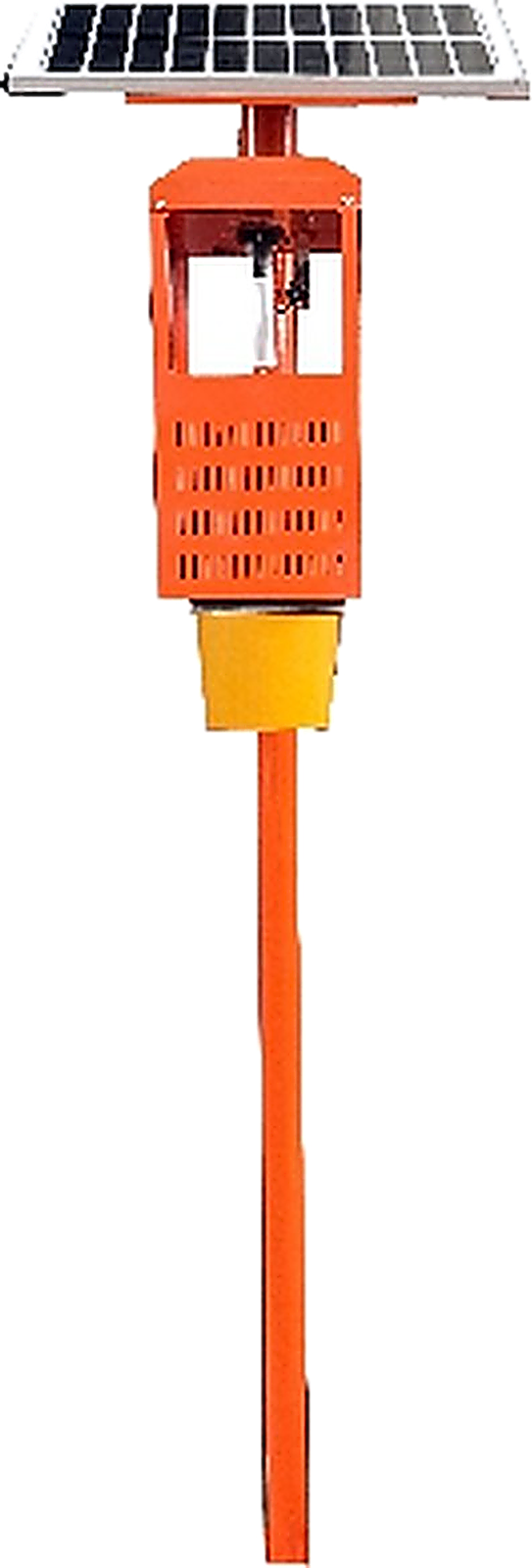
FBF-12 — orange waterproof housing designed for waterside outdoor use.
6. Smart Features: Do You Need IoT?
For modern agriculture projects, the FBF-7 IoT Auto-Dumping Trap adds:
APP remote monitoring and control
Automatic insect-box dumping every 48 hours (saves labor)
Lower long-term operating cost on large plantations
If you manage a small farm, the classic FBF-1 (yellow steel housing) delivers the same wind-suction capture without the connected cost.
Quick Model Picker
Your scenario Recommended model Key spec
Orchard, large flying insects FBD-2 Electric Insect Killer 4800V grid, 3m pole
Open field, visible & durable FBF-1 Classic Wind Suction Yellow steel, 2200 r/min fan
Tea plantation, smart project FBF-7 IoT Auto-Dumping APP control, auto-dump
Fish pond / waterside FBF-12 Solar Wind Suction Orange waterproof housing
Courtyard / resort / humid FBA-20 Mosquito Killer 1200V, IP55
Why Buy Factory-Direct from FOSIBO?
Shandong FOSIBO Energy Technology designs and manufactures all six product families in our own workshop — from laser cutting and welding to assembly, finishing and export packing. Buying direct means:
True ex-works pricing with no trading-company markup
Free HD product photos and catalog for distributors
OEM/ODM: logo, packaging, structure and configuration tuned to your market
1-year warranty and spare parts support
Get a Quote
Not sure which model fits your farm? Send us your crop type, area and pest challenge — our team will recommend a configuration and MOQ within 24 hours.
Get a Quote | Chat on WhatsApp
Shandong FOSIBO Energy Technology Co., Ltd. — Factory-direct solar pest control & custom outdoor lighting. Supplying distributors, projects and OEM partners in 50+ models across 6 product families.
Related Guides: how to choose a solar insect killer lamp for your farm