Every buying decision gains from a solar insect killer buying plan that targets the adult flying stage and runs through peak season.
Solar Insect Killer Buying Priorities
A solar insect killer buying plan works best when devices are spaced by habitat and maintenance is scheduled before peak season, not after pests arrive.
Choosing the right solar insect killer for a commercial farm is not the same as picking a backyard bug zapper. Farms, orchards, and greenhouses need equipment that runs unattended for months, covers a large area, and survives heat, rain, and dust. This guide breaks down the specifications that actually matter so you can shortlist the right model before requesting a quote.
Why Commercial Buyers Need a Different Standard
A residential solar bug zapper is built for a patio. A commercial solar insect killer is built for a field. The difference shows up in three places: coverage radius, duty cycle, and service life. If you buy a consumer-grade unit for a 20-hectare orchard, you will replace it within a season.
1. Coverage Area and Trap Density
Coverage is the first number to check. Most solar insect killers list an effective radius of 20–80 meters depending on the lamp power and the insect species.
Small plots (< 1 ha): one unit per 0.2–0.3 ha is usually enough.
Orchards (1–10 ha): space units 40–60 m apart along rows.
Open fields (> 10 ha): plan a grid with 50–80 m spacing and verify with a trial of 5–10 units first.
Tip: ask the supplier for the tested coverage radius, not the marketing maximum.
2. Wind-Suction vs UV-Light Traps
There are two dominant technologies in the agricultural solar insect killer category:
Wind-Suction (Fan-Based)
A fan pulls insects into a collection bag or death chamber. Advantages: works day and night for some species, fewer escaping insects, lower non-target attraction for moths.
UV-Light Attraction
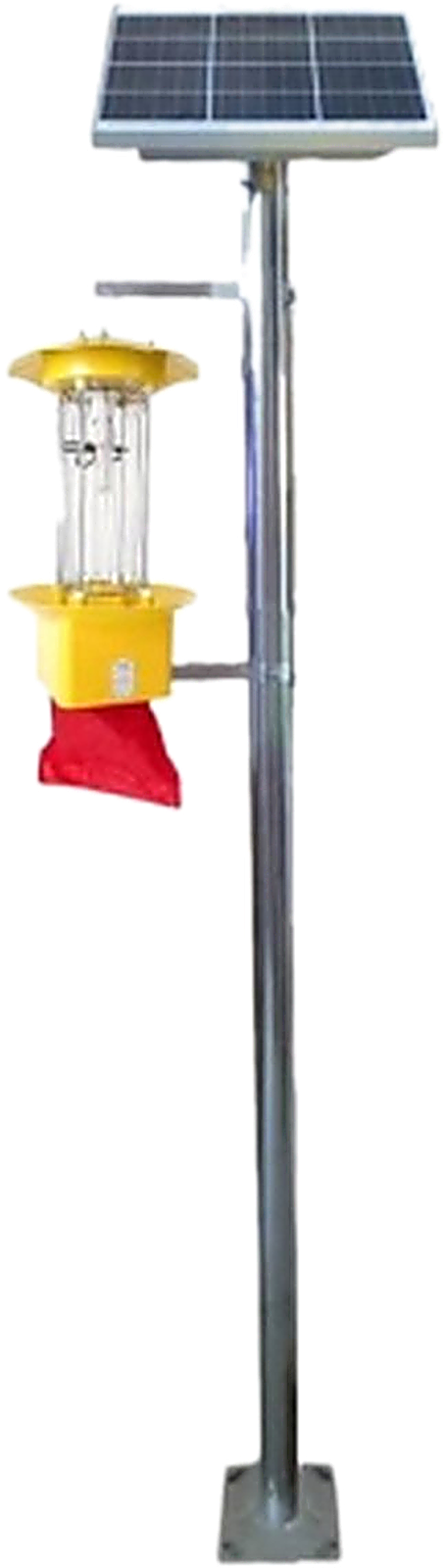
A UV or LED lamp draws nocturnal insects to a grid or water tray. Advantages: lower cost, proven for moth and beetle control.
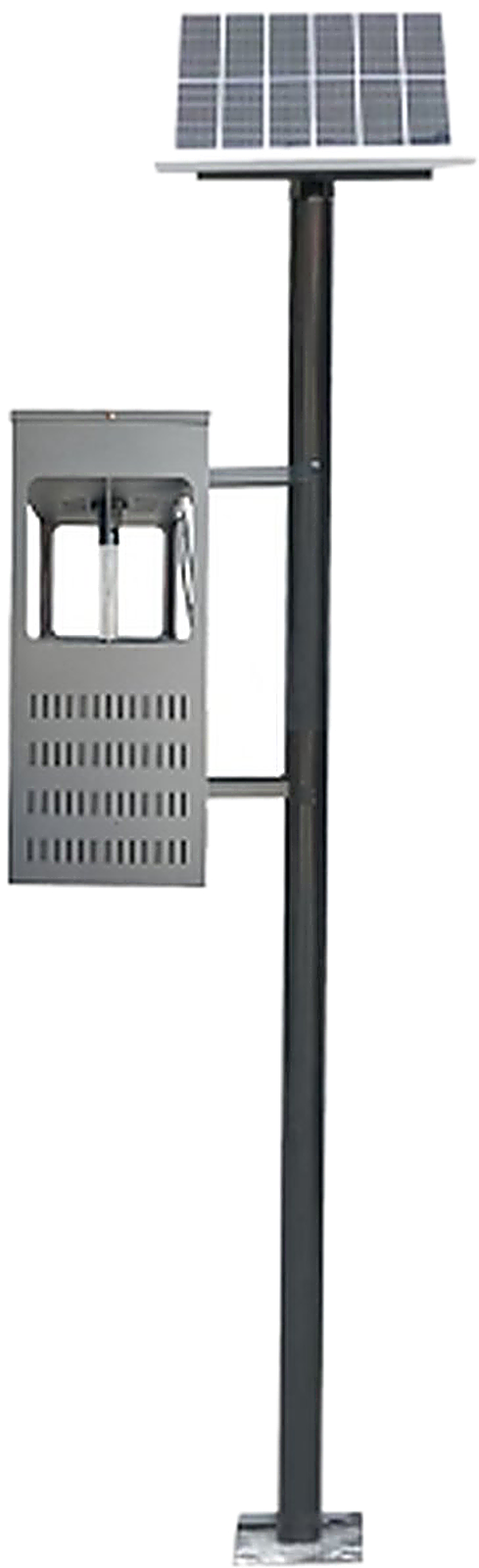
For most farms, a combined wind-suction + LED unit gives the broadest catch across pest types. FOSIBO’s FBF Wind Suction Trap is an example of this hybrid design.
3. Solar Panel and Battery Specs
A commercial unit must run through the night on stored solar energy.
Panel: 10–40 W monocrystalline panels charge faster and last longer than polycrystalline.
Battery: lithium (LiFePO4) outlasts lead-acid by 3–5x in daily cycle use.
Autonomy: look for ≥ 2 rainy days of backup so pests are still controlled during cloudy weeks.
4. Waterproof and Dust Rating
Fields are harsh. Minimum IP65 rating; IP66 preferred for orchards with irrigation spray. Check the seal on the controller box — that is the part that fails first.
5. Mounting and Height
Most traps mount on a 1.5–3 m pole. Match the height to the crop canopy:
Low crops (vegetables): 1.2–1.5 m
Orchards: top of canopy or 0.5 m above
Greenhouses: suspended from trusses
6. OEM / ODM and Spare Parts
If you are a distributor, confirm the factory offers:
Custom logo and packaging
Voltage/plug variants for your market
Replacement fans, panels, and controller boards
Minimum order quantity (MOQ) and lead time
FOSIBO supports OEM/ODM for wholesale buyers — request the catalog and MOQ sheet with your inquiry.
7. Certifications for Import
Depending on your country, you may need CE, RoHS, or FCC. Ask for the certificate pack before container booking to avoid customs delays.
FAQ
Q: How many solar insect killers do I need per acre? A: Roughly 1 unit per 0.5–1 acre depending on crop height and pest pressure. Start with a pilot grid.
Q: Do they work in winter? A: Cold reduces battery capacity but units still operate. In snowy regions, remove and store batteries if temperatures drop below -10°C for long periods.
Q: Can I connect them to a central monitoring system? A: Some commercial models support RS485 or LoRa reporting. Confirm with the factory if you need fleet management.
Q: What is the lifespan? A: Panels 20+ years, battery 2–4 years, fan 1–3 years with maintenance. Total service life is typically 5+ years with spare parts.
Conclusion
When buying a solar insect killer for commercial use, prioritize coverage radius, battery autonomy, IP rating, and spare-part availability over price alone. Send your field size, crop type, and target pests to the supplier and ask for a deployment plan before ordering.