
A common question from farms and distributors is whether a solar insect killer is just a bigger version of the bug zapper sold for backyards. It is not. The commercial agricultural trap and the residential electric grid zapper are built for different jobs, and confusing the two leads to poor catch rates and unsafe installs. This comparison explains how a solar bug zapper built for farms differs from a consumer bug zapper in catch method, safety, coverage and total cost.
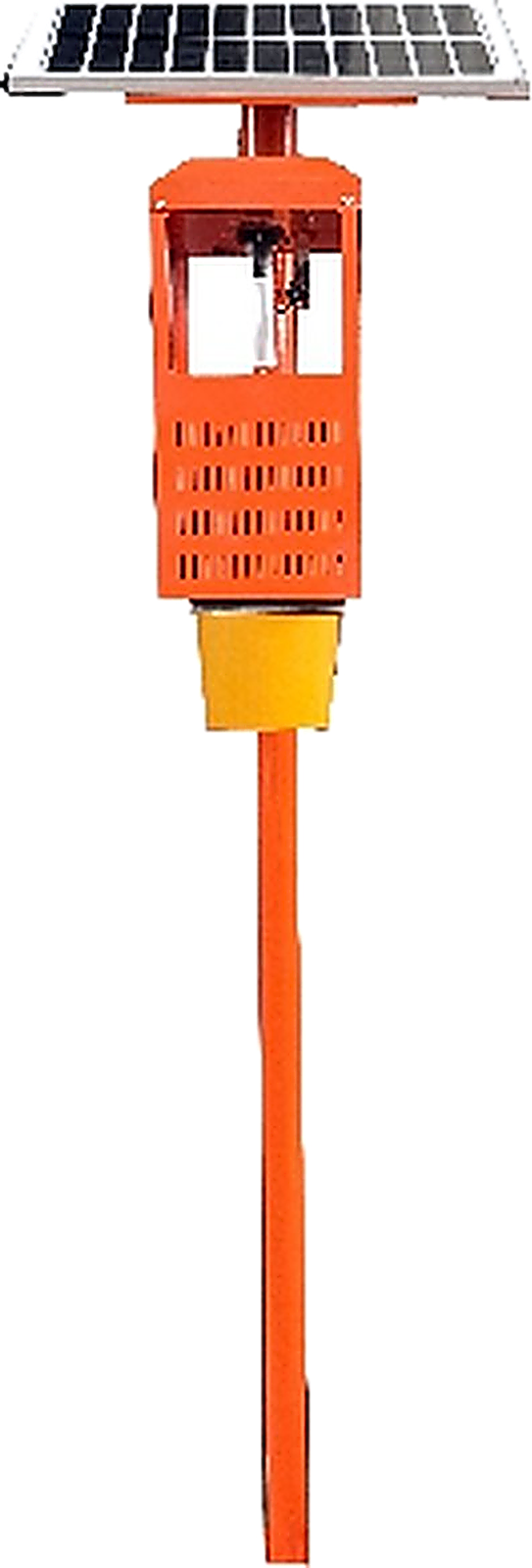
The consumer bug zapper uses a high-voltage grid. Insects are lured by a UV tube and zapped on contact, producing the familiar crackle. The solar insect killer used on farms typically uses wind suction: a fan draws insects into a collection tray where they dry out, with no exposed electrified mesh.
For agricultural pest control this matters. Wind suction targets flying adults without spraying or shocking, and it is safe around workers, livestock and sensitive crops. A residential grid zapper is designed for patios, not 60-hectare fields.
A consumer bug zapper covers a patio or a few square metres. A commercial solar insect killer is sized for hectares, with a brighter, broader-spectrum LED and a mounting height of 1.5–2.4 metres to project light across a crop canopy.
In a farm pest management plan, placement and spacing decide results. One unit per hectare of crop edge is a common starting point, tightened along known flight corridors. A backyard zapper has no such deployment logic.
Consumer zappers rely on a fixed UV tube that attracts a broad, indiscriminate mix. Farm-grade solar insect killer models tune the LED spectrum toward the wavelengths that draw the moths, flies and beetles actually damaging the crop, while reducing draws on beneficial species. Pairing the right spectrum with wind suction is what turns a light into a farm pest management tool rather than a patio novelty.
Consumer grid zappers pose a shock risk and can indiscriminately kill beneficial insects drawn to the light. The commercial solar insect killer avoids exposed grids, reducing accidental contact. For sites with workers, children or animals nearby, that difference is decisive.
This is also why the solar insect killer suits schools, stables and food-processing perimeters where a sparking grid would be unacceptable.
Backyard zappers are light, plastic and often not rated for field conditions. A farm-grade solar bug zapper uses an IP66 sealed housing, a corrosion-resistant pole and a battery sized for consecutive cloudy days. It is built to sit outdoors for years, not one summer.
A consumer bug zapper is cheap to buy but limited in life and scope. A commercial solar insect killer costs more upfront yet covers far more area and lasts seasons. Measured per hectare per year, the agricultural unit is the lower-cost tool for real pest pressure.
Distributors should position the two clearly: the consumer unit for patios, the solar insect killer for production agriculture and commercial grounds.
A backyard zapper needs little beyond a bulb change. A commercial solar insect killer needs a monthly tray empty, a panel wipe and a battery health check — but it carries no electricity bill and no fuel cost. Over a season the zero running cost of the solar unit is a major part of its lifetime value for a solar bug zapper deployment across many hectares.
Mixing them up wastes budget and under-protects the crop.
For distributors, the comparison is not just technical — it is a positioning decision. Stocking both tiers lets a reseller serve a patio customer and a 200-hectare orchard from one catalogue, but the two must never be cross-sold as equivalents. A farm pest management buyer judging a solar insect killer against a consumer bug zapper expects field-grade light output, weather sealing and a serviceable battery; the residential unit cannot meet that bar.
The practical rule is to match the tool to the acreage. Below roughly 500 square metres, a consumer bug zapper is adequate and far cheaper. Above a hectare of production crop, the commercial solar insect killer is the only option that pays back through reduced spray trips and saved labour. Resellers who state this clearly upfront reduce returns and build a reputation for honest agricultural pest control advice.



Use this guide alongside the references below to build a complete, defensible program.
For deeper technical and regulatory context, see the FAO Integrated Pest Management and the EPA safe pest control.
Is a solar insect killer the same as a backyard bug zapper?
No. One uses wind suction and is built for hectares and field durability; the other uses an electric grid for a patio.
Which is safer around livestock and workers?
The wind-suction solar insect killer, because it has no exposed high-voltage grid.
Can a consumer zapper protect a farm?
Only a tiny area. Real agricultural pest control needs the coverage, light output and durability of a commercial solar insect killer.
Does the solar unit need mains power?
No. It runs on its own panel and battery, which is why it suits off-grid fields and remote crop edges.
Why does the comparison matter for B2B buyers?
Because resellers who clarify the difference avoid returns and build trust with farm customers who need field-grade performance.