
As a solar insect killer livestock operation, your first win against flies and mosquitoes is breaking the adult breeding cycle at night.
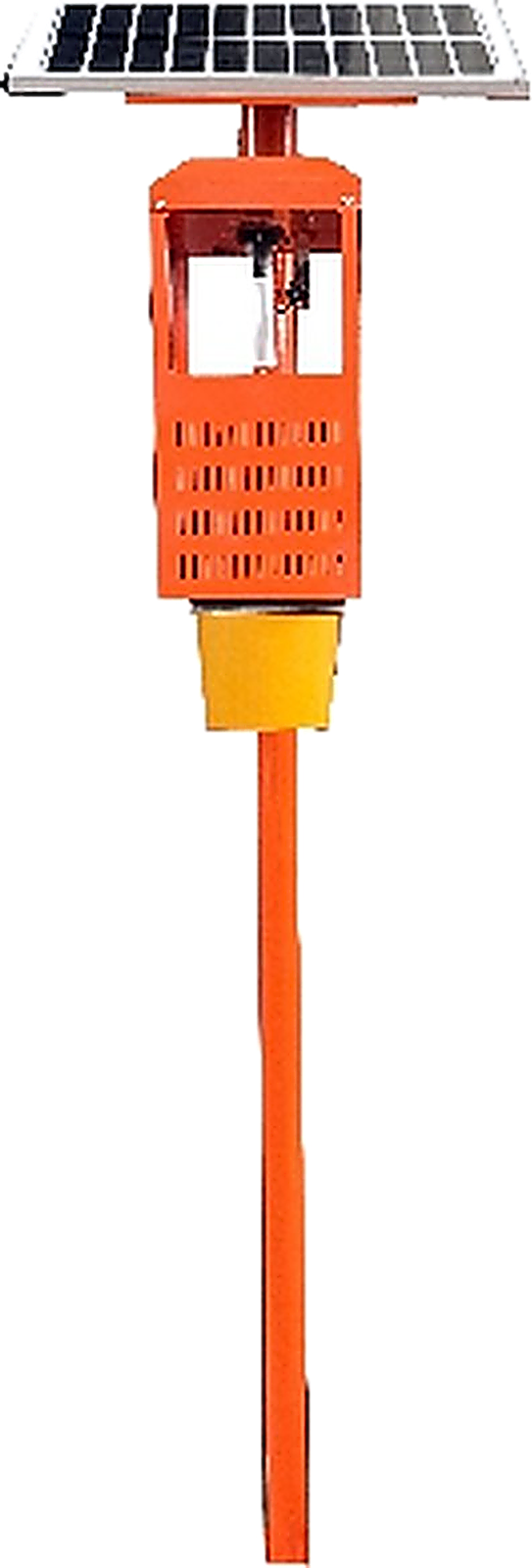
A solar insect killer is usually pictured in an orchard or a vegetable field, but the same device earns its place on a very different kind of operation: the livestock and poultry farm. Flies, mosquitoes, gnats, and midges are not cosmetic nuisances in animal production. They spread disease, stress animals, suppress feed conversion, and push up veterinary and labor costs. A well-placed solar bug zapper turns night-flying insect pressure down across barns, pens, and feedlots without adding another chemical to the operation — and without another electric bill.
The direct damage from a few flies is small; the indirect cost is not. Houseflies and stable flies bite, irritate, and force animals to spend energy fighting pests instead of eating and resting. Stressed dairy cattle produce less milk. Stressed broilers gain weight more slowly. Layer hens under constant fly pressure lay fewer eggs. Mosquitoes and midges transmit bluetongue, avian influenza vectors, and a long list of regional pathogens that vary by climate.
For a manager, agricultural pest control on an animal site is therefore a production issue, not a comfort issue. A single solar insect killer positioned over a holding yard can cut the adult fly population enough to measurably reduce stress and the need for sprays around feed and water.
Conventional knockdown sprays work, but they raise three problems on a livestock site:
This is where a solar bug zapper fits as a quiet, continuous layer of farm pest management. It runs from dusk to dawn on stored solar power, attracting and trapping night-flying insects before they breed. Less spraying means fewer residues near animals and fewer hours your team spends fogging pens.
Placement decides most of the result. Insects gather where animals, moisture, and warmth meet, so prioritize those zones:
Mount each solar insect killer at roughly animal head height or just above, angled so the UV attractant clears the structure. Because the unit is self-powered, you can site it exactly where the pest pressure is worst — no trenching, no power drop, no extension cord across a walkway.
In broiler and layer houses, flying insects carry bacteria and trigger bird stress. A solar bug zapper hung at house ends and along side curtains reduces the adult insect load that otherwise drifts in through vents. Pair it with good ventilation and dry litter management, and you get a meaningful drop in nuisance flies without spraying inside the bird zone — exactly the kind of low-chemical farm pest management buyers and auditors increasingly expect.
A livestock site runs insects all season, so runtime matters more than peak brightness. Look for:
A solar insect killer built for agriculture survives the barn environment better than a garden-market unit. Choose models with sealed grids and stainless fixings; they cost more once and save repeated replacements.
A trap alone will not erase a fly problem, and it should not try to. The strongest results come from combining a solar bug zapper with sanitation and biological controls:
This integrated approach is the practical meaning of agricultural pest control on a modern animal farm: mechanical, biological, and chemical tools each doing the job they do best.
For deeper technical and regulatory context, see the FAO Integrated Pest Management and the EPA safe pest control.
Will a solar insect killer bother the animals? No. The UV attractant is outside the visible range that stresses livestock, and there is no noise. Units run silently through the night.
Is it safe around feed and water? Yes. Because it relies on light and a grid rather than chemicals, there is no spray drift onto feed, milk, or water lines.
How many units do I need per barn? As a rule of thumb, one solar insect killer covers the fly draw of roughly 200–400 square meters of open yard or the perimeter of one house end. Site surveys sharpen this.
Does it work in winter? Adult insect pressure drops in cold months, so runtime and catches fall. The unit still runs; you simply see fewer catches until the season returns.
A solar insect killer is one of the cheapest, lowest-labor upgrades a livestock or poultry operation can make to cut insect pressure. Placed at breeding and gathering points and paired with basic sanitation, it delivers quiet, chemical-light farm pest management that protects animal welfare, feed conversion, and your bottom line.