
Vietnam is one of Southeast Asia’s most intensively farmed countries, packing rice, coffee, dragon fruit and black pepper into a long, narrow landscape of deltas, highlands and coastal plains. On a Vietnam farm, pest pressure is amplified by warm humidity, double- and triple-cropping, and fields pressed right up against one another. This case study looks at how growers pair a solar insect killer with their existing agricultural pest control program to protect yield and export quality across several crops at once.
A Vietnamese grower rarely farms one crop in isolation. The Mekong Delta stacks two or three rice crops a year; the Central Highlands run coffee under shade; the southeast grows dragon fruit on trellises; and the central coast produces much of the world’s pepper. That density means adult flying insects move freely between plots, and a population that builds in one field spills into the next. Reliable farm pest management is the baseline that keeps all of those value chains profitable.
A solar insect killer attracts and captures adult flying insects at night, which is exactly when most of the damaging moths, planthoppers and borers are active. On a Vietnam smallholding, the most relevant targets are the adults that cause direct damage or vector disease.
Rice in the Mekong and Red River deltas faces brown planthoppers and leaf folders. The adults are strong nocturnal fliers, the stage a solar bug zapper is built to intercept. Capturing the adult before it lays eggs breaks the build-up far more cleanly than spraying after the hopper burn appears. For a Mekong rice farmer, fewer adults over the paddy means lower virus spread and steadier tillers.
In the Central Highlands, coffee berry borer and the moths that spread anthracnose on pepper vines fly after dusk. A solar insect killer placed at the edge of the block draws those adults away from the canopy. Because the device works without chemicals, it slots neatly into the agricultural pest control plan a Vietnam exporter must document for buyers demanding low residues.
Dragon fruit is a high-value Vietnam export, and its night-blooming flowers attract a complex of fruit-piercing moths. Those same moths are strongly phototactic. A solar bug zapper running through the flowering window measurably reduces scarring on premium fruit bound for China and Europe.
Vietnam farms are often small and mixed, so deployment follows the crop mix rather than a single uniform grid.
Growers hang one solar insect killer per 0.5–1 hectare, tuned to lamp output and surrounding vegetation, and share coverage across adjacent rice, coffee and fruit plots. Because the unit is solar-powered, there is no trenching or cabling through flooded paddies — a real advantage during the monsoon.
Many Vietnam highland and delta blocks sit far from a reliable grid. A solar insect killer charges through the day and operates all night, independent of the grid. That autonomy is why the technology fits family smallholdings as well as corporate estates under the same farm pest management umbrella.
European and Asian buyers increasingly demand residue-free paperwork. Because a solar insect killer captures insects physically — no spray, no smoke — it leaves nothing on the grain, berry or fruit, supporting the export documentation a Vietnam cooperative must present. Growers report fewer downgraded lots after adding traps to the existing agricultural pest control schedule.
A single solar bug zapper costs more up front than a jug of pesticide, but it runs for years with no consumable and no fuel. On a Vietnam farm, the payback shows up as fewer downgrades, lower spray rounds and less labor. For cooperatives, bulk purchasing of the same solar insect killer model further improves the numbers and simplifies spare-parts inventory.

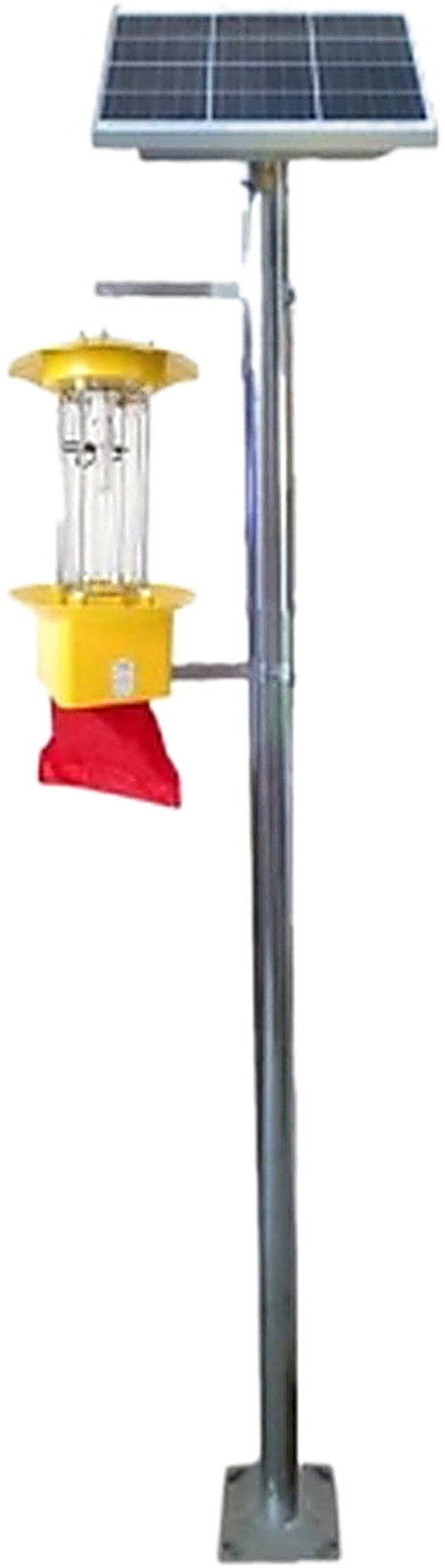


Use this guide alongside the references below to build a complete, defensible programme.
For deeper technical and regulatory context, see the FAO Integrated Pest Management and the EPA safe pest control.
Do Vietnam farms still need sprays? Yes. The solar insect killer owns the adult flying stage; nematodes, disease and soil pests still need a broader agricultural pest control program.
Will a solar bug zapper work during the monsoon? Yes. The unit is weatherproof and solar-charged; heavy rain does not stop nightly capture on a delta block.
Is the trap safe near export fruit and grain? Yes. It works without chemicals, leaving no residue, which protects farm pest management compliance for export.
How many traps per hectare for mixed crops? Roughly one solar insect killer per 0.5–1 hectare, tuned to lamp output and canopy density across the crop mix.
Can one trap serve rice, coffee and dragon fruit? Yes. The adults of rice planthoppers, coffee borers and dragon-fruit moths are all nocturnal fliers, so one solar bug zapper spans multiple crops on a diversified Vietnam farm.