
Tanzania and Uganda sit at the heart of East Africa’s cash-crop belt, where coffee, bananas, and maize are both household food and export income. Yet the same warmth and rainfall that fuel growth also fuel insects that strike at the most valuable moment. This case study follows four representative sites — a Tanzanian Arabica coffee cooperative, a Ugandan banana stronghold, a maize outgrower scheme, and a mixed estate — where farmers added a solar insect killer to their pest routine. The result was fewer rejected coffee, cleaner banana bunches, and a measurable drop in calendar spraying.
The region’s equatorial and highland climates give pests year-round pressure. Smallholders often lack the budget for repeated chemical sprays, and residue rules for export coffee and horticulture are tightening.
The coffee berry borer (*Hypothenemus hampei*) is the region’s most damaging coffee pest. It bores into the cherry and ruins the bean, and because it hides inside the fruit, surface spraying rarely reaches it. Both Tanzanian and Ugandan cooperatives lose export grade to borer damage every season.
Ugandan banana systems face the banana weevil and a range of leaf-feeding and scarring pests that lower bunch quality. With bananas a staple and a cash crop, even a small loss per plant adds up across millions of stools.
Maize across both countries is hit by fall armyworm (*Spodoptera frugiperda*), which can strip leaves and collapse young plants. Outgrower schemes that supply millers and exporters are especially exposed because a single outbreak can wipe a contracted block.
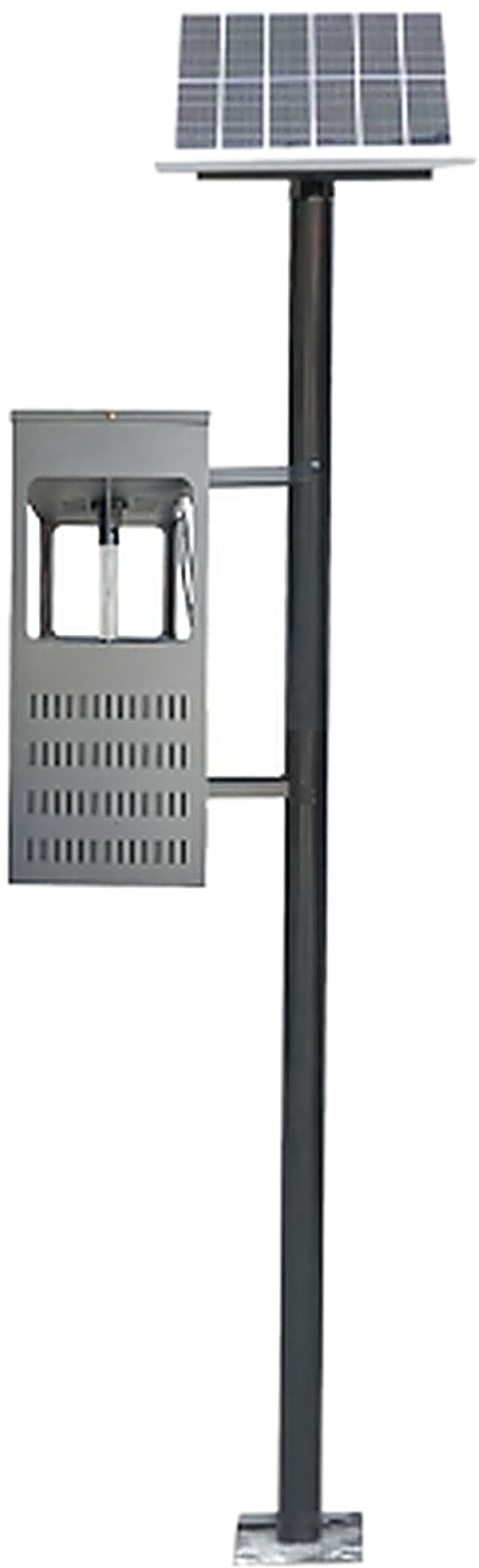
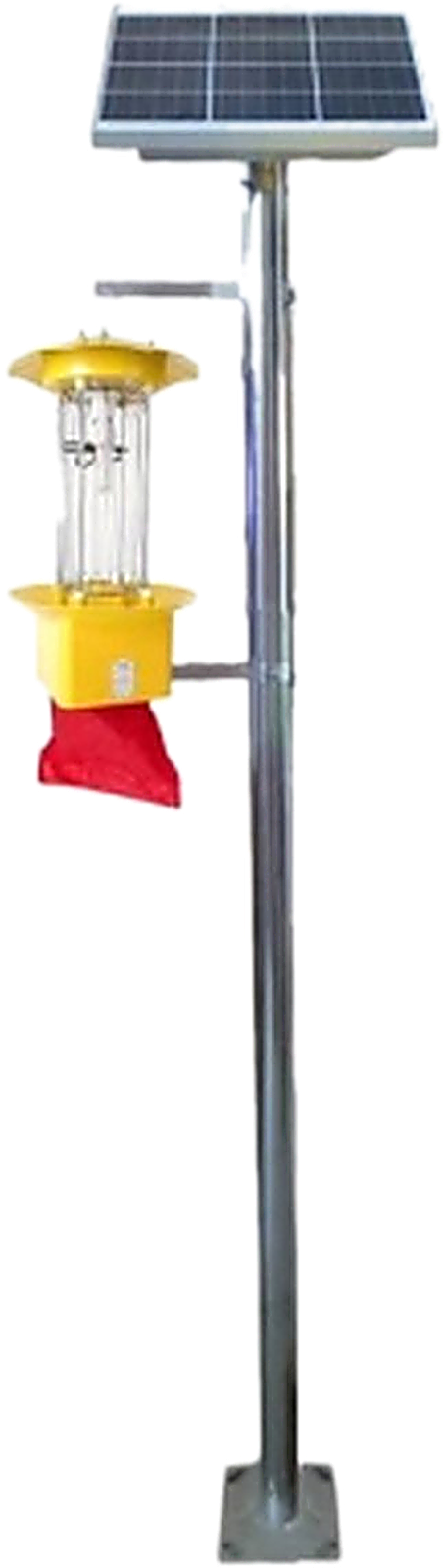
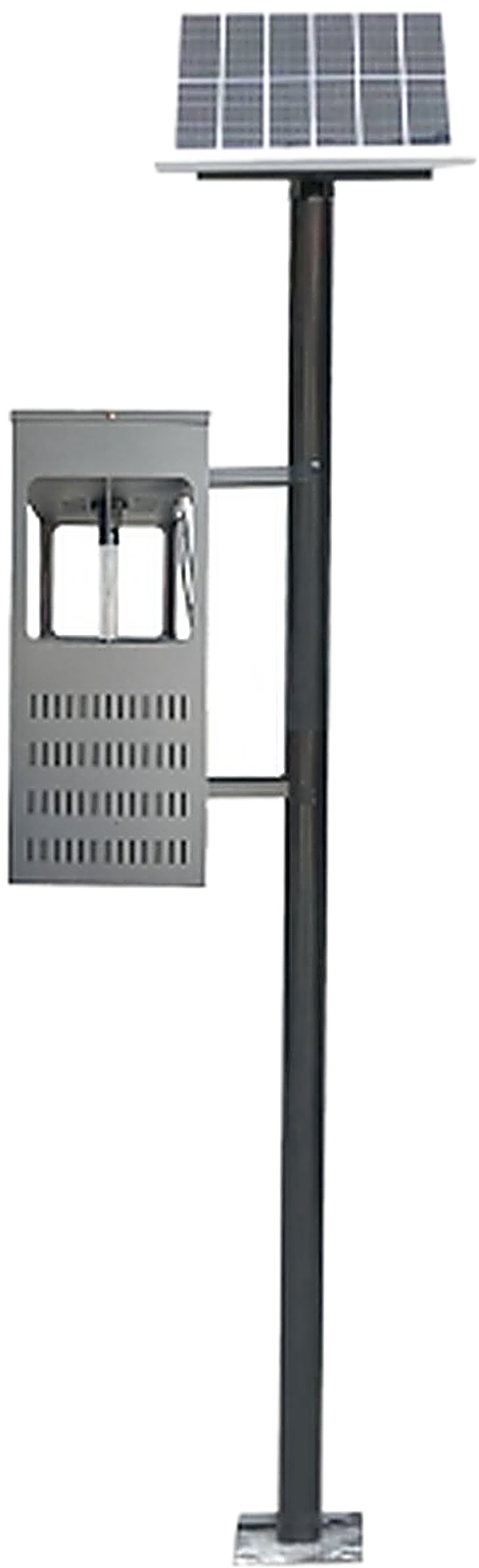
A solar insect killer runs on sun and a battery, with no grid or diesel. At night it draws adult moths and beetles to a light and removes them before they mate. For East African farms, one device can protect a coffee block, a banana garden, and a maize edge at once.
The Tanzanian cooperative mounted units at the edge of shaded coffee blocks, where borers and the moths that attack coffee actually fly. Because the solar bug zapper needs no wiring, it moved easily between the coffee block in the wet season and the pulping station yard in the dry season.
In Uganda, units were placed at the boundary of banana gardens and along maize field edges. The night-flying moths that lay eggs in both crops were pulled in before they reached the inner planting, a low-cost layer of farm pest management that complements good sanitation.
Across two seasons the sites tracked coffee rejection, banana bunch grading, and maize stand survival. The numbers below are representative averages.
The Tanzanian cooperative saw fewer bored cherries reach the sorting table, lifting the share of export-grade parchment. Cleaner cherries also meant less mold risk during fermentation and drying.
The Ugandan site reported cleaner bunches with less scarring and fewer lepidopteran entries, improving both local sale price and processor acceptance.
The maize outgrower scheme recorded better young-plant survival through the first armyworm window and trimmed its scheduled sprays, lowering input cost for smallholders.
The solar insect killer was layered into a wider agricultural pest control routine: pruning coffee for airflow, de-trashing banana mats, rotating maize, and scouting. The trap handled the adult stage; the cultural steps handled the eggs and the environment.

Use this guide alongside the references below to build a complete, defensible program.
For deeper technical and regulatory context, see the FAO Integrated Pest Management and the EPA safe pest control.
Yes. Equatorial and highland nights stay warm and insect-active for most of the year, which is exactly when the trap operates. The panel and battery are sized for local sun patterns.
No. It is a preventive adult-control layer. Farmers keep a targeted, reduced spray plan for outbreaks the trap cannot fully contain, especially in dense maize.
Units were sited away from water courses and hives, and they add no chemical residue to the crop, which matters for export-grade coffee and horticulture.
For a typical 0.5 to 1.5 hectare mixed plot, one to two units at the field edge gave the best balance of coverage and cost.
Tanzania and Uganda show that a solar insect killer is well suited to both smallholder and estate farming in East Africa. Layered into cultural IPM, it cut coffee rejection, improved banana quality, and supported maize survival while reducing spray frequency. For growers in the region, that blend of better grade and lower input cost is what makes farm pest management worth adopting season after season.