
Coffee and tea are long-cycle, high-value crops grown across tropical and subtropical highlands. They also sit in exactly the kind of warm, humid, shaded environment where flying insects thrive. For smallholders and estate managers alike, pest pressure translates directly into cup quality, yield and the premiums that certified buyers pay. A solar insect killer offers a quiet, automatic way to cut adult pest numbers across a plantation without adding spray rounds or grid power.
This article covers the main coffee and tea pests a trap targets, how to deploy units on sloped, shaded land, and how the approach strengthens a broader farm pest management strategy.
Unlike open field crops, coffee and tea grow in structured, often terraced systems with dense foliage and consistent moisture. That environment favours several persistent pests:
A solar bug zapper intercepts the adult, flying stage of these pests — the stage responsible for spread — before they settle and reproduce in the canopy.
The berry borer is the most economically damaging coffee pest worldwide. While the larval stage bores inside the cherry, the adult beetle flies to find new fruit. Light-based attraction, especially when paired with a species-appropriate lure, pulls adults away from the ripening crop and limits new infestations.
Tea flush is delicate. Thrips and leafhoppers feed on the youngest leaves, causing bronzing, distortion and lowered plucking weight. Because both are small, weak fliers active at low light, distributed traps across a tea block catch a meaningful share of the adult population.
Many caterpillar pests of coffee and tea begin life as eggs laid by night-flying moths. Reducing the adult moth count reduces larval damage to the very growth that determines next season’s yield.
Sustainable certification schemes for coffee and tea increasingly ask for reduced chemical inputs. A solar insect killer fits that requirement naturally:
The result is a lower chemical footprint and a more defensible sustainability story — both of which protect market access.
Plantations are rarely flat. Practical deployment guidelines:
A distributed network of solar insect killer units outperforms a few central units because pest flight distances are short and local interception matters most.
Coffee and tea estates sit at altitude, where nights are cool and mornings are wet. Choose traps with sealed electronics, moisture-resistant kill chambers and corrosion-resistant housings. A unit that survives mist, dew and temperature swing without maintenance is worth more than a cheaper one that fails mid-season.
The return on a trap network shows up in three places: fewer damaged cherries and leaves, fewer spray passes, and stronger certification compliance. For a specialty or certified grower, protecting cup quality and audit standing is worth far more than the hardware cost. A solar insect killer pays for itself not by replacing every input, but by protecting the premium you have already earned.
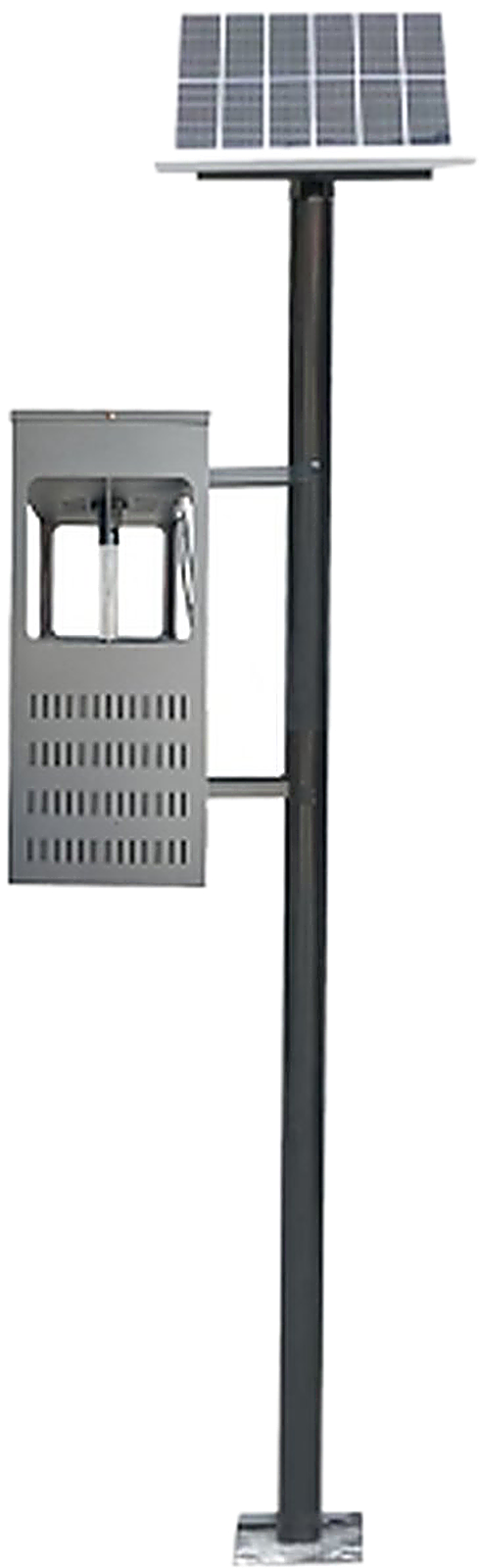



Use this guide alongside the references below to build a complete, defensible program.
For deeper technical and regulatory context, see the FAO Integrated Pest Management and the EPA safe pest control.
Will a solar trap control coffee berry borer on its own? It strongly reduces the adult flying stage and limits spread, but borer management also needs sanitation (removing infested cherries) and monitoring. Treat the trap as a core layer, not the only one.
Is tea flush safe from trap residue? Yes. A light trap leaves no chemical residue on leaves or plucking shoots, which is why it suits organic and certified estates.
How should I space units on a terraced estate? Stagger them along each terrace bench every 30–50 metres, prioritising rows with the heaviest historical pest pressure.
Do I need grid power in the field? No. Each solar insect killer charges from its own panel and runs on battery through the night, ideal for remote highland blocks.
For coffee and tea growers, a solar insect killer is a low-labour, low-chemical way to protect yield and quality across a plantation. It strengthens farm pest management, supports certification, and runs anywhere the sun shines. FOSIBO builds rugged, plantation-grade solar traps with OEM and ODM options for estates and exporter supply chains — reach out to size a deployment for your altitude and crop mix.