
Ecuador exports more than 300 million boxes of bananas a year, almost all of them from the coastal provinces of El Oro, Guayas and Los Ríos. The climate that makes that volume possible — humid, warm, and never cold enough to break a pest cycle — is the same climate that keeps insects flying twelve months a year. This case study looks at how commercial growers on an Ecuador banana farm fold a solar insect killer into an existing agricultural pest control programme, and what actually changed on the grading table.
An Ecuador banana plantation has no winter reset. Irrigation canals keep the canopy humid even in the dry season, planting is staggered so fruit is present every week of the year, and the result is a continuous supply of adults emerging into a continuous supply of host material. For an exporter, a single scarring event on a premium cluster is enough to push a whole bunch from Class 1 down to local market, and the margin on that bunch disappears. That is why farm pest management here is not a seasonal project but a standing operating cost.
Several tephritid fruit flies and cosmid borers attack the inflorescence and the young bunch. The adults are strong nocturnal fliers, which is exactly the stage a solar bug zapper is built to intercept: catch the adult before it lays and the cycle breaks far more cleanly than spraying after the scar appears.
Thrips scar the peel, leafhoppers stress the plant and moth larvae bore into the pseudostem. All three are drawn to the lamp as adults. Over a season, continuous nightly capture measurably lowers the adult population working over the canopy, and the effect is cumulative rather than dramatic on any single night.
Nematodes, root feeders and larvae already inside the plant are outside the reach of any light trap. An honest agricultural pest control plan pairs the device with sanitation, nematode management and scouting. The trap owns the flying adult stage; the rest of the programme owns the ground.
Rows are long and blocks are large, so units follow the canopy rather than the boundary. The working figure on a commercial Ecuador banana block is one unit per 0.5 to 1 hectare at roughly canopy height, tightened where surrounding vegetation is dense. Because the device is solar powered there is no trenching, no cabling and no electrician visit, which is a real advantage in blocks far from the packhouse.
Plenty of productive ground sits beyond the reach of a reliable grid connection. A solar unit charges through the day and runs all night without one, which is why the same hardware fits corporate estates and the cooperative plots that surround them.
Ecuador is also a leading cocoa and cut-flower exporter, and cocoa pod borer moths and rose thrips are both nocturnal. The same solar insect killer model deployed on an Ecuador banana estate works unchanged on the cocoa and rose blocks beside it, so a diversified operation buys one device, one spare-parts list and one service routine instead of three separate ones.
European and Middle Eastern buyers increasingly ask for a residue statement alongside the phytosanitary certificate. Because the trap captures insects physically — no spray, no smoke, no active ingredient — it leaves nothing on the fruit. Growers who added units to an existing spray schedule report fewer downgraded bunches and steadier Class 1 recovery, and they can hand a buyer a nightly capture record instead of an assurance. That record also feeds the wider farm pest management file the packhouse keeps for audit.
A single solar bug zapper costs more up front than a jug of pesticide and then runs for years with no consumable and no fuel. On a mid-size Ecuador banana operation the payback comes from three places: fewer downgraded bunches, fewer spray rounds, and less labour spent on application. Cooperatives that buy one model in bulk improve the arithmetic further, because the spare-parts inventory collapses to a single line.
A capture log is worth more than a brochure claim. The fields that matter are date, block, weather, nightly count and any damage score per hundred bunches. Four weeks of that table shows whether the grid is right, and it gives a buyer something auditable. Operations that keep it also spot a failing lamp or a clogged fan before the tray goes quiet for a fortnight.
Mounted too high, spaced too wide and left unserviced, a good trap underperforms and then gets blamed for it. The common thread is treating a device as a purchase instead of a programme: the layout, the cleaning interval and the count all need an owner with a calendar.
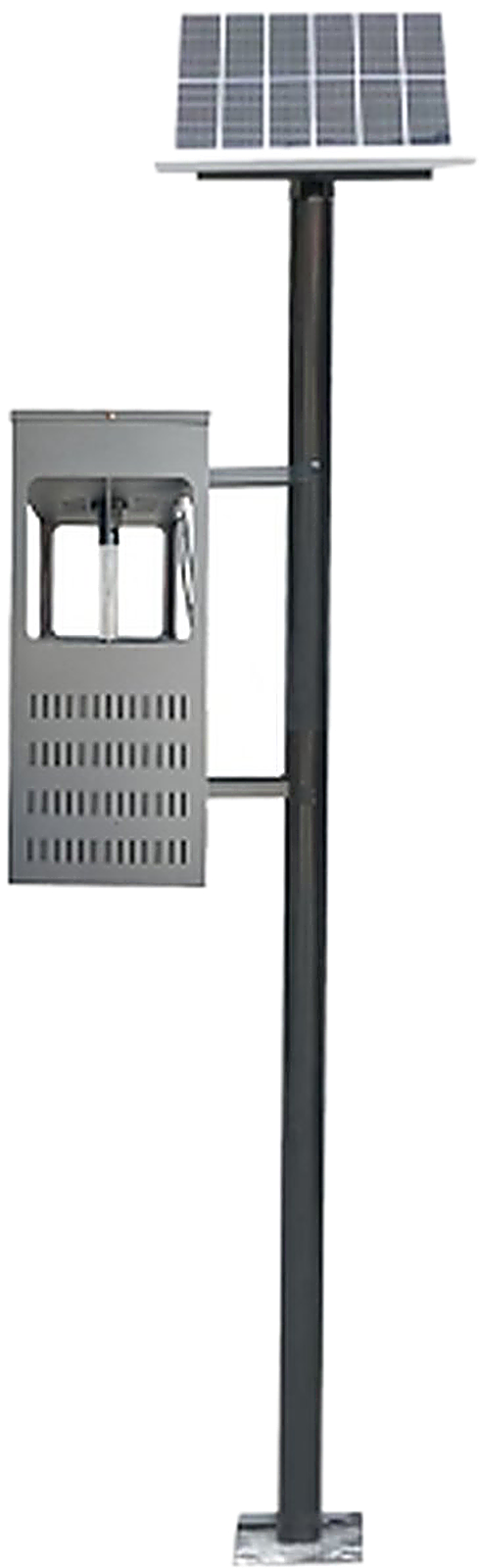



Use this guide alongside the references below to build a complete, defensible programme.
For deeper technical and regulatory context, see the FAO Integrated Pest Management and the EPA safe pest control.
Do Ecuador banana farms still need sprays?
Yes. The device owns the adult flying stage; nematodes, disease pressure and soil pests still need a broader programme.
Will the unit work through the rainy season?
Yes. It is weatherproof and solar charged, and rain does not stop nightly capture on the coast.
Is the trap safe next to export fruit?
Yes. It works without chemicals, so it leaves no residue on the fruit and simplifies the export paperwork.
How many units per hectare?
Roughly one per 0.5 to 1 hectare, tuned to lamp output and canopy density.
Can one model serve cocoa and roses as well?
Yes. Pod borer moths and rose thrips are nocturnal fliers, so the same unit covers all three crops.