
Walnut is a high-value, long-cycle crop where a single pest event can cost years of invested growth. Mature trees, dense canopies and strict export residue limits make broad spraying both expensive and risky. For these reasons, walnut orchards are an increasingly strong candidate for the solar insect killer as the front line of agricultural pest control and farm pest management.
A walnut block faces a recurring set of enemies:
Each is an adult-flying insect during part of its life cycle — the window a light-and-suction trap exploits.
Codling moth is the headline threat. Females lay eggs on fruit and leaves; hatched larvae tunnel to the kernel, and although the nut may look normal from outside, the kernel is damaged and the lot is downgraded. Calendar spraying struggles because moth flight is uneven and residues near harvest invite MRL problems.
A solar bug zapper style trap does not replace mating disruption or targeted biologicals, but it consistently removes a portion of the adult flight, lowering pressure and giving the rest of the IPM program room to work.
The strongest programs pair solar insect killer units with pheromone dispensers. Mating disruption confuses males, while the trap captures confused and migratory adults and provides a real-time flight monitor. Together they cut the need for cover sprays during the sensitive pre-harvest window.
Husk fly is a late-season pest whose maggots stain the husk and, by extension, the shell. Because damage appears close to harvest, chemical options are especially limited by residue rules. Adult husk flies are attracted to light traps during dusk flights, so positioning the solar insect killer along orchard margins and within the canopy catches them before egg-lay.
Walnut trees are tall and broad, which actually suits trap deployment:
For walnut orchards chasing premium or export grades, avoiding unnecessary sprays is itself a selling point.
A practical season plan for agricultural pest control in walnuts:
Typical spacing is one solar insect killer per 0.5–1 ha of mature orchard, adjusted after the first season’s catch counts.
Walnut economics reward quality. A single downgraded lot loses far more than the cost of a trap fleet. The solar bug zapper style unit pays for itself when it:
Because the solar insect killer runs on sunlight, operating cost is near zero after purchase — attractive for a multi-year tree crop.
The trap is one layer. A complete farm pest management program for walnut orchards also includes:



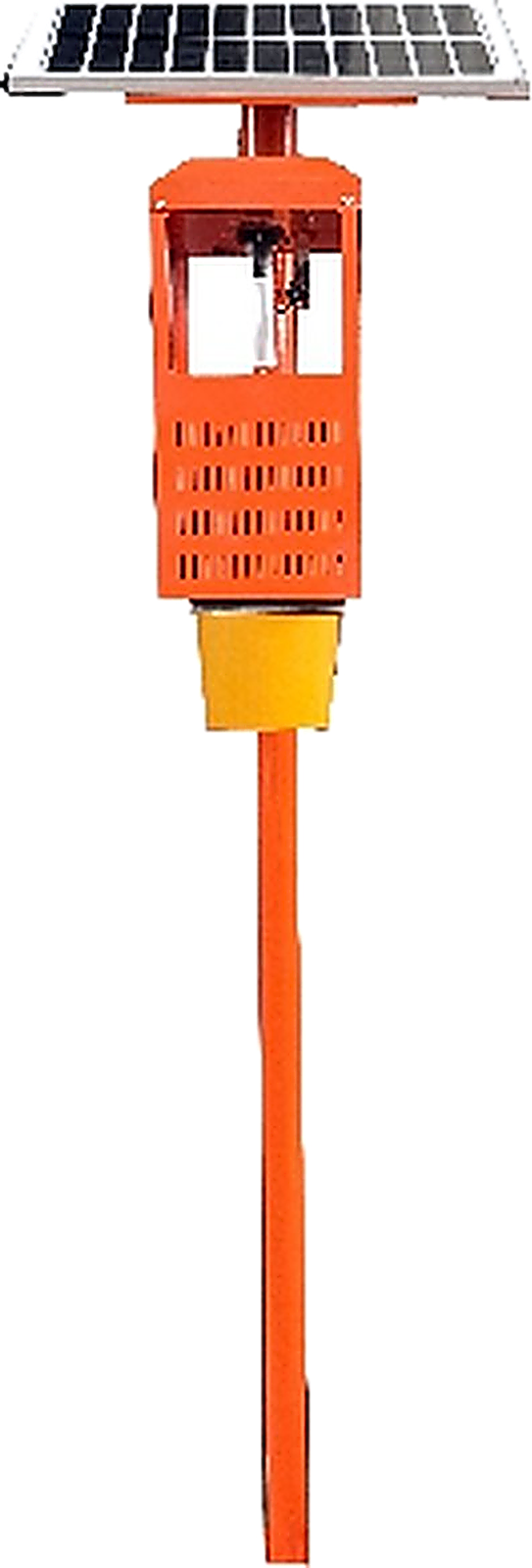
Use this guide alongside the references below to build a complete, defensible program.
For deeper technical and regulatory context, see the FAO Integrated Pest Management and the EPA safe pest control.
Are solar insect killers effective in tall walnut trees? Yes. Perimeter and in-row placement catches adult flights at dusk, and the chemical-free action suits the tall, pollinator-active canopy.
Do they help with codling moth specifically? They remove a share of adult codling moth flight and provide flight monitoring, best used alongside pheromone disruption for full control.
Will a solar bug zapper affect beneficial insects? Light-suction traps capture far fewer beneficials than broadcast sprays, so they protect rather than disrupt the orchard’s biological control.
How many units does a walnut orchard need? A common starting point is one solar insect killer per 0.5–1 ha of mature trees, refined using the first season’s catch data.
Can they support export residue standards? Yes. By reducing pre-harvest spray passes, traps help walnut orchards meet strict MRL and residue-free export requirements.
For walnut orchards, the solar insect killer is a low-cost, residue-free pillar of agricultural pest control. By suppressing codling moth and husk fly adults, supporting beneficials, and protecting export grades, it strengthens farm pest management across the whole walnut season.