
Sugar beet and other sugar crops sit in one of the most insect-pressured rows in agriculture. Leaf miners tunnel the foliage, aphids cluster on the crown and transmit virus yellows, and weevils and cutworms hit seedlings at emergence. Left unchecked, foliar loss drops both tonnage and sugar content, and the Brix penalty at the factory gate is paid by the grower. A solar insect killer gives the agronomist a chemical-free layer of suppression that runs every night without fuel, labor, or re-entry restrictions.
For processors and large contract growers, agricultural pest control on sugar crops is increasingly about reducing spray passes — both to protect pollinators and to keep residue declarations clean for export sugar. That is exactly where a well-sited solar bug zapper earns its place in the program.
A single solar insect killer covering a block reduces the adult reservoir so that fewer pests reach the leaf and the need for curative sprays drops.
Sugar beet is a long-season, high-canopy row crop with few bloom-period pollinator conflicts once the rosette closes. That makes it a safe candidate for broad-spectrum nocturnal trapping — the opposite of flowering orchards where non-target catch is a concern. The field perimeter and headland are ideal farm pest management zones: place units there and you intercept migrating adults before they enter the canopy.
Solar also matters operationally. Sugar regions are often remote, with long rows far from grid power. A solar insect killer needs no trenching, no generator, and no monthly fuel — it simply works from planting to harvest.
Beet often follows cereals and precedes beans, so the pest complex shifts through the rotation. A trapping band set at the field edge catches the adults moving in from the previous crop and those leaving for the next, giving a degree of protection to neighbors too. This makes a solar insect killer a community-level tool, not just a single-field fix, and it is why cooperatives rather than individual growers often fund the perimeter lines.
With insecticide resistance rising in aphid and beetle populations, every spray avoided protects the chemistry that still works. Trapping reduces reliance on pyrethroids and neonicotinoids during the most sensitive growth stages. For growers under sugar-factory residue limits, fewer sprays means a cleaner delivery ticket and fewer rejected loads at the gate.
Although beet has few blooms at canopy closure, the headland often flowers. Keep units lifted and facing outward, and switch off or shield during any flowering cover-crop window if beneficial activity is high. A solar bug zapper placed with this discipline protects yield without trading off the bees that surrounding crops depend on.
Growers adopting a trapping band typically report fewer spray decisions and cleaner foliage at canopy closure. The measurable wins are:
Because a solar insect killer runs automatically, the control is consistent across the whole season — including the nights a scout would never visit.
In cane regions the canopy is taller and the flight longer; mount units higher (2.5–3 m) and extend spacing slightly. The same solar bug zapper logic applies, just scaled to the architecture of the crop. The adult pests respond to the same UV attraction, and the perimeter-band strategy transfers directly.
Traps are one layer, not the whole program. Use them for adult suppression, keep field scouting for larvae thresholds, and reserve targeted sprays for confirmed economic breaches. This is the definition of modern agricultural pest control: mechanical suppression plus measured intervention.

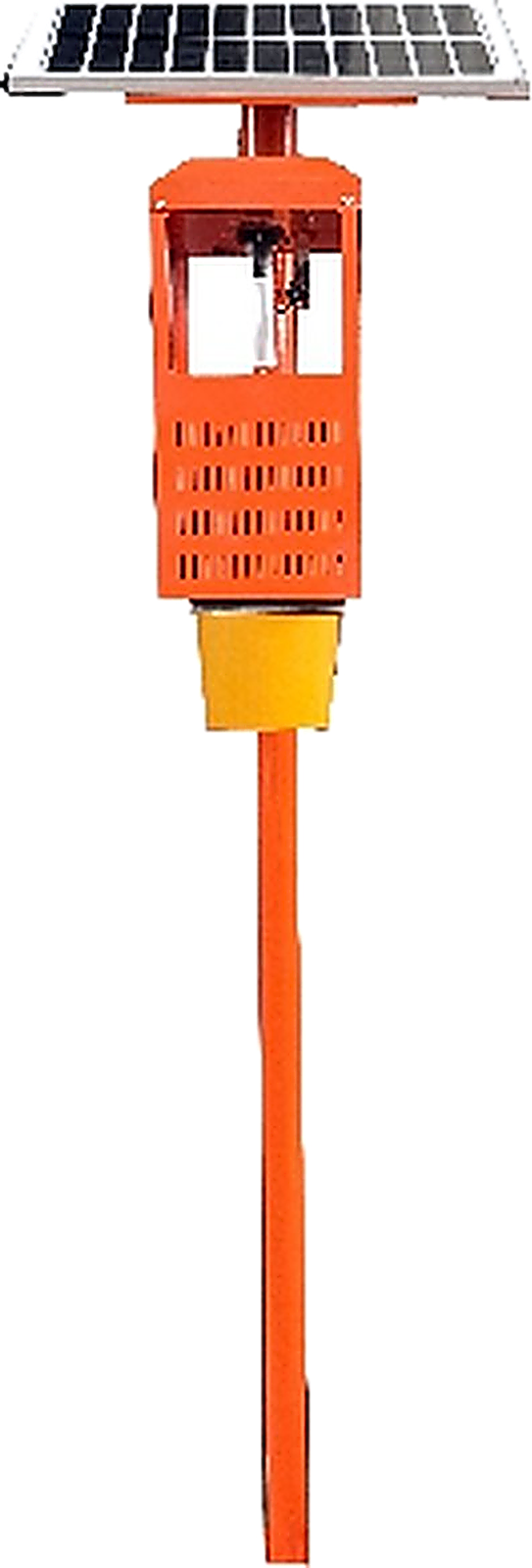

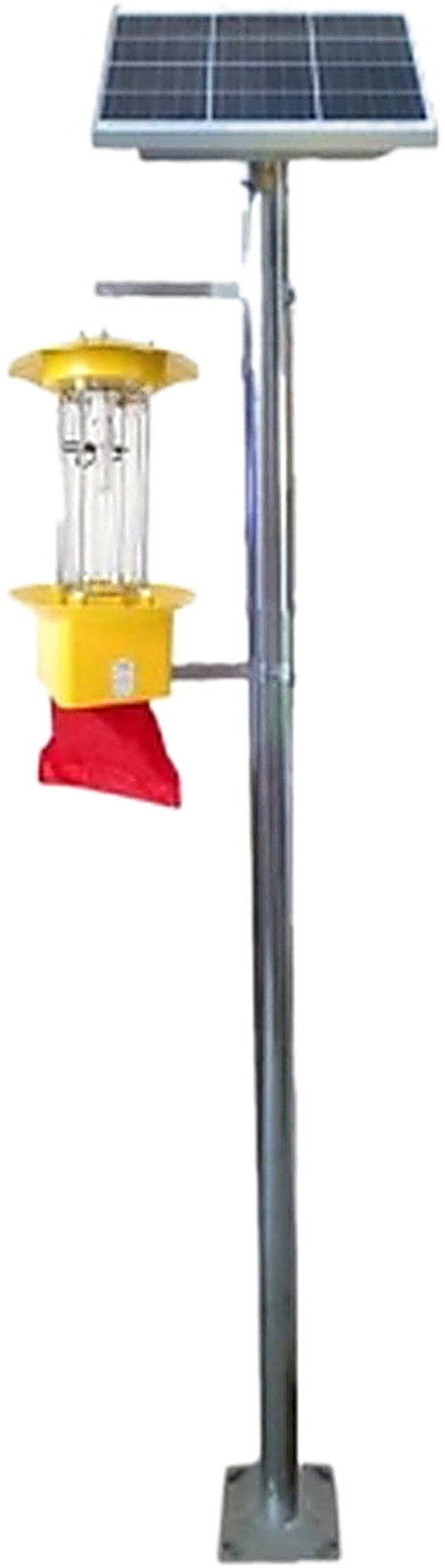
Use this guide alongside the references below to build a complete, defensible program.
For deeper technical and regulatory context, see the FAO Integrated Pest Management and the EPA safe pest control.
Will a solar insect killer replace spraying entirely on sugar beet?
Not usually. It cuts adult pressure so you spray less and later; thresholds and local rules still govern curative action.
How many units per hectare?
Perimeter banding needs fewer units than blanket interior coverage. A typical large field uses a perimeter line plus a few interior hotspots — often 1 unit per 0.5–1 ha of pressured area.
Are sticky or grid better for sugar crops?
Grid units handle the high nocturnal moth and beetle pressure of summer fields; sticky boards suit packhouse and seed-store areas.
Do they work on sugarcane too?
Yes. The same nocturnal-flying pests respond to the same UV attraction; siting and spacing shift with the taller canopy.