
Pineapple is a long-cycle crop, so pest pressure builds quietly for two years before anyone sees damage at harvest. This guide explains where a solar insect killer fits in pineapple plantations, what it can and cannot do against mealybug wilt, and how to build a routine that protects export grade.
Pineapple plantations sit in warm, humid tropics where pest pressure rarely stops. The crop moves through flowering, fruiting, and ratoon regrowth, and each stage draws a different set of night-flying insects. For any manager responsible for agricultural pest control on a pineapple estate, the issue is not one pest but a rolling sequence of them. A solar insect killer offers a chemical-free, always-on tool that fits this continuous cycle better than calendar-based spraying.
Unlike annual row crops, pineapple plantations keep living foliage in the field for 12 to 24 months. That long window lets pest populations build quietly before damage shows. Farm pest management on these estates leans heavily on monitoring and early knockdown, exactly where a well-placed solar bug zapper earns its place.
The biggest threat to pineapple plantations worldwide is the mealybug–wilt complex. Mealybugs feed on the plant, and the viruses they carry cause wilt, stunting, and yield loss. Adult mealybugs and their ant attendants are active above the canopy, and the winged forms disperse at night.
Winged adult females move from infected to healthy plants, often carried short distances on breezes or on ants that farm them for honeydew. Once a focus of infection forms in a pineapple plantation, it expands outward in a patchy front. Early removal of attractant sources and continuous adult trapping slow that spread.
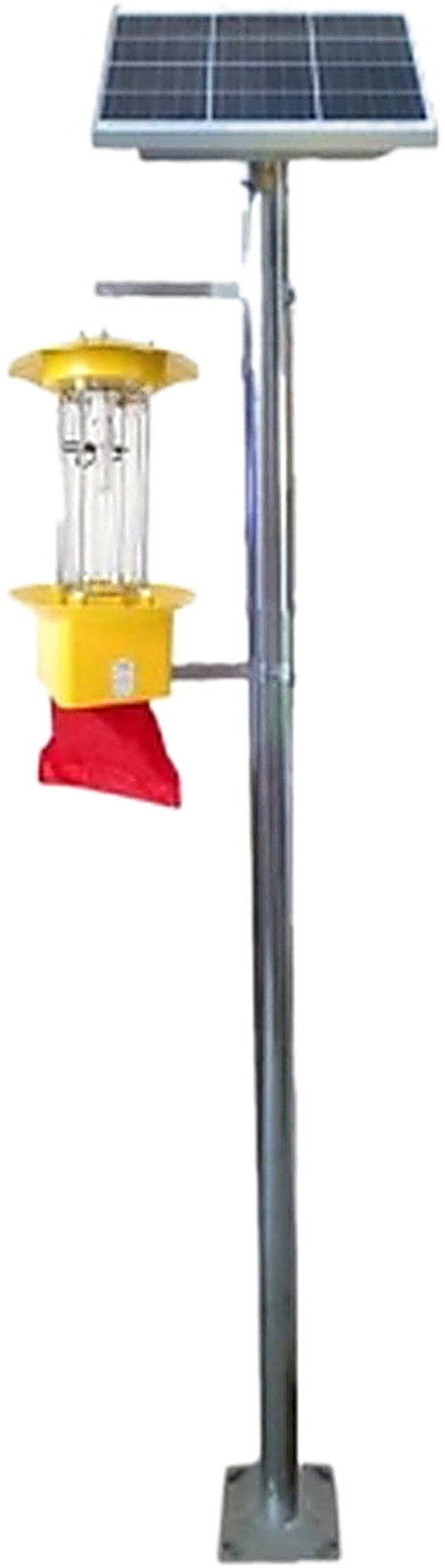
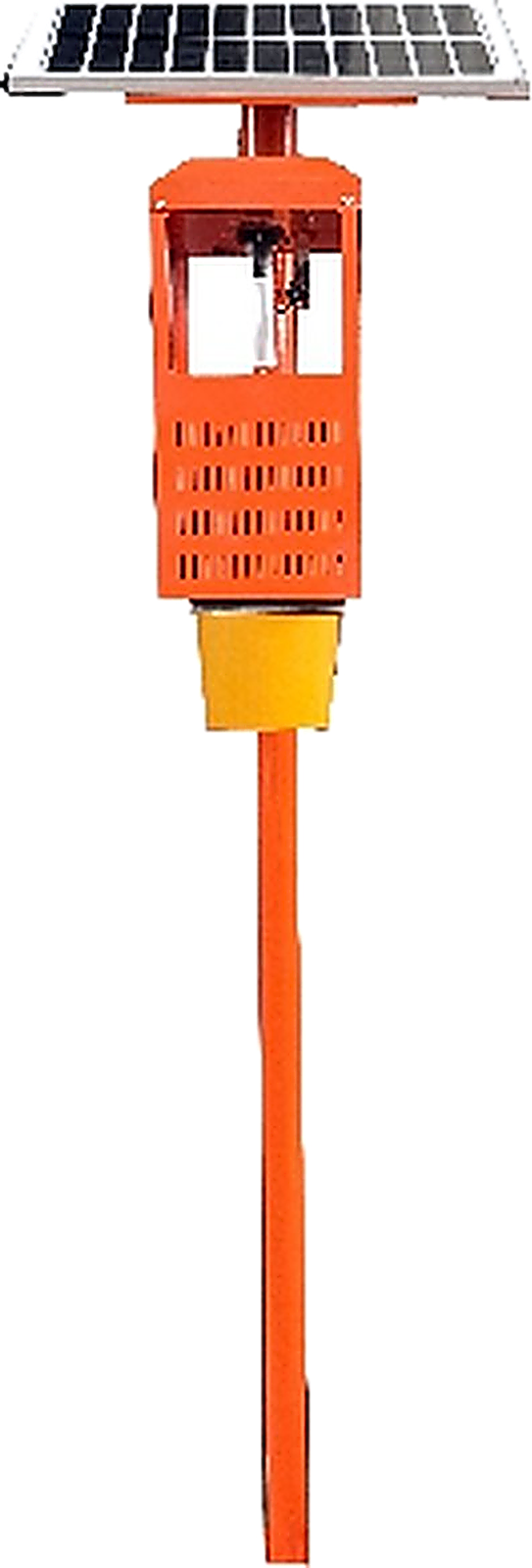
Like many sap-feeding and fruit-damaging insects, the dispersing adults respond to light after dusk. A solar insect killer mounted at row ends exploits this phototaxis, pulling winged adults away from the canopy before they settle and reproduce. Because the trap runs on a solar panel, it needs no grid power across remote estates.
Traditional agricultural pest control on pineapple relies on scheduled insecticide sprays, sometimes every two to three weeks. This controls visible outbreaks but leaves gaps between sprays and can disrupt beneficial predators.
Sprays are weather-dependent, labour-intensive, and leave residue concerns for export fruit. Buyers in the EU, Japan, and North America enforce strict maximum residue limits, and a single off-label application can jeopardise a shipment. A solar bug zapper does not replace agronomy, but it reduces reliance on emergency sprays by keeping adult populations low.
The trap is a physical knockdown tool. It complements—not replaces—sanitation, variety selection, and biological control. On most pineapple plantations, the best result comes from pairing traps at field margins with scouting and threshold-based action. This integrated approach is the core of modern farm pest management.
A practical plan for pineapple plantations starts with mapping. Identify ratoon blocks, nursery areas, and export-grade rows that need the tightest protection, then deploy traps there first.
Mount a solar insect killer on a 2 to 2.5 metre pole at row ends and along windward edges where flying adults enter. Spacing of 30 to 50 metres works for dense canopy; wider spacing suits young plantings. Keep the light clear of competing yard lighting.
Empty and count the catch tray weekly. A rising mealybug or thrips count is an early warning that triggers scouting, not automatic spraying. Over a season, this data turns farm pest management from guesswork into a documented, export-defensible programme.
Nursery and ratoon suckers are the entry point for mealybug wilt, so they deserve the tightest protection. Place a solar bug zapper close to nursery rows where winged adults first appear, and inspect suckers weekly. Early interception pays back across the whole ratoon cycle.
Ants farm mealybugs for honeydew and shield them from predators. Part of farm pest management is breaking ant trails near the trap line, which makes the solar insect killer far more effective at removing the winged dispersers.
Pineapple is a high-value export crop, and residue-free fruit commands premium prices. Agricultural pest control that leans on physical traps reduces the chemical load on the fruit surface and the surrounding soil. Many certifications now ask for a written pest-management record; trap logs from a solar bug zapper network supply exactly that evidence.


Use this guide alongside the references below to build a complete, defensible programme.
For deeper technical and regulatory context, see the FAO Integrated Pest Management and the EPA safe pest control.
They target the winged adult stage that spreads the wilt virus, not crawlers or rooted colonies. Used with sanitation and ant control, they slow field spread across pineapple plantations.
No. It is one layer of integrated agricultural pest control. Severe outbreaks still need labelled products, but traps lower spray frequency and residue risk.
For mature blocks, plan roughly one solar insect killer per 0.3 to 0.5 hectare, concentrated on margins and ratoon blocks, then adjust using catch counts.
Yes. The wind-suction design catches insects without high-voltage grids, making it suitable near irrigation and worker paths common on these estates.
Yes. Weekly catch logs document your farm pest management effort and help answer residue-conscious buyer questions about the block.