
Growers comparing tools for agricultural pest control often ask a simple question: should I hang sticky yellow traps or install a solar insect killer? Both target flying insects, but they work differently, cost differently, and fit different parts of a farm pest management plan. This guide breaks down the real trade-offs so you can choose—or combine—them wisely.
Yellow sticky cards exploit the natural attraction of many insects to the color yellow. Coated with adhesive, they catch whiteflies, aphids, fungus gnats, and thrips on contact. They are passive, cheap, and widely used for monitoring.
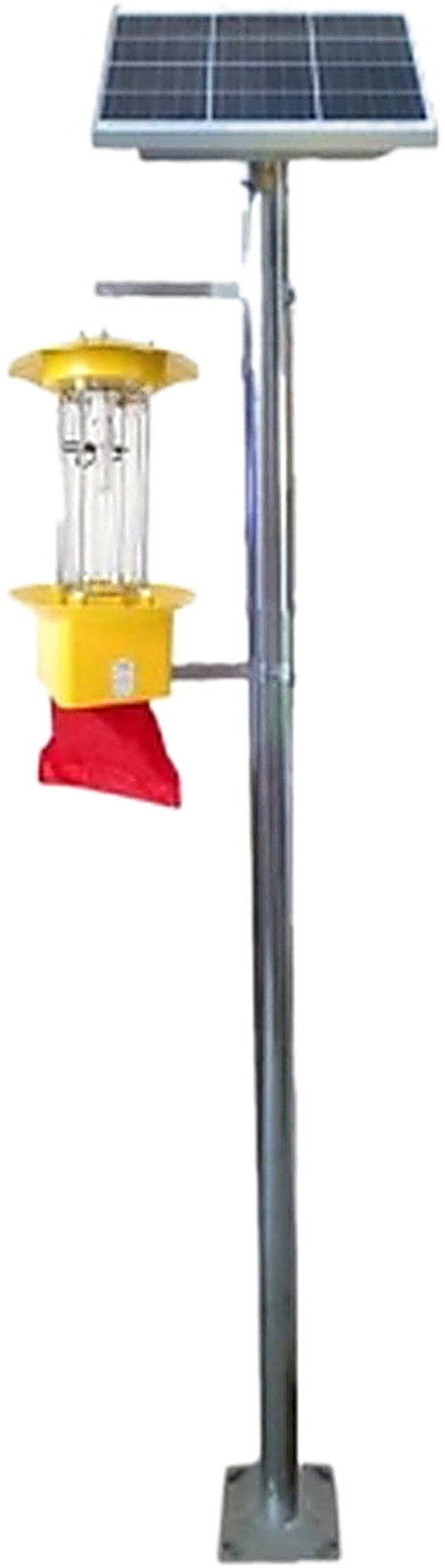
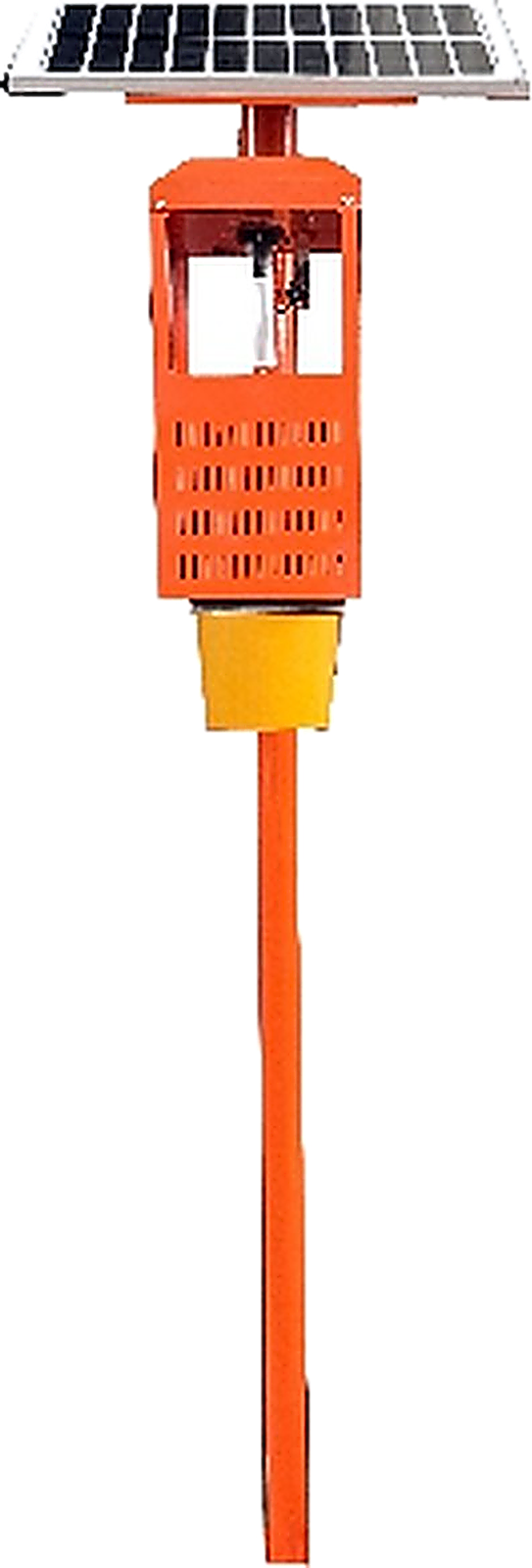
A solar bug zapper uses a UV or LED light to attract nocturnal fliers, then captures them with a fan (wind-suction) or an electrified grid. Because it runs on stored solar energy, it operates automatically from dusk to dawn with no grid connection.
The biggest difference is purpose. Sticky yellow traps are excellent for monitoring—counting pest pressure and catching early infestations. But their catch volume is limited by card size and adhesive area. A solar insect killer is built for control, pulling down large numbers of adults nightly across a wider radius.
Cards must be replaced every 1–2 weeks, and someone must walk every block to swap and count them. In large fields this is steady labor. Adhesive also loses tack in heat and dust.
A solar insect killer needs a monthly panel wipe and a tray empty every 7–10 days. There are no consumables to reorder. Over a season, the labor curve flattens while trap cards keep demanding attention.
Neither tool adds chemistry to the crop, which is why both fit organic and residue-free programs. Sticky yellow traps leave no residue but clutter the canopy with plastic cards. A solar bug zapper leaves no residue either and keeps the field cleaner for harvest and packout audits.
Sticky cards look cheap per unit, but the recurring cost of cards, labor, and disposal adds up across a season and multiple blocks. A solar insect killer has a higher upfront price but near-zero running cost, often paying back within one to two seasons on reduced spray and labor alone.
Smart farm pest management rarely picks one. A common pattern:
This combination turns monitoring into action and keeps chemical use minimal.
Growers new to both tools make predictable errors. The first is using sticky yellow traps as a control method: they are monitors, and swapping a full card does nothing to reduce the next generation. The second is installing a solar insect killer too high or too far from the crop, which wastes its attraction radius. The third is ignoring the tray: a full collection chamber stops the fan and silently kills performance. Treat the two tools as a system—scout with cards, suppress with light—and both will do their jobs without overlapping or conflicting.


Use this guide alongside the references below to build a complete, defensible program.
For deeper technical and regulatory context, see the FAO Integrated Pest Management and the EPA safe pest control.
Not for control. They are superb for monitoring but catch limited volume. A solar bug zapper is designed to reduce adult populations nightly across a wider area.
They capture a range of nocturnal fliers and add no chemical residue, so they preserve predator communities that sprays would otherwise harm. Pairing with border habitat further supports beneficials.
Sticky cards have low upfront cost but recurring labor and consumable expense. A solar insect killer costs more up front but runs almost free, often paying back within one to two seasons.
Monitoring and control solve different problems. Using sticky yellow traps for scouting and a solar unit for suppression gives the clearest, lowest-residue result.
Sticky yellow traps win for cheap, effective monitoring; the solar insect killer wins for scalable, residue-free control. The smartest agricultural pest control programs use sticky yellow traps to scout and a solar bug zapper to suppress, keeping chemical use low and yields clean.