
Every grower eventually asks the same question at the start of a season: should I keep burning mosquito coils around the field, or invest in a solar insect killer? Both promise fewer biting insects and less damage, but they work on completely different principles. Understanding the difference is the first step toward a reliable agricultural pest control plan.
Mosquito coils, citronella candles and repellent sticks release smoke or volatile oils that create a thin, drifting cloud of scent. The goal is simple: confuse or repel adult insects so they land somewhere else. A single coil may cover a small patio or a few square meters near where people sit. They are cheap, portable and familiar.
The catch is that repulsion is temporary and local. Wind, rain and open fields dilute the effect within minutes. Mosquito coils do not reduce the adult insect population — they only push it a few meters away, often onto the next row of crops. For a backyard barbecue that may be enough; for a two-hectare orchard it is not.
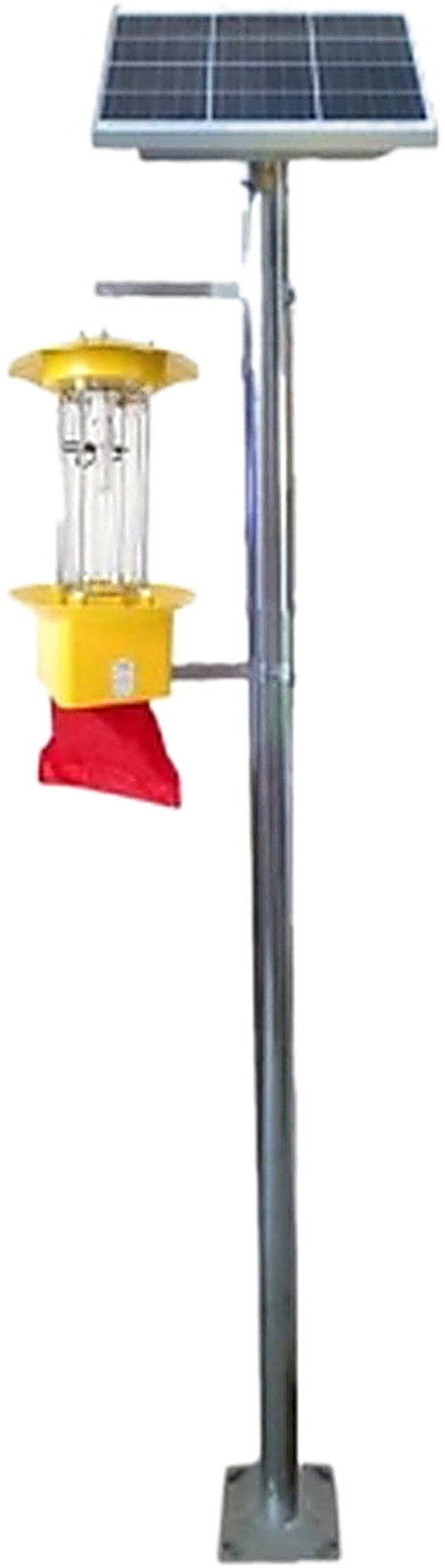
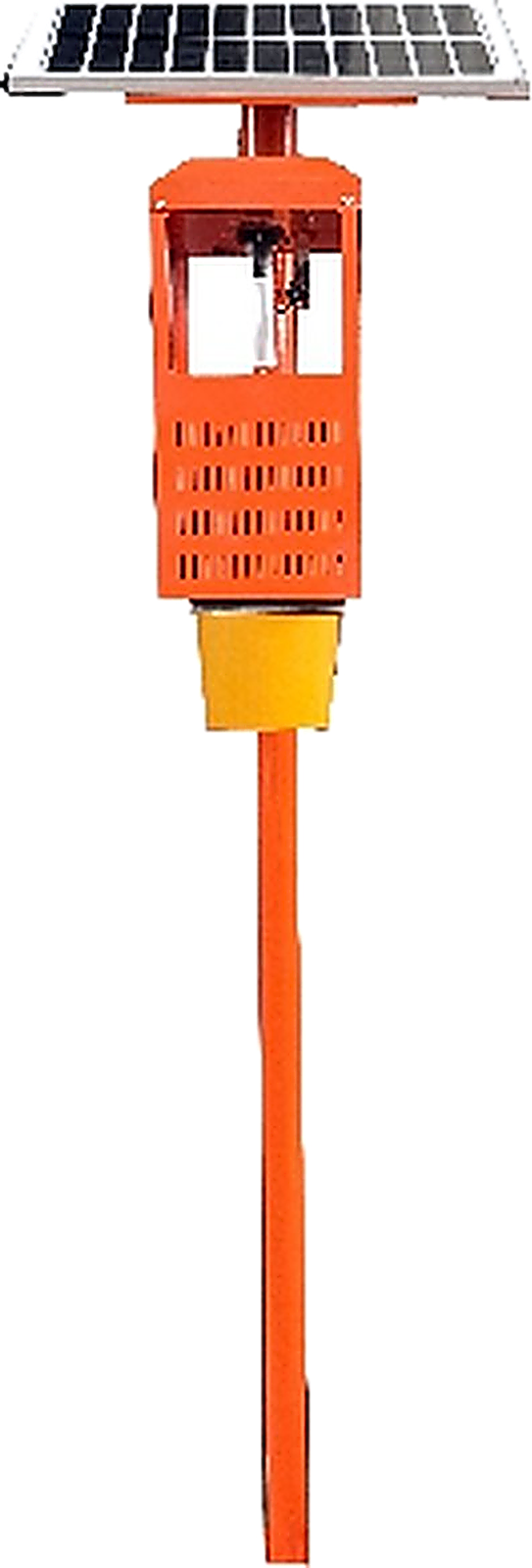
A solar bug zapper built for agriculture uses a photovoltaic panel to charge a battery, then powers an LED lamp tuned to wavelengths that attract flying insects at night. A fan or electrified grid captures them. Because the device runs autonomously and attracts rather than repels, it removes adults from the local population every night it operates.
This distinction matters. Repellents move the problem; a solar insect killer reduces it. Over a season, continuous attraction and capture lowers egg-laying pressure on the crop itself, which is the foundation of real farm pest management.
Citronella candles and mosquito coils are designed for still air and short distances. A field with any breeze simply carries the scent away. A solar insect killer, by contrast, draws insects from a radius of several meters to tens of meters depending on the model and lamp output, and it works through the night without supervision.
Coils and candles need to be lit, replaced and monitored. Forget one evening and the protection stops. A solar bug zapper needs only occasional cleaning and a weekly glance at the battery indicator. For growers managing many plots, that autonomy is a major advantage in any agricultural pest control routine.
The per-unit price of mosquito coils looks tiny — a few cents each. But a typical field season burns dozens or hundreds of them across the area you want to protect, and the cost repeats forever. A solar insect killer has a higher upfront price yet zero fuel cost and a multi-year lifespan, so the per-night cost falls sharply after the first season.
Open combustion produces smoke and ash that can settle on leaves, fruit and nearby soil. For export growers chasing residue-free certification, that residue risk is a real concern. A solar insect killer captures insects physically with no spray, no smoke and no chemical residue — a cleaner fit for farm pest management programs aimed at premium or regulated markets.
This is not an argument to ban mosquito coils entirely. Around worker break areas, packing sheds and patios, a repellent candle is a reasonable comfort measure for people. The mistake is expecting a people-repellent to do the job of crop protection. Use coils where humans gather; use a solar insect killer where crops grow.
If your goal is protecting a few square meters of seating, mosquito coils and citronella are fine. If your goal is lowering insect pressure across a garden, orchard or field, a solar insect killer is the scalable, residue-free and labor-light choice. Many farms keep both: repellents for the crew, attraction traps for the crop.


Use this guide alongside the references below to build a complete, defensible program.
For deeper technical and regulatory context, see the FAO Integrated Pest Management and the EPA safe pest control.
Do mosquito coils kill insects or just repel them? Mostly they repel. The smoke discourages landing but does not meaningfully reduce the adult population, whereas a solar bug zapper captures attracted insects every night.
Can a solar insect killer replace repellents around people? It reduces flying insects in the area, but for direct personal comfort near a seating area, a repellent candle or mosquito coils remain a handy supplement.
Is a solar insect killer safe near food crops? Yes. It works without chemicals or smoke, leaving no residue on fruit or leaves, which supports clean agricultural pest control and export compliance.
Which is cheaper long term? Mosquito coils are cheap per piece but recur forever. A solar insect killer costs more up front and then runs nearly free for years, winning on lifetime cost.
Will wind ruin a solar bug zapper? No. Wind affects repellent scent, but a solar insect killer attracts insects to its own lamp regardless of breeze, making it reliable in open fields.