
Buyers evaluating agricultural pest control options often frame the choice as either a solar insect killer or a biological control program. In practice the two are complementary, not competitors. A light trap removes flying adults around the clock; biocontrol agents suppress the larvae and eggs that traps cannot reach. This guide compares a solar bug zapper with the main biological tools — *Bacillus thuringiensis* (Bt), parasitoids and predatory nematodes — so distributors and growers can build resilient farm pest management without doubling cost or multiplying labour.
Understanding the mechanism is the first step to using both well.
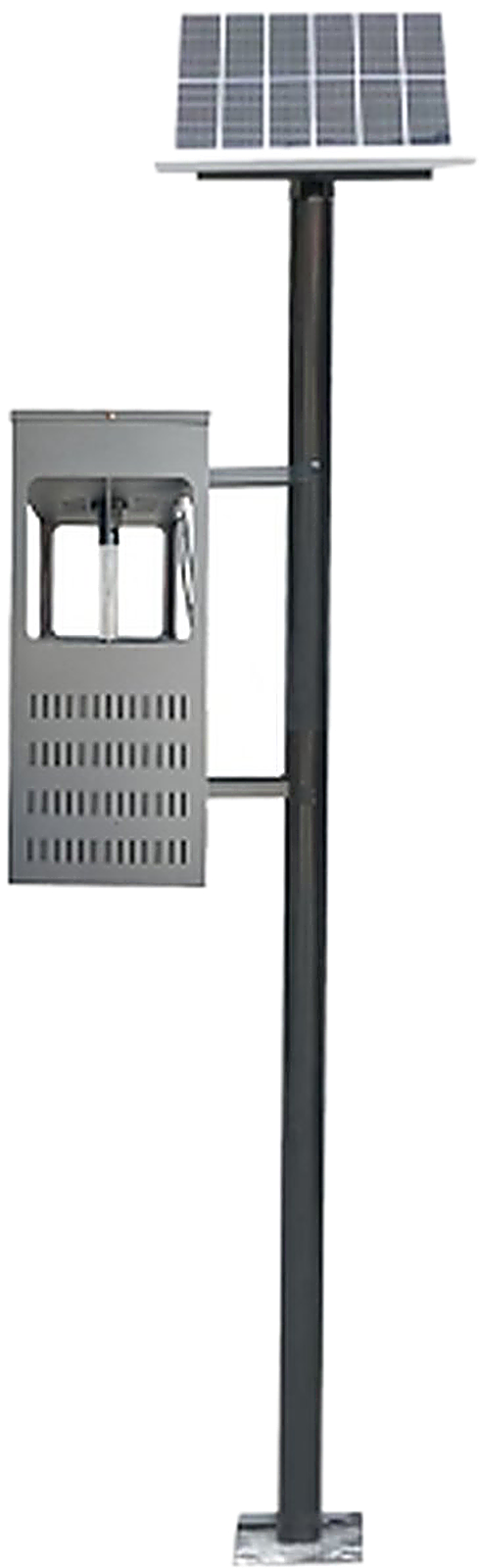
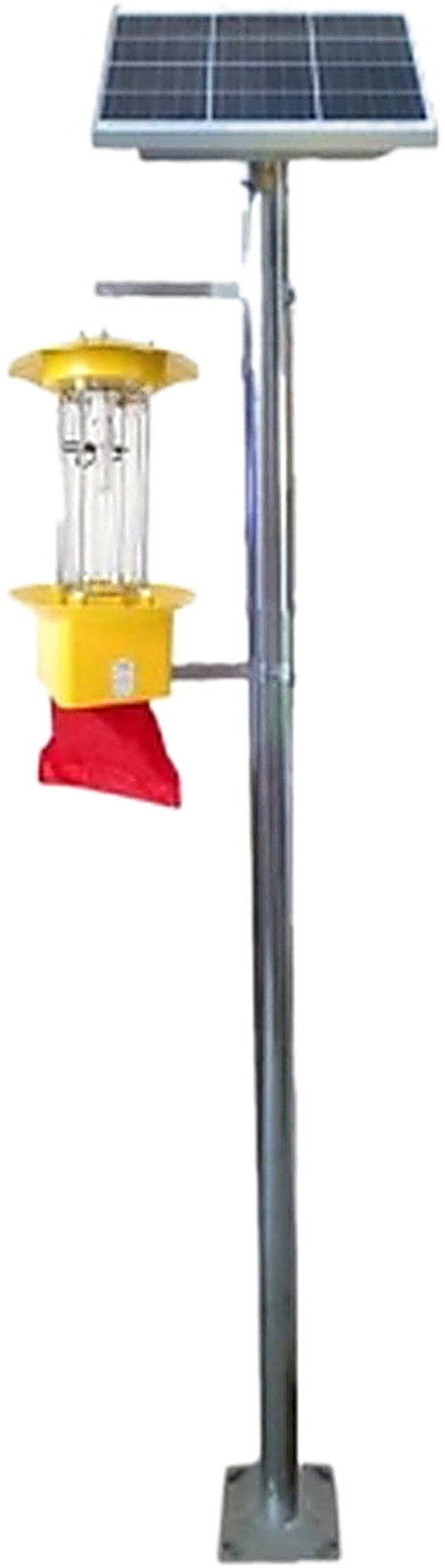
A solar-powered trap uses light (and often an attractant lure) to draw flying adults into a fan-suction or grid chamber, removing them from the breeding population. It acts on the adult stage and runs continuously, powered by the sun, with no recurring chemical input.
Biological control deploys living or microbial agents. *Bacillus thuringiensis* and *B. sphaericus* are bacterial proteins that kill larvae that ingest them. Parasitoids (tiny wasps) and predators (lacewings, ladybirds) suppress eggs and larvae. Entomopathogenic nematodes hunt soil-dwelling larvae. These tools act mostly on immature stages and rely on a living host or susceptible target.
The two methods differ sharply in response time and breadth.
A solar insect killer removes adults immediately — useful when a moth flight peaks or a virus-vectoring aphid moves in. Biologicals act more slowly, building population pressure down over days to weeks as agents establish and multiply. For sudden influxes, trapping gives the faster visible win.
Biocontrols are often narrow: one nematode species targets specific grubs, one parasitoid favours one host. That precision is an advantage for protecting beneficials but a limitation when the pest complex is mixed. A light trap is broader, catching many flying species at once — ideal for monitoring and for general adult reduction.
Operational fit matters as much as biology.
Both approaches score well on food safety compared with broad-spectrum chemistry. Trapping leaves no residue, which suits export and residue-free programs. Biocontrols are similarly clean, though some growers track agent approvals for their market. Because neither relies on the same modes as synthetic insecticides, combining them slows the resistance that plagues pyrethroids and neonicotinoids.
The strongest farm pest management results come from layering, not choosing one.
Use the solar insect killer on field margins and around glasshouses to thin adult flights, then release parasitoids or apply Bt inside the crop when scouting shows larvae present. Traps reduce the immigrant pressure that would otherwise overwhelm the biocontrol agents.
Catch counts from smart traps tell you when a flight starts, so Bt or nematode releases are timed to the vulnerable window instead of a calendar guess. This precision cuts waste and improves control.
The combined model is easiest to see in two common situations.
On cabbage, broccoli and carrot rotations, a solar bug zapper on the windward hedge cuts the adult cabbage root fly and aphid flights that start infestations. Inside the crop, parasitoid banks and Bt sprays handle the larvae that slip through. Growers report cleaner heads and fewer virus incidents from aphid vectors.
Whitefly and sciarid flies enter through vents and doors. Traps placed at those entry points catch adults continuously, while predatory mites and parasitic wasps established inside the canopy mop up juveniles. The trap catch also confirms whether a biocontrol release is working or needs topping up.
Distributors should present the two as a bundled farm pest management offer rather than an either/or. Stock traps with clear IP ratings and spare parts, and partner with biocontrol suppliers for the larval stage. Buyers respond well to a simple decision chart: trap for adults and monitoring, biocontrol for larvae, targeted spray only at threshold.


Use this guide alongside the references below to build a complete, defensible program.
For deeper technical and regulatory context, see the FAO Integrated Pest Management and the EPA safe pest control.
Can I use a solar bug zapper and Bt together? Yes. They target different stages and are fully compatible; trapping reduces adults while Bt suppresses larvae.
Does biological control kill beneficial insects? Targeted agents are generally safe for beneficials, far more so than broad chemicals; light traps catch some non-targets, so siting and species selection matter.
Which is cheaper long term? It depends on crop value and pest pressure. Traps favour low labour and residue-free markets; biocontrols suit specific larval pests where they establish well.
Will trapping alone stop an outbreak? For heavy larval outbreaks, trapping adults helps but usually needs to be paired with larval tools such as Bt or nematodes for full control.
Is this suitable for organic certification? Physical trapping and most approved biocontrols fit organic systems; confirm your certifier’s allowed-input list before use.