
Few pests frustrate growers as reliably as thrips. These tiny, slender insects hide inside flowers and leaf folds, multiply in days, and transmit devastating viruses. Effective thrips control depends on catching adults before they lay eggs — and that is exactly where the solar insect killer earns its place in a modern farm pest management plan.
The two most damaging species in field and greenhouse agriculture are:
Both feed by rasping plant tissue and sucking the exuded fluid, leaving silvery scars and distorted growth. More importantly, they vector TSWV (tomato spotted wilt virus) and INSV (impatiens necrotic spot virus), turning a cosmetic pest into a yield-ending one.
Thrips control is difficult for three reasons:
Because of this, prevention and adult suppression beat reactive spraying — a perfect fit for the solar bug zapper style light-and-suction trap.
Before investing in any control, establish a baseline:
Good agricultural pest control starts with numbers, not guesswork.
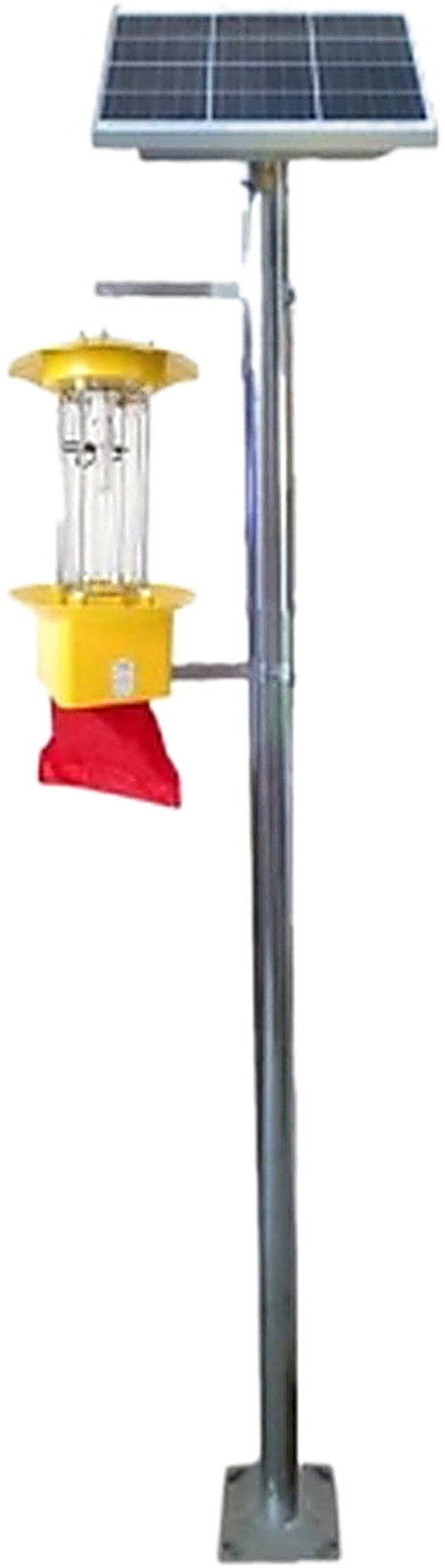
Adult thrips are strongly attracted to certain wavelengths of light, especially UV and blue. A solar insect killer uses a low-power lamp to draw flying adults into a suction chamber, removing them from the breeding population. Key advantages:
For thrips control, place units where adults congregate — field margins, greenhouse vents, and directly above susceptible flowering crops.
Each of these benefits from a solar insect killer positioned to capture the adult flight.
The strongest farm pest management programs combine the trap with living control agents:
Because the solar bug zapper type unit does not broadcast chemicals, it preserves these beneficials instead of wiping them out — a crucial difference from calendar spraying.
Practical guidance for thrips control:
A typical protected-crop house uses one solar insect killer per 200–400 m² of high-value flowering area, tuned after the first season’s data.
Success in thrips control is not just “fewer bugs”. Track:
Farms that pair trapping with scouting usually see the biggest gains in virus suppression and marketable yield.



Use this guide alongside the references below to build a complete, defensible program.
For deeper technical and regulatory context, see the FAO Integrated Pest Management and the EPA safe pest control.
Can a solar insect killer alone eliminate thrips? No single tool eradicates thrips. The solar insect killer suppresses adults and virus spread; pair it with monitoring and beneficial insects for full thrips control.
Why target adults instead of larvae? Larvae hide inside flowers and buds where sprays fail. Removing flying adults before egg-lay is the most efficient leverage point.
Are thrips a problem in greenhouses too? Yes. Greenhouse thrips transmit INSV and TSWV in tomato and pepper, making light-and-suction trapping valuable year-round.
Does a solar bug zapper hurt predatory mites? Light-suction traps catch far fewer beneficials than broadcast insecticides, so they protect rather than disrupt biological control programs.
When should traps start running? Begin at first flower and continue through harvest, since thrips pressure is highest during bloom when virus transmission matters most.
Reliable thrips control comes from catching adults early, protecting beneficials, and avoiding resistance-building sprays. The solar insect killer is a low-labour, residue-free centre of that strategy, making it a smart addition to any agricultural pest control and farm pest management program facing thrips pressure.