
Silvopasture—grazing livestock beneath trees—and broader agroforestry are among the fastest-growing sustainable farming models. They mix pasture, fodder, timber and fruit trees in one system. That diversity is great for soil and income, but it complicates farm pest management: pests move between the tree layer, the grass layer and the animals. A solar insect killer is unusually well suited to these mixed systems, and this article explains why and how to deploy it.
In a monoculture, pests are predictable. In silvopasture, you have three interacting zones. The tree canopy hosts defoliators, borers and fruit flies. The understory pasture hosts armyworms and grasshoppers. The livestock attract horn flies, stable flies and face flies. A single spray program cannot fairly cover all three without harming grazing animals or beneficial insects.
This is exactly the gap a solar bug zapper fills. It is a stationary, chemical-free adult suppressor that works across all three layers simultaneously, day after day, with no operator near the animals. Because it runs on sunlight alone, it keeps working even when a paddock is temporarily empty or the manager is busy elsewhere.
The tree and fodder components of agroforestry carry the highest-value pests. In walnut, pecan and fruit-tree silvopastures, codling moth and various borers emerge as night-flying adults. Light traps placed at the canopy margin catch them on exit and entry flights.
For the pasture itself, armyworm and cutworm moths are strongly phototactic. Suppressing adults before egg-laying protects the very forage the livestock depend on—a direct link between agricultural pest control and animal productivity.
Flies are the silent profit drain in any grazing system. Horn flies can reduce weight gain, and stable flies cause irritation and lower milk and meat output. While traps aimed at crop moths are not a sole fly solution, perimeter solar insect killer units near shade trees, water troughs and loafing areas capture a meaningful share of night-active fly adults and reduce the chemical pour-on burden.
Combined with manure and moisture management, this forms a cleaner, lower-resistance livestock fly control strategy.
Start by identifying where pests enter: wooded edges, water lines, lane trees and neighboring crop fields. Place the first units there rather than spreading them uniformly.
Tree-layer pests need canopy-height traps; pasture pests are caught lower. A mix of pole-mounted and post-mounted units covers both. Most solar insect killer models allow simple height adjustment.
Keep traps out of direct rubbing or bedding zones to avoid damage, and use enclosed-grid or suction designs where curious livestock or poultry are present. This protects both the equipment and the animals.
A mature agroforestry IPM plan layers several tools:
Because the trap needs no grid connection, it fits remote paddocks and rotational grazing cells where power is unavailable.
Mixed agroforestry systems are often in remote or extensive settings where daily pest control labor is expensive. A solar insect killer runs unattended, so the suppression baseline continues through holidays, dry spells and labor shortages. Its sealed, weatherproof housing also stands up to the wind and rain that hit open pasture and woodland edges.
Economically, the model is attractive: one capital purchase covers trees, fodder and livestock zones for years, with no recurring chemical, fuel or mixing labor. For distributors serving regenerative and silvopasture-minded farmers, that combination of resilience and low operating cost is the core sales argument.

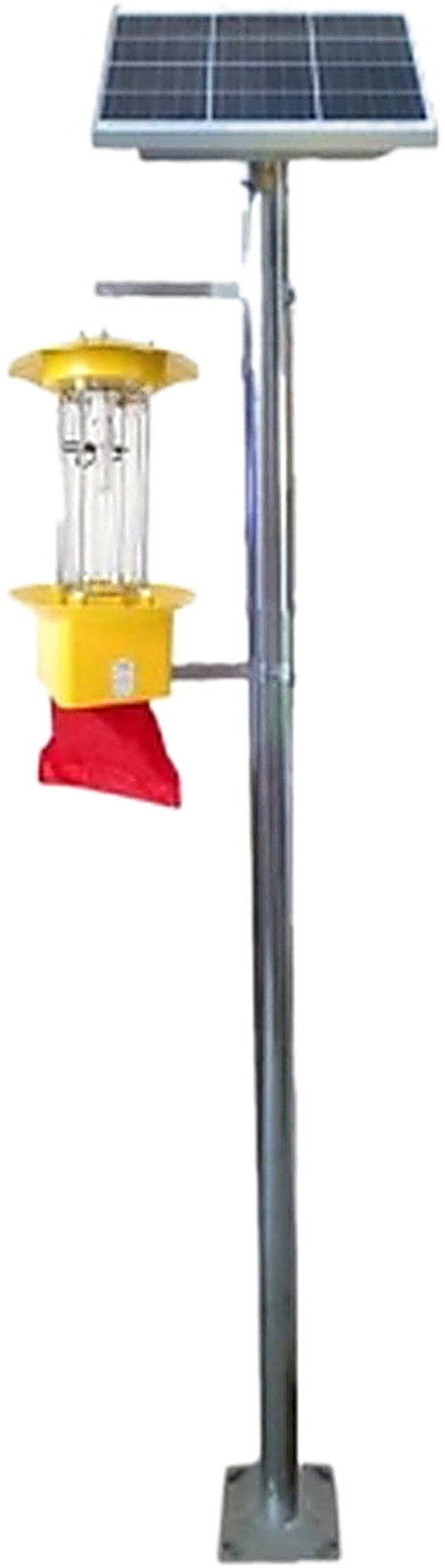


Use this guide alongside the references below to build a complete, defensible program.
For deeper technical and regulatory context, see the FAO Integrated Pest Management and the EPA safe pest control.
Units are positioned at field edges and operate at pest-flight wavelengths, not broad white light. Grazing animals quickly habituate, and placement away from bedding keeps any glow off the resting area.
A single unit captures adults across both layers if mounted at a mid height, but for strong results use canopy-height units in the tree rows and lower units in open pasture, linked by perimeter placement.
Physical, non-chemical light trapping is generally accepted in organic systems, though final approval depends on your certifier’s input list. It supports residue-free marketing either way.
Silvopasture and agroforestry reward diversity, and a solar insect killer is one of the few pest tools that works across every layer at once. For mixed farms and the distributors who supply them, it delivers a chemical-free, grid-free foundation for farm pest management that protects trees, fodder and livestock together.