
Panel tilt is the cheapest fix for a solar insect killer that stops at midnight. The panel spends its day at the wrong angle, a tree crosses it after lunch, and the stored energy never covers the full flight window. Getting the angle right at installation protects nightly runtime and keeps agricultural pest control consistent through the season.
The photovoltaic panel is the only energy source on a stand-alone trap. Its output depends on how directly it faces the sun and how many hours it stays unshaded. A poorly aimed module can lose a large share of daily charge even on a clear day, leaving the battery low before insects become active.
That shortfall shows up at the worst time. Dusk arrives, the lamp comes on, and the voltage drops just as the first moths fly. Correct panel tilt spreads the charge across the whole day instead of concentrating it into a brief morning peak.
As a general rule, a fixed panel is aimed toward the equator and tilted near the site latitude, with a steeper angle for winter-weighted operation and a shallower angle for summer. Farms that run traps mainly from late spring to early autumn often favour the shallower setting because the sun sits higher and nights are shorter.
Not every site allows a perfect angle. Flat roofs, low barns, and existing poles force compromises. In those cases, a small increase in panel area or a slightly larger battery is easier than fighting the mounting structure. The goal is a workable mounting angle that can be reached and cleaned, not a theoretical optimum nobody can maintain.
Walk the site at three times of day before drilling holes. Note where tree crowns, silos, and tall crop rows cross the planned panel position. Remember that a young orchard will shade far more in five years than it does at planting, so leave room for growth.
Winter sun is low and casts long shadows across fields that look open in June. Even in summer-focused programs, early-season monitoring can be compromised by shade from bare branches and neighbouring structures. A mounting angle that sheds dust and leaves also reduces the cleaning burden after storms.
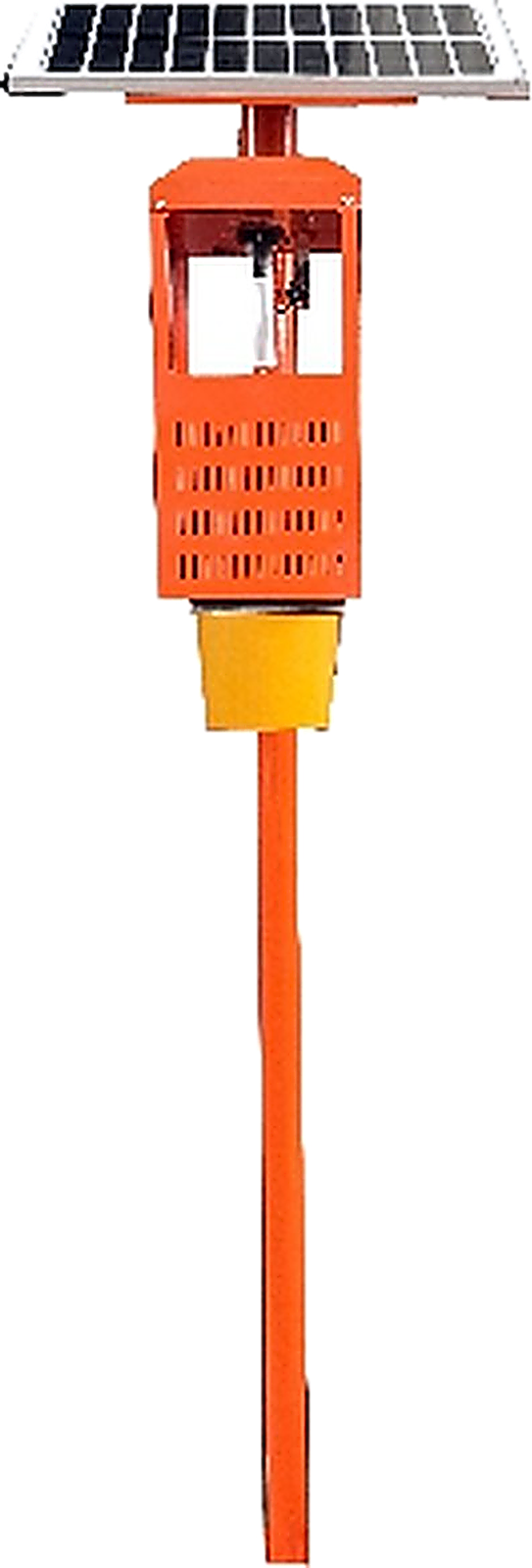
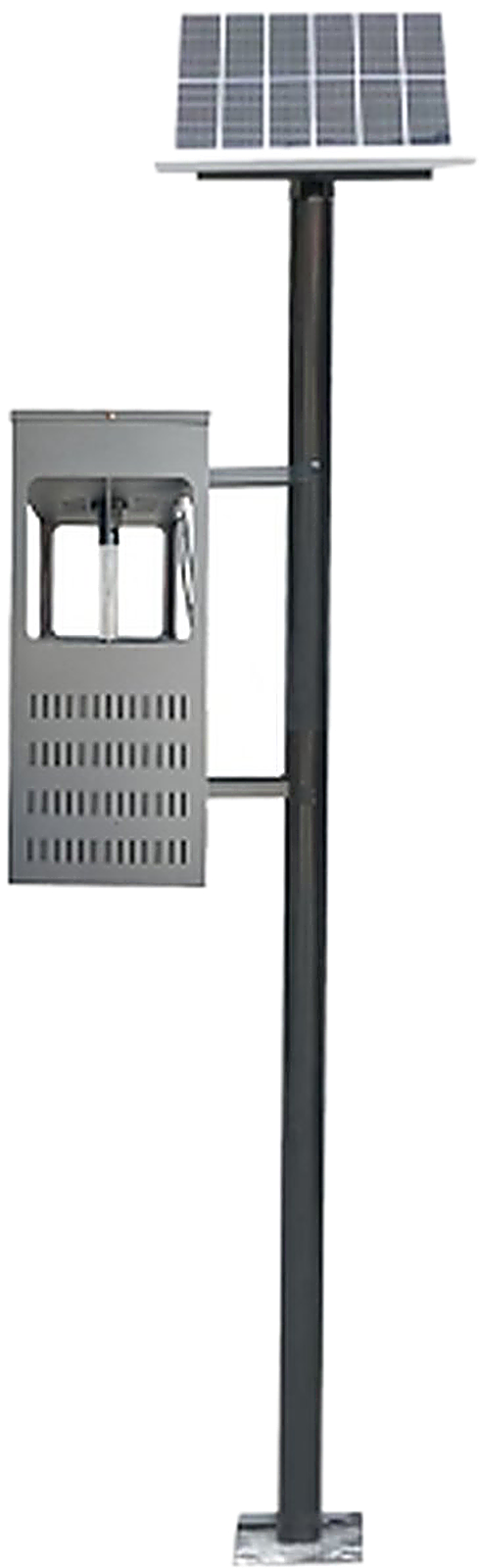
Panel aim and lamp height solve different problems. The panel needs light; the lamp needs a clear attraction radius. Raise the head above the crop canopy and keep the panel on the sun-facing side of the pole so the lamp housing does not cast a shadow across it.
Avoid placing two traps so close that one panel shades the other. Check the cabinet and cable routing as well: a loose door or a dangling lead can throw a narrow shadow across a cell string for hours.
It is tempting to solve short runtime by specifying a larger battery. That works for a cloudy week, not for a whole season. A bigger store still needs the same daily input, and a panel that never reaches full charge will operate in a chronic low state, shortening cell life.
A well-chosen aim improves every night without adding cost to each replacement cycle. Treat battery sizing and panel geometry as a pair: first secure the daily harvest, then size the store for the number of cloudy days you want to ride through.
A smartphone-level inclinometer is enough for the initial setting. After installation, check the charge current on a clear day at noon and compare it with the supplier specification. A large gap points to shade, dirt, or a wiring problem rather than a faulty panel.
Once a month, clean dust and pollen from the glass and recheck the mounting bolts. Wind and thermal cycling slowly rotate brackets, and a panel that drifted ten degrees is easy to correct during a routine visit. Keep a short log of runtime hours and catch counts: a sudden drop after a storm often traces back to a shifted panel tilt.
The first mistake is copying a setting from another farm without considering latitude and season. The second is aiming the panel toward the farmyard because that is where the installer parked, rather than toward the sun. The third is leaving the module in permanent shade to make the pole look tidy. The fourth is setting the angle once and never revisiting it after a storm.
Each of these errors reduces charge quietly. The trap still switches on, so nobody investigates until pest counts rise in the crop.


Use this guide alongside the references below to build a complete, defensible programme.
For deeper technical and regulatory context, see the FAO Integrated Pest Management and the EPA safe pest control.
A common starting point is the site latitude, adjusted steeper for spring and autumn use and shallower for high-summer operation. Local shading, pole height, and the length of the trapping season all justify small deviations from that baseline.
Yes, if the bracket is designed for it. Two or three settings a year take minutes and can noticeably improve charge in early spring and late autumn. Farms with fixed mounts should choose a compromise angle at installation.
Even a narrow shadow across part of the panel can cut output because cells are connected in series. Aim for full sun from late morning to mid-afternoon, and revisit the site as nearby trees grow.
Yes. A steeper panel catches more wind and transfers more force to the pole and bolts. In exposed fields, balance the energy gain against structural load and use hardware rated for the site.