
Mass trapping is one of the oldest and most reliable ideas in integrated pest management: deploy enough attractant traps across an area to pull adult pests out of the population faster than they can reproduce. A solar insect killer is a natural fit because it runs unattended, every night, with no power line. This guide shows how to turn individual units into a coordinated agricultural pest control programme that pays back over a season.
Unlike perimeter trapping, which guards a boundary, this approach floods the whole block with capture points. The goal is suppression, not exclusion. For a solar insect killer that means spacing units close enough that few adults escape the cumulative attraction radius. Done well, it lowers the regional adult count rather than the damage on one row.
Start from the lamp’s effective attraction radius, then overlap it. On open farmland a solar bug zapper every 0.3 to 0.8 hectare often works; in tall crops or orchards, tighten the spacing. The point of mass trapping is redundancy, because gaps let pests breed and reinfest the cleared zones.
Hang units at the flight height of your target. For low-lying vegetable pests that may be near the crop; for orchard moths, at canopy mid-height. A solar insect killer on a pole is easy to reposition as the season and crop change, so the grid stays matched to the pest.
A solar insect killer already lures with light. Adding species-specific dispensers — pheromone or kairomone, placed near the lamp — sharpens the catch toward your real target. This lure and kill approach makes the programme efficient: more of the right insect, less off-target catch, better farm pest management and a cleaner residue profile for export buyers.
Every trap is also a sensor. Counting captures per solar bug zapper each week builds a flight-intensity curve. That curve tells you when the next generation peaks, so sprays — if needed — land on the right night. The programme therefore doubles as an early-warning system for the wider agricultural pest control plan, not just a kill mechanism.
Trapping works best when neighbours join. A single farm can suppress its own adults, but a whole district trapping together prevents reinfestation from untreated blocks. Cooperative purchasing of the same solar insect killer model also cuts cost and simplifies spare parts, which makes the programme affordable for smallholders working adjacent plots.
The economics are straightforward. Each solar bug zapper has a fixed upfront cost and near-zero running cost. A coordinated programme cuts spray rounds, labour and downgraded fruit. On a per-hectare basis it usually pays back within one to three seasons — faster where export residue rules make every spray round expensive and every downgrade painful.
Ponds, ditches and bloom margins attract both pests and beneficials. Place a solar insect killer to favour the pest flight path while keeping a respectful distance from water and from hives. Good siting protects lure and kill efficiency without creating a nuisance, and it keeps your farm pest management plan neighbour-friendly.
Pest communities shift as crops and weather change. Rotate dispensers — or switch the lamp wavelength — to track the dominant species each month. A solar insect killer with a static setup catches less as the mix changes; a programme that rotates lures stays relevant from planting to harvest.
Log, for each solar bug zapper: date, weather, weekly catch count, lure type and any damage score. Over a season these rows reveal your local flight calendar. That record is the difference between a hopeful gesture and a measured agricultural pest control tactic you can defend to an agronomist or a buyer.
Start small: a single block, one season, one clear target pest. Prove the catch curve and the payback, then replicate the exact mass trapping layout block by block across the farm. Because a solar insect killer needs no grid power, scaling is mostly a logistics exercise — more units, the same model, the same record template — rather than new infrastructure.
Too-wide spacing, wrong height and ignoring the flight curve all blunt the result. So does treating the trap as a one-time purchase instead of a managed programme. A solar insect killer is durable, but the layout, lure rotation and counts need a light monthly review to keep delivering.


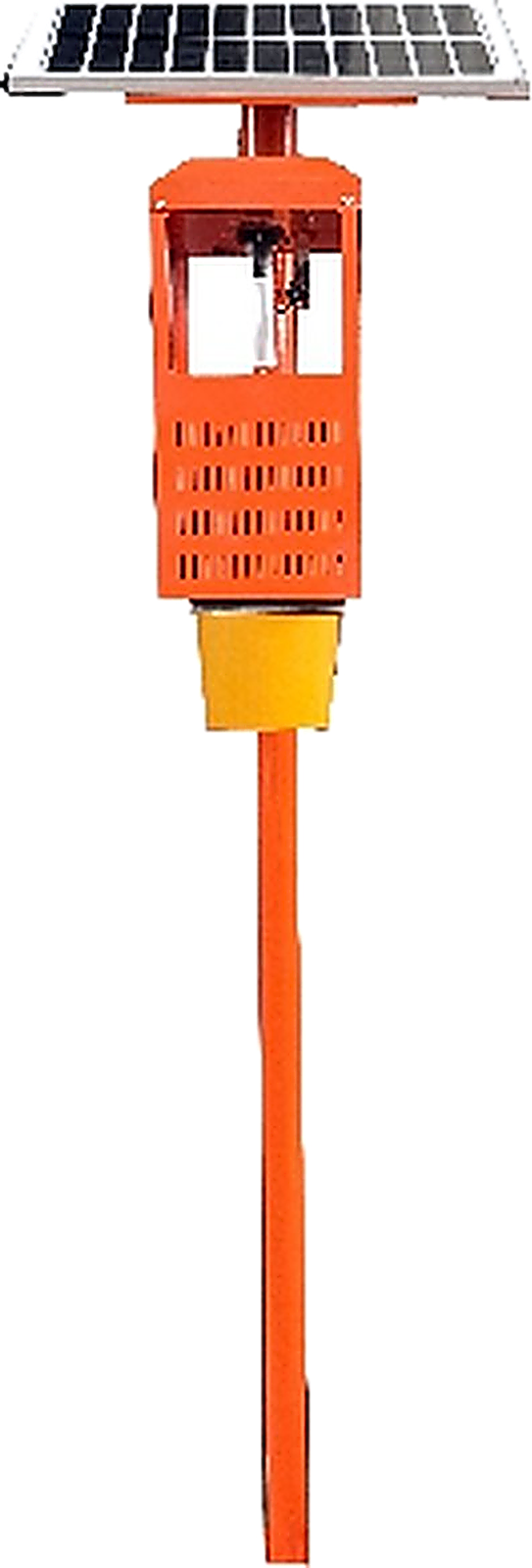

Use this guide alongside the references below to build a complete, defensible programme.
For deeper technical and regulatory context, see the FAO Integrated Pest Management and the EPA safe pest control.
Is mass trapping the same as a few traps at the edge?
No. It floods the whole area with overlapping capture points, while edge traps only guard a boundary.
Do I still need pesticides?
Often fewer. The programme handles the adult stage; you may need targeted sprays only when monitoring shows a spike.
How many solar bug zappers per hectare?
Typically one solar insect killer per 0.3 to 0.8 hectare, tightened for tall crops or strong fliers.
Can lures improve the catch?
Yes. Pheromone or kairomone dispensers near the lamp turn a plain solar bug zapper into a precise lure and kill station.
Does it help neighbours too?
Yes. Coordinated programmes across farms prevent reinfestation and lower cost through shared procurement.