
A solar insect killer lives its whole life outdoors, on a tall metal pole, in the open, often in the thunderstorm belts of the tropics and subtropics. That is about the worst place imaginable for sensitive electronics. Yet most field failures are not design — they are protection gaps. Proper lightning surge protection is what separates a unit that runs for five seasons from one that dies in the first storm.
Three factors stack against the trap. The pole is the tallest object in the field, inviting a direct or nearby strike. The long solar cable and the metal housing act as antennas that pick up induced voltage from a strike hundreds of metres away. And the battery and LED driver are exactly the components that hate voltage spikes. Without deliberate lightning surge protection, a single event can cook the charge controller and the light array at once.
Understanding what actually breaks tells you what to protect.
A complete design addresses all three.
The workhorse of lightning surge protection is the metal-oxide varistor, or MOV. Placed across the input from the panel and across the battery bus, an MOV clamps voltage spikes: it stays open at normal voltage and shunts to ground when the line exceeds its rating. For faster, lower-energy transients, a transient-voltage-suppressor (TVS) diode sits closer to the controller chip, catching what the MOV is too slow to stop.
Layering matters. The MOV handles the bulk energy; the TVS cleans up the residue before it reaches the microcontroller. A well-designed solar bug zapper controller therefore shows both, plus a replaceable fuse on the panel line so a spent MOV fails safe instead of taking the board.
Electronics protection is only half the story. The pole itself must be part of the plan. A driven ground rod at the base, bonded to the pole and to the enclosure’s earth point with a thick, corrosion-resistant conductor, gives a strike a low-resistance path to soil. The enclosure, the pole and the mounting plate should all be bonded together so there is no voltage difference between them during a surge.
In open agricultural pest control settings — windy headlands, hilltops, rice paddies — a single rod may not suffice; two rods spaced apart, linked by the bonding conductor, drop the resistance further.
Not every hazard is a lightning bolt. A charge controller that never disconnects the panel will overcharge the battery, boiling cells and warping the case. A proper design includes a set-point that cuts panel input at full charge and re-enables it with hysteresis. Reverse-polarity protection — a series diode or a smart controller — stops a miswired installation from instantly destroying the board.
These guards are cheap, but they are the difference between a unit that survives a careless setup and one that does not.
For farm pest management in humid, salty regions, component grade matters as much as circuit design. Use MOVs with a higher joule rating than the datasheet minimum, because tropical storms deliver repeated hits across a season. Choose TVS diodes with a low clamping voltage and fast response. Seal every connector with marine-grade gel; corrosion is the slow murderer of field electronics.
The LED driver deserves its own protected sub-section, since replacing the whole light array because of one unbuffered chip is wasted money.
A protected design still fails if installed carelessly. Before commissioning a solar insect killer, verify:
Following this list turns lightning surge protection from a hope into a specification.
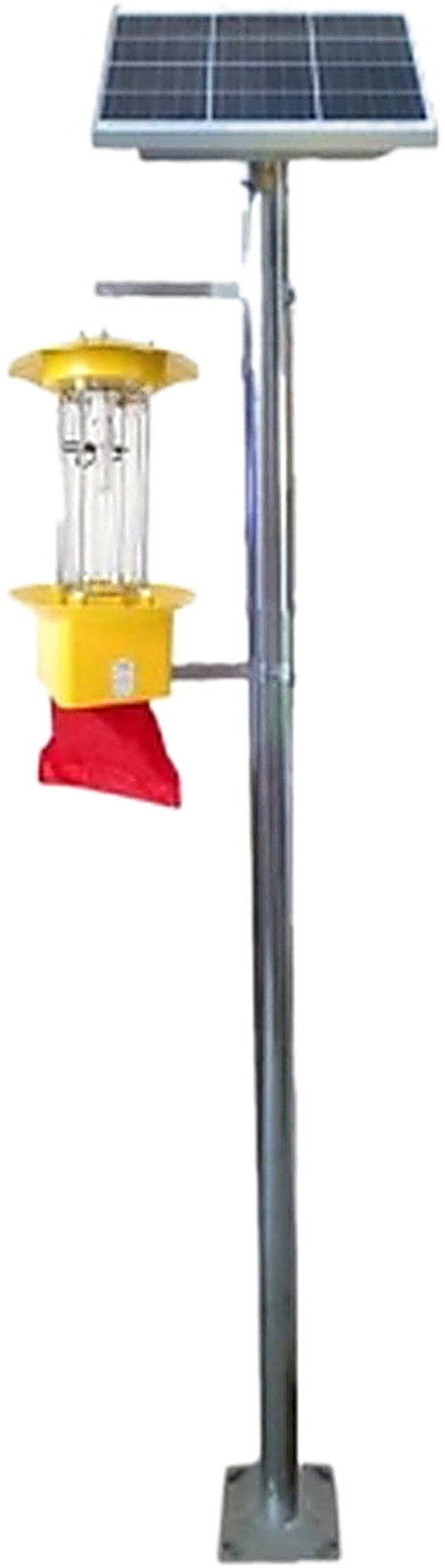


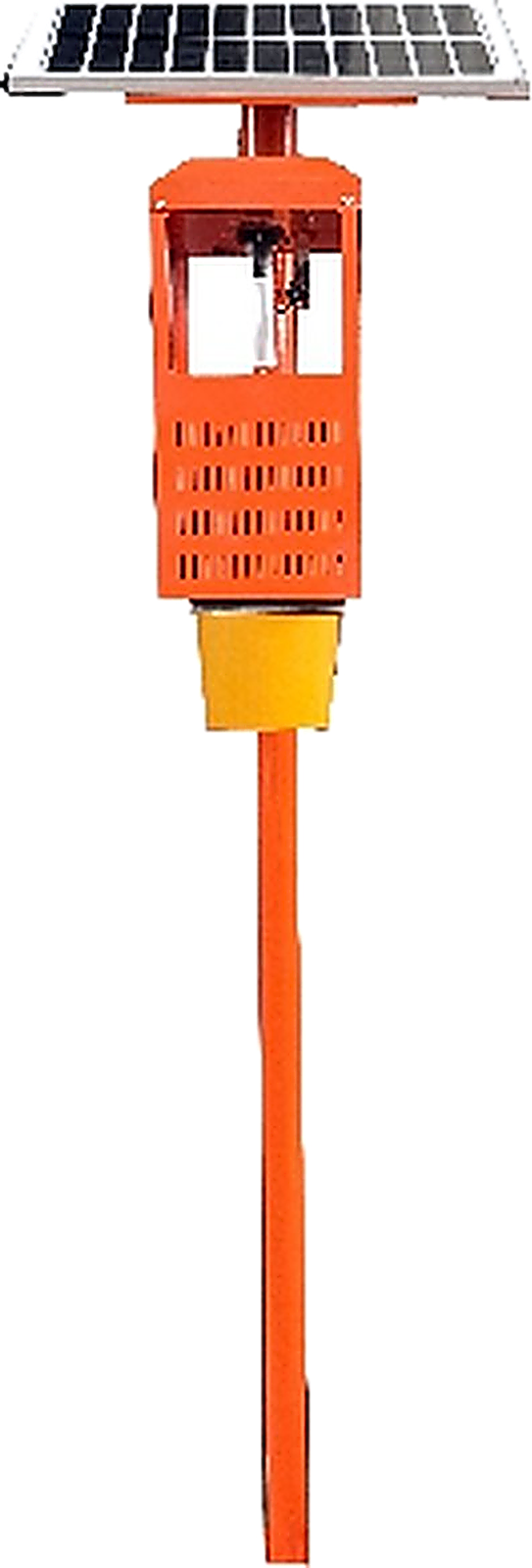
Use this guide alongside the references below to build a complete, defensible program.
For deeper technical and regulatory context, see the FAO Integrated Pest Management and the EPA safe pest control.
Can surge protection survive a direct strike? A direct hit is extreme; grounding and bonding aim to route it safely to earth and give the electronics the best chance. No design guarantees survival of a direct strike, but proper protection handles the far more common nearby surges.
How often should the MOV be checked? Inspect the protector annually and after any major storm. A sacrificed MOV should be replaced rather than left open.
Does protection add much cost? The components are inexpensive — a few dollars in volume — yet they prevent the far larger cost of a fried controller and a replaced light array.
Is grounding needed if the unit is battery only? Yes. The battery and electronics still see induced surges, and the pole remains a strike target. Grounding is non-negotiable for field-grade lightning surge protection.
A solar insect killer is an investment meant to run unattended for years. Treating lightning surge protection as a core part of the design — not an afterthought — is what keeps it running through the storms that would otherwise end it.