
Lightning protection matters because a solar insect killer stands in an open field on a metal pole, often the tallest object for hundreds of metres. That makes agricultural pest control equipment exposed to direct strikes and nearby surges. Lightning protection is not a luxury accessory for these traps; it is the difference between a device that survives a storm season and one that fails the first time a cell passes overhead.
This guide sets out a practical lightning protection plan for a solar bug zapper: how a strike path forms, what a grounding system must do, and the steps to install and inspect one. It is written for farm managers and installers who want reliable farm pest management without electrical guesswork.
A direct strike sends a large current down the pole and through the battery and control board. A nearby strike is more common and still damaging: it induces a surge in the panel cable and the grid wiring. Both paths can destroy electronics even when the trap itself is untouched. Lightning protection addresses the strike path and the induced surge together.
Isolation raises risk. A single pole above an open field is a natural attachment point, and long cable runs act as antennas for induced voltage. Proper lightning protection gives that energy a controlled route to earth instead of letting it find its own way through the device.
An air terminal, or rod, sits above the trap and offers the strike a preferred attachment point. A heavy-gauge down conductor carries current from the terminal to the ground electrode. The route should be short and straight; sharp bends increase impedance and reduce effectiveness.
A grounding rod driven into moist soil connects the system to earth. All metal parts of the solar insect killer, the pole and any nearby frames should be bonded to the same electrode. Bonding keeps every surface at the same potential, which protects both equipment and people.
A surge protection device on the low-voltage line clamps voltage spikes before they reach the battery and controller. Pairing a surge device with a solid grounding system gives complete lightning protection: the rod handles the big strike, the surge unit handles the induced spike.
Note the height of the trap relative to trees, buildings and other poles. Open, elevated sites need a full air terminal and rod system; sheltered sites may need only bonding and surge protection. Record the assessment as part of the farm pest management file.
Use a copper-bonded rod of adequate length and drive it deep enough to reach soil that stays moist. In sandy or rocky ground, add multiple rods or a ground-enhancing compound. Test continuity after installation.
Connect the pole, housing, panel frame and any fence or gate within reach to the grounding electrode. Use corrosion-resistant clamps. Good bonding is the foundation of a safe earthing system because it removes dangerous potential differences.
Run the conductor by the most direct path to the rod. Avoid loops and tight coils, which raise impedance during a fast strike. Secure the cable with insulated clips and keep it clear of the insect chamber.
Install a surge protection device where the panel and battery cables enter the control box. Choose a unit rated for the system voltage. This step completes lightning protection for induced surges that travel along wires.
Place the battery in a sealed, shaded compartment and keep cables tidy and strain-relieved. Where possible, add a disconnect that allows isolation before a forecast storm. These habits extend service life even when strikes are nearby.
Check the rod connection, conductor clamps and surge indicator after severe weather. Look for scorch marks, loose fittings and damaged insulation. Log each inspection so agricultural pest control equipment stays auditable and safe.

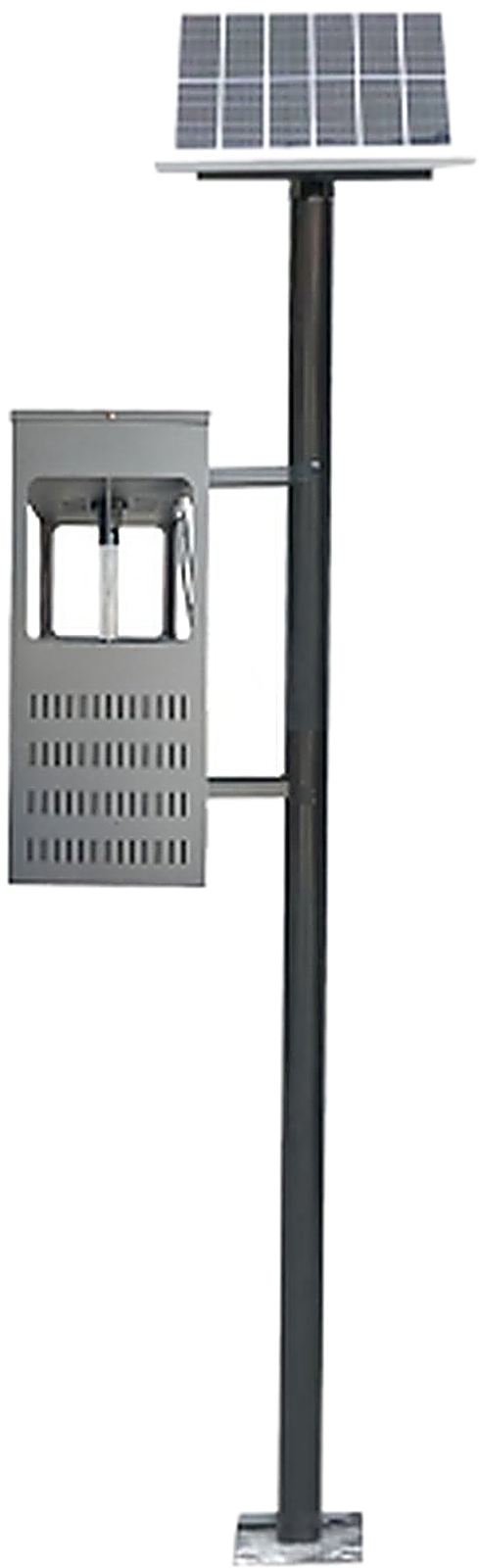
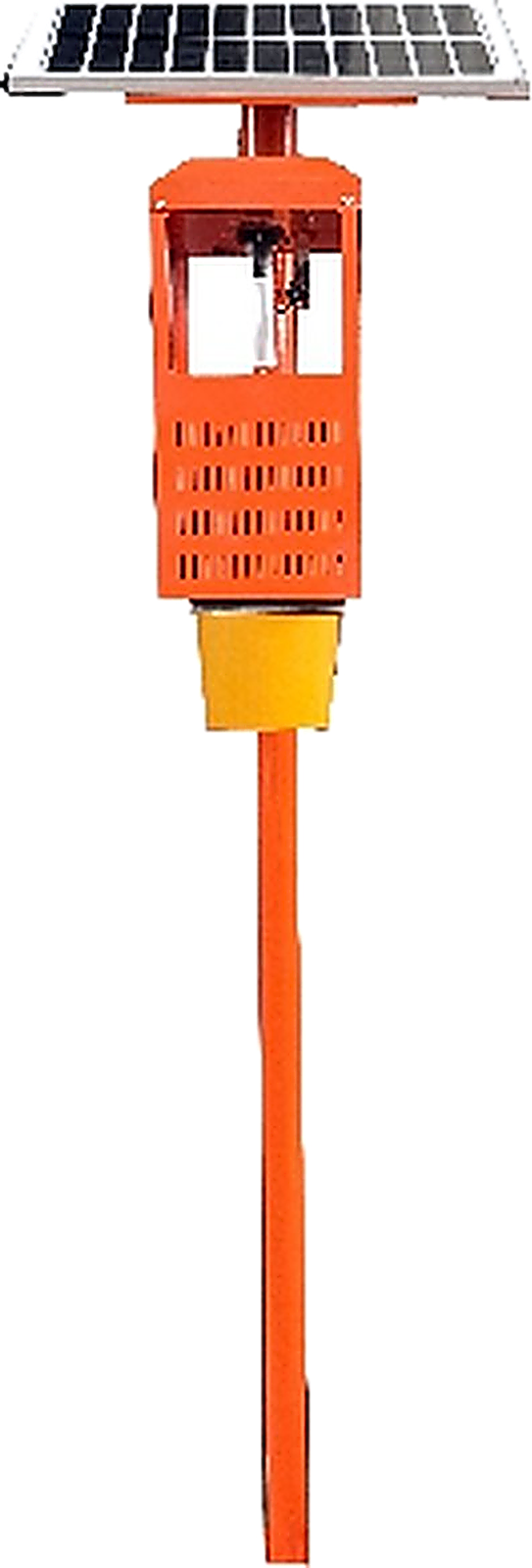
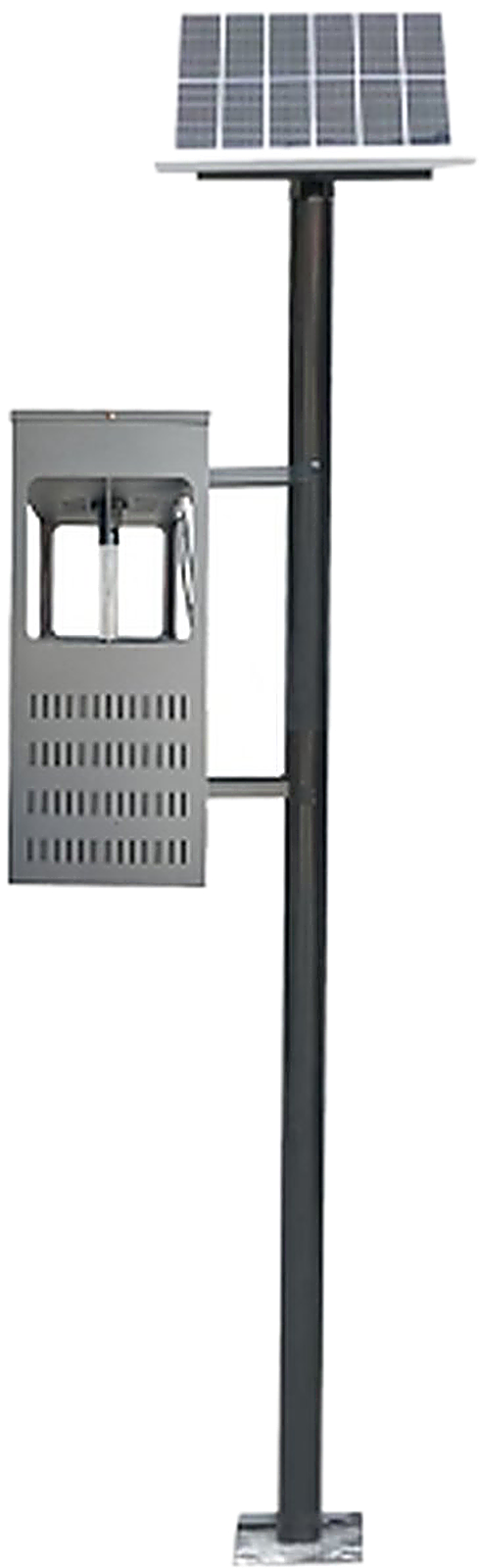
Use this guide alongside the references below to build a complete, defensible programme.
For deeper technical and regulatory context, see the FAO Integrated Pest Management and the EPA safe pest control.
Does a solar bug zapper need lightning protection in a non-storm region? If thunderstorms occur at all, a tall isolated trap is exposed. A basic grounding and bonding setup is cheap insurance.
How deep should the ground rod be driven? Deep enough to reach soil that remains moist through the dry season. In difficult ground, use multiple rods or a grounding enhancer and verify continuity.
Can a surge device replace a ground rod? No. The surge unit clamps voltage on cables, while the rod carries the main current to earth. Lightning protection uses both.
Who should install the system? Anyone comfortable with basic electrical safety can bond and ground a pole, but local code requirements should be checked and complex sites reviewed by a qualified electrician.
How often should the system be inspected? After every severe storm and at least once per season, checking clamps, conductors and surge indicators.