
A solar insect killer grain storage program starts at the bin door, not after weevils have already spread through the lot.
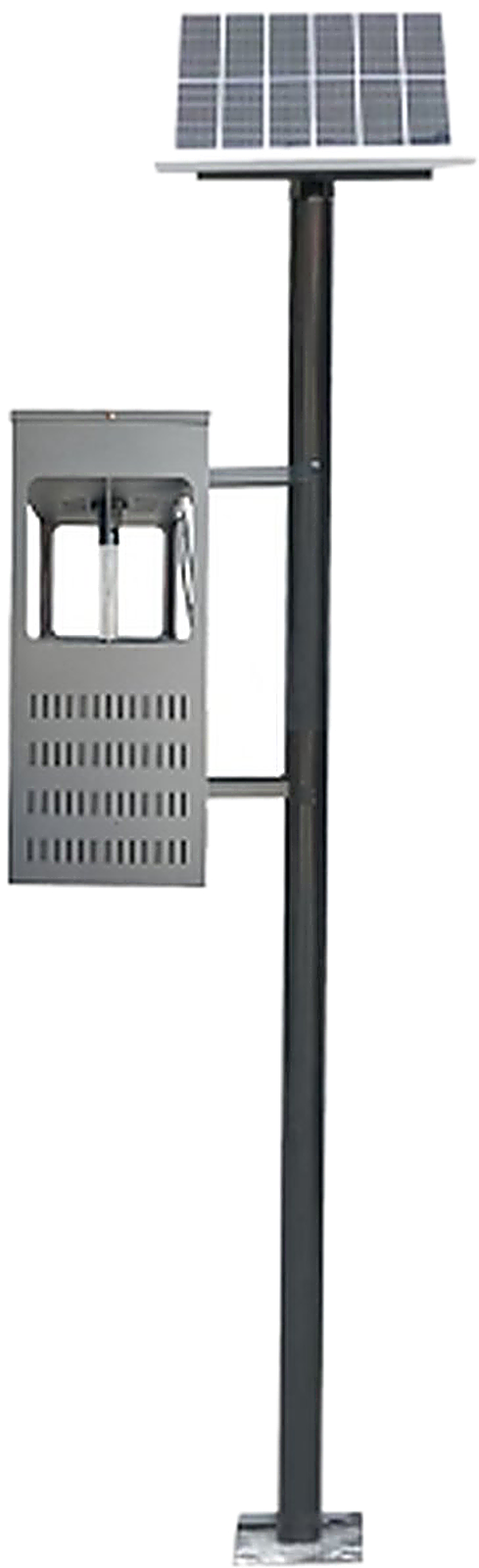
Harvest is only half the battle. Once grain is in the bin, the warehouse, or the silo, a new enemy takes over: stored-product insects. Weevils, grain moths, flour beetles, and psocids quietly eat margin, lower grade, and trigger rejections at export. A solar insect killer is not a replacement for sealed storage and good hygiene, but as a perimeter and internal trap it adds a continuous, chemical-free line of defense that fits modern agricultural pest control programs.
A small infestation compounds. Insects breed inside the mass, raise moisture and heat, and invite mold. By the time you see webbing or frass, tons of grade may already be lost. For an exporter, a single failed cleanliness inspection can block a shipment. For a cooperative, shared warehouse space means one bad lot infects the next.
This is why farm pest management should not stop at the field edge. The post-harvest chain — dryers, transit, and storage — deserves the same discipline as the growing season.
Fumigation and contact sprays kill what they touch, but they leave residues and re-entry limits, and they do nothing about the next moth that flies in through a vent. Worse, repeated chemical use selects for resistant strains. A solar bug zapper attacks the part sprays miss: the adult insects entering and circulating around the facility, breaking the breeding cycle at the winged stage.
Think of the device as a flight-interception layer:
Because a solar insect killer is self-powered, you can hang it exactly at the entry points that matter without running conduit through a food-grade facility. That is a real advantage in audited warehouses where wiring changes are slow and costly.
Not every solar bug zapper suits a grain store. For flying moths and beetles, a UV grid unit works well. In dusty or flour-rich areas, a suction trap with a catch bin is safer and easier to clean. Sealed, corrosion-resistant housings matter because grain dust and cleaning chemicals are hard on electronics. Match the trap to the pest and the zone.
A trap is the last line, not the only one. The strongest programs combine:
A solar insect killer then handles the adult flight that hygiene alone cannot stop. Together they form a layered agricultural pest control system that protects both grade and audit standing.
The math is straightforward. A trapped adult is a breeding cycle prevented. Multiply prevented cycles across a season and you protect tons of saleable grain and avoid re-treatment cost. Operators who add solar bug zapper units at docks and vents typically report fewer adult finds in monitoring traps and lower fumigation frequency — translating into saved product and fewer rejected loads.
A solar bug zapper only earns its place if you can prove it works. Build a simple verification loop:
Distributors who hand operators this loop close more warehouse accounts, because the buyer sees a measurable drop in adult finds rather than a vague promise. Good agricultural pest control is always monitored, not assumed — and the data also feeds the next season’s siting plan.
For deeper technical and regulatory context, see the FAO Integrated Pest Management and the EPA safe pest control.
Can a solar insect killer sit inside the grain mass? No, and it should not need to. Place it at the perimeter and in the airspace near entry points, not buried in grain, so it pulls adults away from the store.
Is it food-safe? The unit uses light and a grid, not sprays, so there is no chemical residue on grain. Keep it clear of the grain surface and cleaning is simple.
How many do I need for a warehouse? Cover each major entry — dock doors, vents, and the internal light line — with at least one solar insect killer, then add units to any hot monitoring zone. A site survey sets the final count.
Does dust affect it? Dust can coat the grid. Choose a model rated for agricultural dust and wipe it during routine cleaning; sealed suction traps handle dusty zones best.
A solar insect killer will not seal a leaky bin, but it is one of the most cost-effective, chemical-free tools for cutting adult insect pressure in grain storage and warehouses. As part of disciplined farm pest management, it protects quality, grades, and export approvals long after the harvest truck leaves.