
Diamondback moth is the small grey butterfly that can turn a clean cabbage field into a riddled one in a single warm week. Its larvae mine leaves from the inside, so damage is often visible only after the crop is already compromised. Reliable control of this pest depends on catching adult flights early, protecting the moments when eggs are being laid, and avoiding the spray-only cycle that has made it famously resistant worldwide.
This small moth is a global pest of brassicas, including cabbage, broccoli, cauliflower, canola, and mustard. A single female can lay more than a hundred eggs, and in warm climates generations overlap so that all life stages are present at once. That biology makes control difficult: spraying one generation does not remove the eggs and pupae already in the field.
Resistance is the second complication. This species has evolved tolerance to many insecticide groups, including pyrethroids and, in some regions, newer chemistries. A product that performed well a few seasons ago may now fail. Growers are therefore moving toward diversified agricultural pest control programs in which monitoring, biologicals, and light traps share the workload instead of relying on a single chemistry.
Females lay small pale eggs on the underside of leaves, usually near veins. After hatch, the larvae mine into the leaf tissue, leaving translucent tunnels before emerging to feed on the surface. Early instars are protected inside the leaf, which is one reason contact sprays applied too late often disappoint.
Adults are weak fliers but are carried long distances on wind, which is why an clean field can be recolonized overnight from a neighbor’s crop. Many adults move at dusk. A solar insect killer switching on at dark captures part of that movement, giving growers a nightly signal that pest pressure is rising before larvae are found in the field.
Walk the field in a W pattern and inspect the undersides of leaves, focusing on the lower and middle canopy where egg laying is heaviest. Tap plants over a white tray to dislodge larvae and count them by size class. Record the crop stage alongside each count, because the same larval density has very different consequences on seedlings and on a nearly mature head.
Trap counts add a second, independent data stream. A solar bug zapper at the field edge collects a sample every night that can be counted in the morning. When trap catches climb for three or four nights in a row, it is time to intensify scouting in earnest, even if leaf mines are still scarce.
Light traps do not replace field scouting, but they make it far more targeted. The adult flight of this pest often precedes visible damage by several days. A nightly catch record shows when that flight begins and when it peaks, allowing treatment to be timed against eggs and young larvae rather than against a calendar date.
Wind-suction capture pulls insects into a sealed collection chamber instead of holding them on an open electrified grid. For diamondback moth control this means specimens stay intact and countable, debris is reduced, and the unit is safer near workers and livestock. Clean, reliable catch data are what turn a trap into a real decision tool inside a farm pest management plan.
Placement decides whether the trap intercepts incoming moths or simply lights an empty paddock.
A single central trap rarely delivers useful diamondback moth control in a large block. Moths arrive from the perimeter, so a boundary line of units produces better interception and a clearer picture of pressure across the farm.
Treat only when scouting and trap trends cross a locally defined threshold. If a spray is justified, rotate between modes of action and never apply the same group to successive generations. That single habit does more to preserve chemistry than almost any other decision in diamondback moth control.
Remove crop residues promptly after harvest, control volunteer brassicas, and avoid planting new brassica blocks directly beside an old flowering one. Conserve parasitic wasps and predators by avoiding broad-spectrum sprays during peak beneficial activity. These steps lower the background population before it ever reaches your field.
The most common error is waiting until heavy mining appears before acting; by then larvae are protected inside leaves. The second is repeating one insecticide group season after season. The third is judging a light trap by a single night’s catch rather than the two-week trend, since weather and moonlight change captures as much as population does.
Another frequent mistake is leaving the lamp low inside a dense canopy. Visibility drops, catches fall, and the operator assumes the pest is absent. Raise the unit, clear vegetation beneath it, and confirm the collection chamber is empty before drawing conclusions.

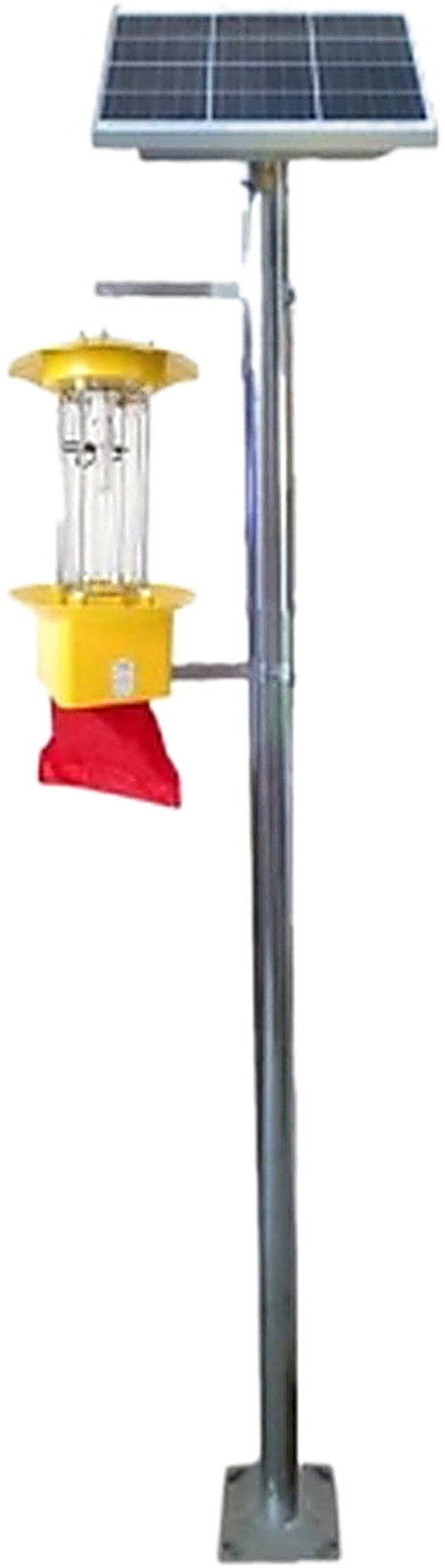


Use this guide alongside the references below to build a complete, defensible programme.
For deeper technical and regulatory context, see the FAO Integrated Pest Management and the EPA safe pest control.
Adults are most active from late afternoon into the early night, especially on warm, still evenings. Timing varies with latitude and season, which is why nightly trap records are more dependable than a fixed calendar date.
Yes. The adults respond to ultraviolet light during dusk flight and are drawn into a suction or grid trap. A solar insect killer works best as a monitoring and suppression layer alongside scouting and thresholds, not as a stand-alone eradication tool.
On many farms it is, provided pressure is moderate. Consistent trapping, residue removal, resistant varieties where available, and conservation of natural enemies can hold populations in check. High-pressure seasons may still need one well-timed, selective treatment.
In peak flight, check and empty it every one to three days. A full chamber reduces capture efficiency and makes counts unreliable, which weakens the whole monitoring program.
Diamondback moth control rewards timing and consistency over brute force. Scout the underside of leaves, watch the nightly flight record, and treat only when the evidence says to. A solar insect killer supplies that steady nightly evidence and keeps working through the dusk window when this pest is most on the move.