
Italy is a study in agricultural contrasts: flooded rice paddies of the north, manicured vineyards across Emilia-Romagna and Trentino, and sun-baked citrus and olive groves of Sicily and Calabria. Each system fights a different insect complex, yet all face the same market pressure — strict EU residue limits and rising demand for residue-free export fruit. Across these regions, the solar insect killer is quietly becoming a backbone of low-chemical agricultural pest control, helping farmers protect yield while keeping their spray logs clean.
Italian agriculture is intensive, high-value and export-oriented. A single bad residue finding can close a market for a whole cooperative. At the same time, the country’s long growing season and warm Mediterranean nights give flying insects a long, productive window to breed. That combination makes continuous, chemical-free farm pest management not just nice to have, but a commercial necessity.
EU Maximum Residue Limits (MRLs) are among the world’s strictest. Table-grape, citrus and olive-oil buyers in Germany, France and Scandinavia test hard. Growers who rely only on calendar spraying risk rejection at the dock. A solar bug zapper removes a share of the pest population every night with zero residue, buying growers room to spray less and smarter.
The Po Valley produces most of Europe’s rice — Arborio, Carnaroli and Vialone Nano. Its warm, flooded fields are also a paradise for planthoppers and stem borers.
Brown planthopper and striped stem borer surge through the warm months, and both have strongly light-attracted adults that emerge at dusk. Grid-spaced solar insect killers placed on the paddy bunds intercept the alate adults before they colonize the next block. Growers report delayed first insecticide rounds during the vulnerable tillering stage — exactly when residues matter most for early-season compliance.
Rice land is often fragmented and far from reliable grid power. A trap that charges from sunlight and runs all night needs no trenching and no monthly bill, which is why the model spreads fastest among small and medium rice holders.
Italy is the world’s largest wine producer, and its vineyards battle grape berry moth, vine weevil and a rising armyworm complex.
Grape berry moth (Lobesia botrana) tunnels into clusters, driving sour rot and downgrades. Vine weevil (Otiorhynchus) attacks roots and foliage. Both adults are nocturnal and strongly drawn to UV light, so a solar insect killer at row ends and perimeter lines pulls them before egg-laying begins.
In the alpine-adjacent orchards of Trentino, codling moth and leafroller pressure is constant. Light trapping along orchard margins trims the adult flight, supporting the region’s residue-conscious, tourism-friendly image. Agritourism operators especially value a quiet, chemical-light approach that keeps patios and tasting rooms pleasant.
Southern Italy’s citrus and olive sectors are iconic, but Mediterranean fruit fly and olive fly (Bactrocera oleae) are relentless.
Olive fly larvae ruin fruit from the inside, and citrus leafminer scars young flush. Adult flies and moths are dusk-active and phototactic. Margin-deployed solar bug zappers suppress the flying adults, complementing bait sprays and sanitation. For organic and premium citrus lines, the trap is often the first line of defense.
Sicilian summers are hot and dusty. Equipment must shrug off heat and filtration clogging. A well-sealed, IP-rated solar insect killer keeps catching through the long southern summer without constant maintenance.
The most successful Italian programs share a pattern:
Across rice, vine and citrus, growers who add light trapping typically report fewer spray passes, lower labor, and cleaner residue sheets. None claim the trap replaces everything — it is one disciplined layer of agricultural pest control inside a broader IPM plan.

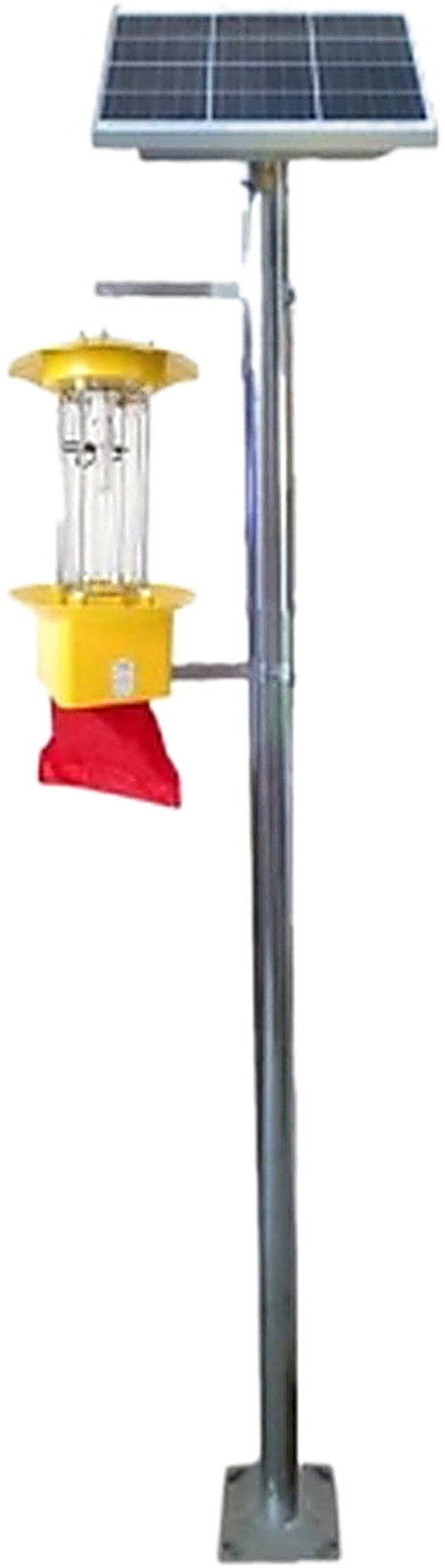


Use this guide alongside the references below to build a complete, defensible programme.
For deeper technical and regulatory context, see the FAO Integrated Pest Management and the EPA safe pest control.
Do solar insect killers work in Italian rice paddies? Yes. Planthopper and stem-borer adults are strongly light-responsive at dusk; bund-placed traps delay colonization and cut early insecticide rounds.
Are the traps legal and residue-safe for EU export? The trap itself is a physical control with no chemical input, fitting most low-residue and organic programs. Always confirm specific input lists with your certifier and buyer.
How many units does a vineyard need? Marginal and in-row placement of roughly one unit per 1–2 hectares is typical, adjusted after the first season of monitoring.
Can olive growers use them against olive fly? They suppress the adult fly flight and reduce new infestations, but sanitation and targeted baiting remain part of a complete program.
Is the system rugged enough for Sicilian summers? A sealed, IP-rated solar unit is built for heat and dust; routine tray emptying is the main upkeep.
From the Po Valley’s rice to Sicily’s olives, Italian growers are proving that a solar insect killer earns its place in Europe’s most demanding, residue-conscious farms. By intercepting night-flying adults continuously and chemical-free, the trap lets vineyards, rice holders and citrus co-ops protect yield while keeping their export doors open. For any operation selling into strict EU markets, this quiet, always-on layer of farm pest management is quickly becoming standard practice.