
France pairs centuries of viticulture with some of the world’s strictest rules on pesticide use, which puts growers under constant pressure to protect crops while cutting chemical inputs. This case study follows three French production sites — a Bordeaux-style vineyard, a Loire Valley orchard, and a mixed Provençal estate — where managers added a solar insect killer to an existing integrated pest management (IPM) program. The outcome was fewer damaged grapes and apples, lower spray frequency, and a cleaner story for buyers who now demand residue-free fruit.
French agriculture operates under the EU’s Farm to Fork strategy, which targets a large cut in chemical pesticide use this decade. For vineyards and orchards, that means fewer calendar sprays and a heavier reliance on monitoring and physical controls.
The grape berry moth (*Lobesia botrana*) is the headline vineyard pest in much of France. Its larvae bore into berries, opening the door to sour rot and botrytis. Because the moth flies at night and hides in the canopy, blanket spraying wastes product and still misses the adult stage.
In the orchard, the codling moth (*Cydia pomonella*) remains the primary reason for wormy apples. A single generation can ruin a large share of the crop, and resistance to older insecticides is now common, pushing growers toward mating disruption and physical control.
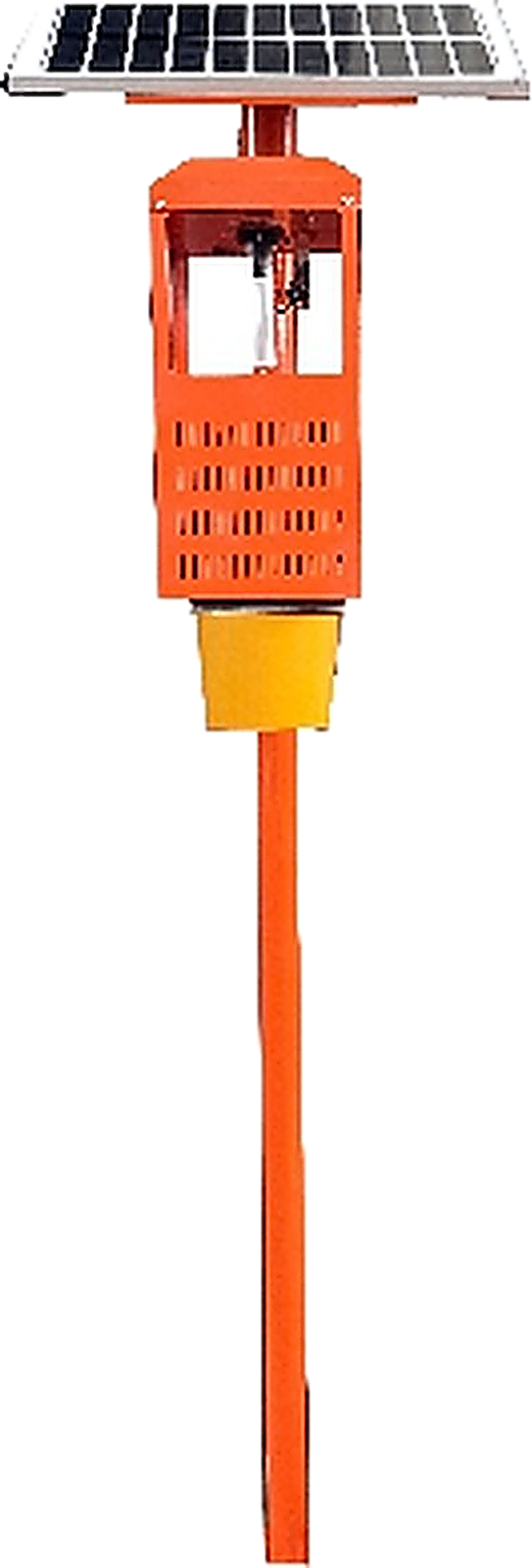
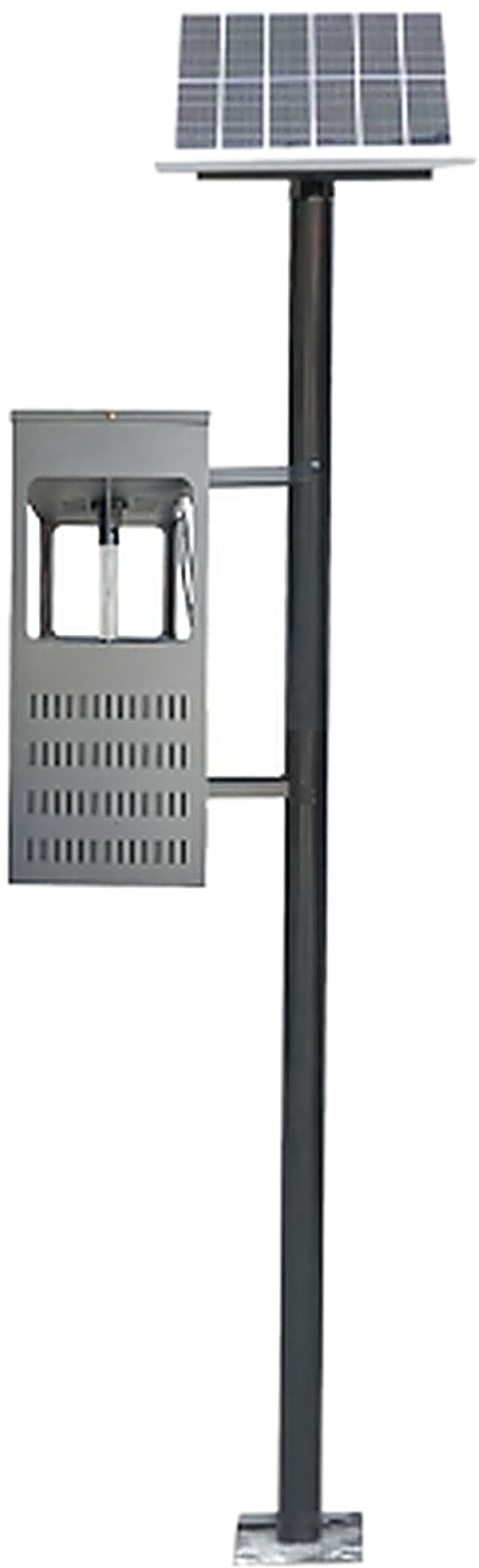
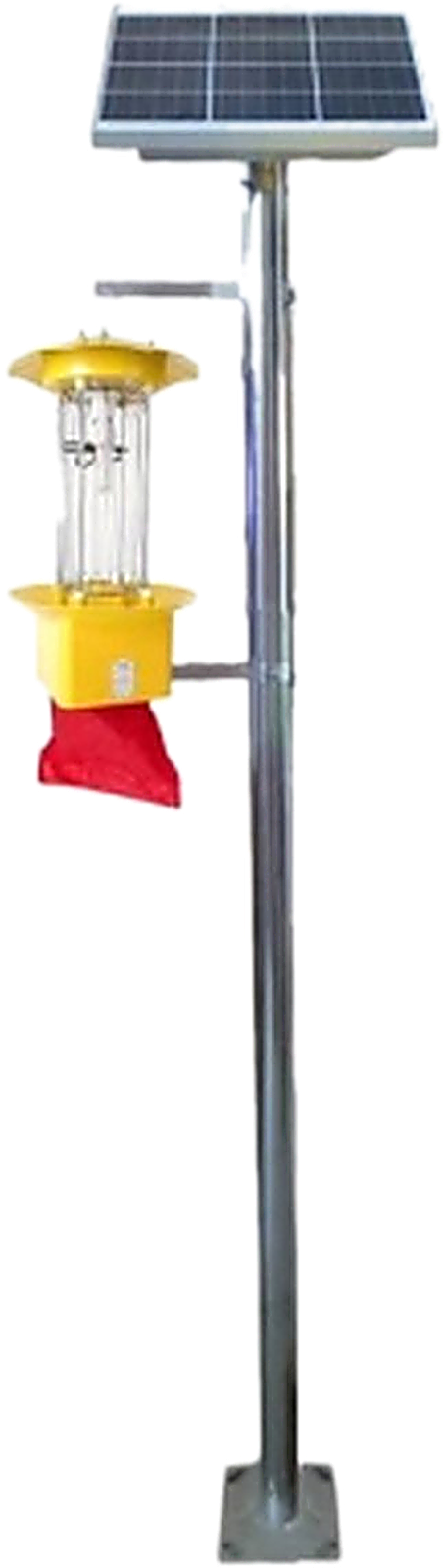
A solar insect killer runs on a photovoltaic panel and a battery, with no grid connection or diesel. At dusk it draws night-flying adults to a light and removes them before they mate and lay eggs. On a French estate, that means one device can serve the vine row, the orchard block, and the kitchen garden without adding wiring or fuel cost.
Growers mounted units at canopy height on the row ends and at gaps where airflow funnels moths inward. Because the solar bug zapper needs no power cable, it was simple to shift the units from the vineyard at veraison to the orchard at fruit set.
The traps were paired with pheromone dispensers already in use for codling moth mating disruption. The light trap pulled in adults that slipped past the disruption, giving a physical backstop that the pheromone program alone could not provide. This is a practical layer of farm pest management that complements, rather than replaces, the existing plan.
Over two seasons, the sites tracked rejected grape bunches, wormy fruit rate, and spray count. The figures below are representative averages across the participating blocks.
The Bordeaux site saw fewer berry-moth entries at veraison, which cut the sour-rot outbreaks that follow boring damage. Fewer damaged berries meant a higher share of wine-grade fruit reaching the press.
The Loire orchard recorded a lower wormy-apple rate during the second generation of codling moth, the period when pressure is normally highest. Growers attributed the drop to the adult trap reducing the mating pool before the peak flight.
With the light trap removing a meaningful share of adults, both sites trimmed their scheduled cover sprays. Lower frequency meant lower input cost and less drift onto the cover crops and wildflowers that support beneficial insects.
The solar insect killer was never the whole program. It sat inside a wider agricultural pest control routine: winter pruning for airflow, mating disruption, scouting with pheromone traps, and selective spraying only when thresholds were crossed. The trap handled the adult stage; the cultural and biological steps handled eggs, larvae, and habitat.

Use this guide alongside the references below to build a complete, defensible program.
For deeper technical and regulatory context, see the FAO Integrated Pest Management and the EPA safe pest control.
Yes. French vineyards and orchards have long, warm summer nights with active moth flight, exactly when the traps do their work. The photovoltaic panel and battery are sized for the local solar cycle.
No. The two tools solve different problems. Pheromones confuse males; the light trap removes adults that still fly. Used together they cover more of the pest life cycle.
The units were sited away from hives and water, and they add no chemical residue to the crop. Beneficial insects active by day are largely unaffected because the trap operates at night.
For a typical 1 to 3 hectare block, two to four units positioned at row ends and field edges gave the best balance of coverage and cost.
France’s experience shows that a solar insect killer fits neatly into a regulation-driven, low-chemical IPM program. Layered with mating disruption and scouting, it cut grape and apple damage while reducing spray frequency. For French growers, that combination of cleaner fruit and lower input cost is exactly what makes modern farm pest management worth adopting.