
Central America — Guatemala, Costa Rica, Honduras, Nicaragua and El Salvador — grows two crops the world depends on: highland arabica coffee and lowland banana and plantain. Both face relentless insect pressure in a tropical climate with two coastlines and a rugged volcanic interior. This case study explores how solar insect killers are entering farm pest management across the isthmus as a low-cost, off-grid IPM layer that fits smallholders and plantations alike.
Central America’s climate is warm and humid year-round, with distinct wet and dry seasons that fuel overlapping pest generations. At the same time, coffee leaf rust and banana diseases already push farms to minimize plant stress, so any tool that lowers insect damage without extra fungicide or insecticide load is welcome. Off-grid reliability matters because many coffee fincas sit hours from the nearest grid connection.
Coffee berry borer (*Hypothenemus hampei*) is the region’s most damaging coffee pest, boring into the bean. Banana weevil (*Cosmopolites sordidus*) attacks the pseudostem and stunts plantations. Mealybugs and thrips vector viruses in both crops, and fall armyworm (*Spodoptera frugiperda*) sweeps across the region’s corn and beans. A solar bug zapper at the farm edge intercepts many adult flyers before they reach the crop.
Highland coffee farms across Central America often lack reliable electricity. A solar insect killer runs independently, catching berry borer adults and related moths at night when they fly. Because it needs no grid, it works on steep, remote plots where spraying is slow and expensive and where a single missed round can ruin a micro-lot’s grade.
In the humid lowlands, banana weevil and thrips pressure is constant. Traps placed along plantation roads and drainage lines pull adults out of the flight path, complementing the sanitation and trapping programs plantations already run. The result is steadier bunch quality through the export window.
The Central America coffee belt is largely smallholder. A shared solar insect killer at a cooperative wet mill or collection point protects the surrounding micro-lots cheaply, making the technology accessible where single-farm purchases are hard and where shared maintenance is easier to fund.
Mount traps at canopy height near the finca edge and along shade-tree rows. Berry borer and associated moths respond to UV, so a solar bug zapper reduces the adult pool during the main fly season and protects the highest-value cherries.
Place units along the plantation perimeter and irrigation channels, where adults move between blocks. Wind-suction models handle the high humidity better than sticky boards, which clog in tropical dew and lose effectiveness within days.
Where corn, beans and coffee interleave, a single trap positioned between plots serves multiple crops, an efficient fit for the diversified small farms that define the Central America landscape.
Growers and cooperatives report:
As with any agricultural pest control program, the trap is one layer. It shines when combined with sanitation, resistant varieties and scouting.
Export coffee and bananas live or die on quality and residue limits. A solar insect killer that delays or removes a spray round protects both margin and market access. For cooperatives, pooled purchase and shared maintenance keep the per-farm cost low, which is exactly what smallholders need to stay competitive in a tightening market.
The isthmus is a mature, quality-driven export region with strong buyer standards and a large smallholder base. That makes it a steady market for rugged, serviceable farm pest management hardware. Units must survive humidity, tropical sun and rough transport — a clear spec for OEM/ODM suppliers targeting the region.

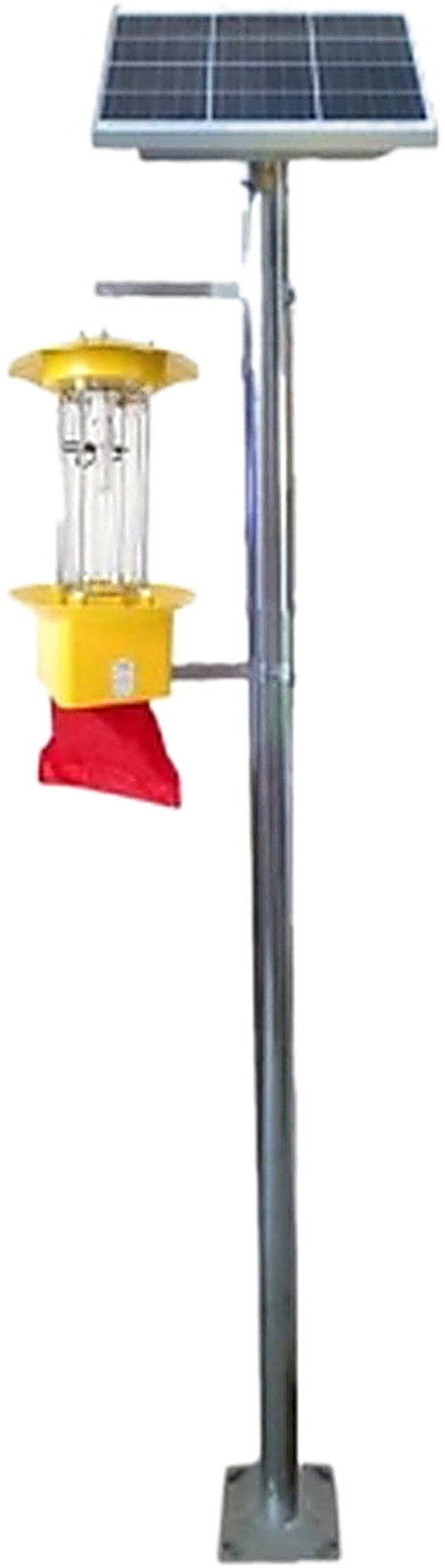


Use this guide alongside the references below to build a complete, defensible program.
For deeper technical and regulatory context, see the FAO Integrated Pest Management and the EPA safe pest control.
Do solar insect killers work in tropical humidity? Yes, but choose IP66-rated, corrosion-resistant units. Wind-suction traps outperform sticky boards, which fail in heavy dew.
Will a trap control coffee berry borer alone? No. It reduces the adult flight population; pair it with sanitation and shade management for real suppression.
How many units per hectare? For coffee, one unit per 1–2 hectares of canopy; for banana, denser along perimeters and channels.
Are these safe near rivers and wetlands? Place them back from water edges to protect aquatic life; the trap itself uses no chemicals.
Central America’s coffee and banana belt is a strong fit for off-grid, residue-light pest control. As export buyers tighten residue rules, the solar insect killer gives the region’s growers and cooperatives an affordable, repairable tool — and gives B2B suppliers a durable, standards-driven market.