
Every solar insect killer lives or dies by its battery. The panel collects sun by day; the battery must deliver the attraction light and fan through the warm, pest-active night—and survive a decade of field abuse. This guide compares the three chemistries buyers actually meet, so your next agricultural pest control purchase is a rational one, not a gamble.
At its core, a solar bug zapper battery stores the day’s harvest of photons for night use. Two numbers decide real-world performance:
Lead-acid chemistries can only use ~50% of rated capacity without shortening life. Lithium (LFP) can safely use 80–90%. That single fact reshapes the whole farm pest management math: an “equal” 12 Ah lead-acid and 12 Ah LFP are not equal at all.
The legacy choice. Cheap upfront, heavy, and tolerant of rough handling. But it hates deep discharge, sulkates if left empty, and typically lasts 1.5–2.5 seasons in trap duty.
A refined lead chemistry with immobilized electrolyte. Better vibration resistance and slightly longer life (2–3.5 seasons), still heavy and capacity-limited.
The modern standard for serious solar insect killer fleets. Higher upfront cost, but 2,000–4,000 cycles, 80–90% usable capacity, and stable output in cold.
| Factor | SLA | Gel/AGM | LFP | | — | — | — | — | | Cycle life (trap use) | 300–500 | 500–900 | 2000–4000 | | Usable capacity | ~50% | ~55% | ~85% | | Weight (12 Ah) | ~3.6 kg | ~3.4 kg | ~1.4 kg | | Cold (0 °C) output | Poor | Fair | Good | | 5-year cost/unit | Medium | Medium-High | Lowest |
For a grower running 50 traps, the LFP column wins on total cost of ownership even at triple the sticker price.
Battery chemistry behaves differently by climate. In temperate zones with cool nights, SLA loses usable capacity fast—your trap dims exactly when moths fly. LFP holds voltage, keeping the UV lamp bright. In hot tropical sites, all chemistries age faster, but LFP’s thermal stability resists the swelling that kills lead-acid packs.
Lead-acid emits hydrogen if overcharged and leaks acid if cracked—a real concern around food crops and workers. LFP is far more stable, with no acid, no gas under normal use, and a much lower fire risk. For agricultural pest control near harvest, that safety margin matters.
Match the controller. LFP needs a charge profile different from lead-acid. A solar insect killer sold as “LFP-ready” should ship with the correct controller—verify before bulk order.
Spread cost over a 5-year horizon with weekly trap duty:
The “cheap” battery is rarely cheap. A solar bug zapper that dies mid-season is worse than no trap—pests rebound.
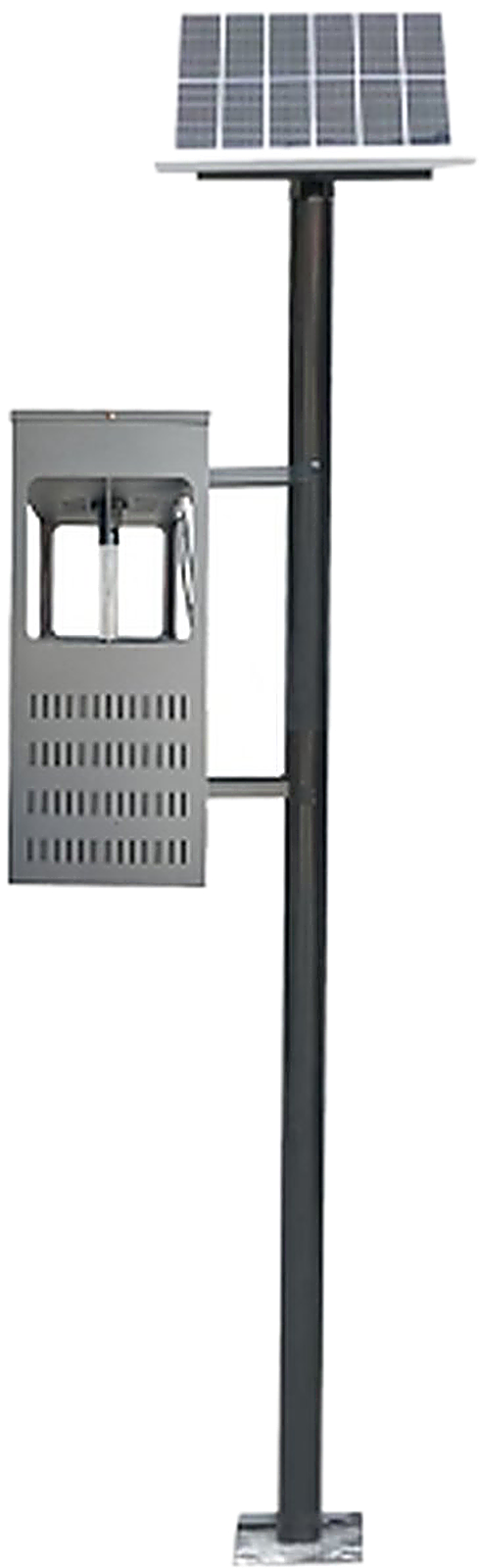
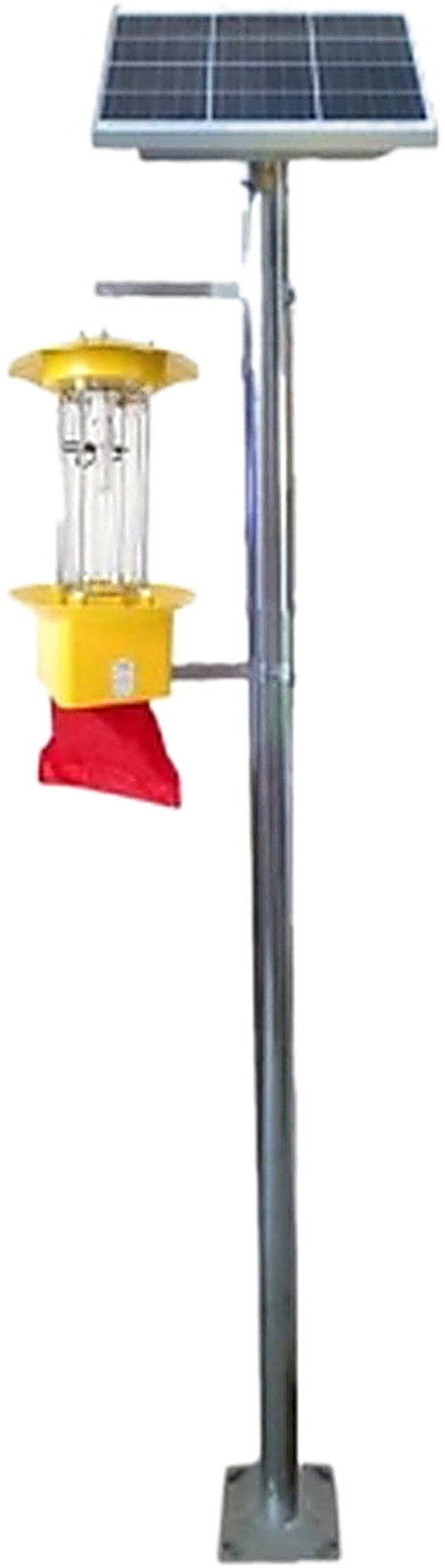


Use this guide alongside the references below to build a complete, defensible program.
For deeper technical and regulatory context, see the FAO Integrated Pest Management and the EPA safe pest control.
Is LFP worth the extra cost for a small farm? If you run more than ~10 traps or expect 3+ seasons of use, yes—the avoided replacements usually pay back the premium. For a single backyard unit, SLA may suffice.
Can I swap lead-acid for LFP in an old trap? Only with a compatible charge controller. Fitting LFP to a lead-acid charger risks undercharging or, worse, unsafe conditions.
How long should a good battery last? Quality LFP in trap duty reliably reaches 4–6 years. Lead-acid typically 1.5–3 years under the same load.
Does cold really matter for insect killers? Yes. Cool nights are prime flight time for many moths; a battery that sags in cold leaves the lamp dim and the catch weak, undermining your whole farm pest management plan.
Battery chemistry is the hidden determinant of solar insect killer performance. Sealed lead-acid wins only on sticker price; gel/AGM is a middle step; LFP lithium wins on lifecycle cost, weight, cold behavior and safety. For any operation serious about agricultural pest control, specifying LFP with a matched controller is the rational, lower-risk choice.