
Arid desert deployment looks like a solar insect killer dream on paper: long sunny days, few clouds, and abundant charge. In practice it brings a different set of stresses. Intense heat, fine dust, wide day-night temperature swings, and scarce water all change how a trap is mounted, powered, and maintained. Get the setup right and the unit runs for years; get it wrong and heat or dust will shorten its life fast.
Low humidity does not mean low pest pressure. Desert agriculture concentrates crops around irrigation, and that green corridor draws pests from a wide dry landscape. Moths, beetles, and True bugs move into irrigated fields at dusk from surrounding scrub. Because farms are often isolated and off-grid, spraying is logistically expensive, and a solar insect killer that needs no fuel or mains power is a natural fit.
The dry setting also helps the trap. There is little rain to interrupt nightly operation, and pest flight is often concentrated into a short window after sunset when the air cools. A solar bug zapper switched on at dusk covers that window precisely, turning arid desert conditions into an advantage for agricultural pest control.
The first rule of arid desert deployment is to plan for heat, not just sun. Photovoltaic panels lose efficiency as their temperature climbs, so a panel that looks generous on paper may deliver less at midday ground heat. Oversize the panel relative to the battery load, and mount it with an air gap above the bracket so it can cool.
Battery choice matters even more. High ambient temperatures shorten the life of lead-acid batteries dramatically. Where possible, specify lithium iron phosphate cells, which tolerate heat cycles far better and hold capacity through deep discharge. Keep the battery in a vented, shaded enclosure rather than exposed to direct sun, and avoid sealing it in a hot metal box.
Fine dust is the silent killer of outdoor electronics. In arid desert and dusty farm settings, airborne grit works into fan bearings, lamp fittings, and connector seats. Choose a unit with a high ingress-protection rating for the enclosure, and prefer sealed connectors over open terminals.
Set a simple cleaning routine into farm pest management: wipe the panel every few weeks so dust does not cut charge, clear the collection tray after windy days, and inspect the fan intake for caked grit. A trap that is cleaned monthly in a dusty arid desert site will outlast one left untouched for a season. Suction-based models tend to tolerate dust better than high-voltage grids, whose insect buildup can arc in dry air.
Desert sites are often windy, and gusts carry sand that scours paint and loosens fittings. Use a rigid pole set in a concrete footing, with stainless fasteners and cable ties rated for UV exposure. Check that the lamp housing is secure and that the panel tilt is fixed against vibration.
For placement, treat the irrigated block as an island. Put units along the upwind edge and corners where pests arrive from scrub, and space additional traps across large fields to overlap light zones. Because night air drains toward low ground, pests often funnel along field depressions and irrigation channels; these are high-value spots for arid desert deployment.
Limited water changes which pests dominate. In arid desert systems, scale insects, mites, and thrips thrive in hot, dry crops, while moth flights spike after the first irrigation of a dry spell. Tie trap operation to the irrigation calendar: run the solar insect killer every night for the week after a field is watered, when adult emergence and movement peak.
Because water is precious, growers cannot rely on frequent overhead sprays to knock pest populations back. A physical trap that works without water gives farm pest management a reliable tool in a setting where chemical spraying is both costly and logistically hard. Over a season, the trap also supplies catch records that show which pest flights matter and which can be ignored.
Arid desert days are hot but nights can cool sharply. That swing stresses cheap electronics and can cause condensation inside a sealed housing even in a dry climate. Look for a unit rated for a wide operating temperature range, with a lamp ballast designed for cold starts. Confirm that the battery and charge controller handle both heat and cool nights without derating.
UV lamp output also affects results. In clear desert air, light carries far, so a moderate lamp can cover a surprising area. That means fewer units may be needed than in hazy humid regions, but spacing should still be verified in the field rather than assumed from a catalog figure.
1. Oversize the solar panel for hot-weather derating and mount it with airflow. 2. Use heat-tolerant batteries in a shaded, vented box. 3. Select a high IP-rated, sealed enclosure built for dust. 4. Fix the pole in concrete with UV-rated fasteners for wind. 5. Place units on upwind edges, corners, and irrigation channels. 6. Clean the panel and tray on a monthly schedule. 7. Sync nightly operation with irrigation and pest flight peaks.


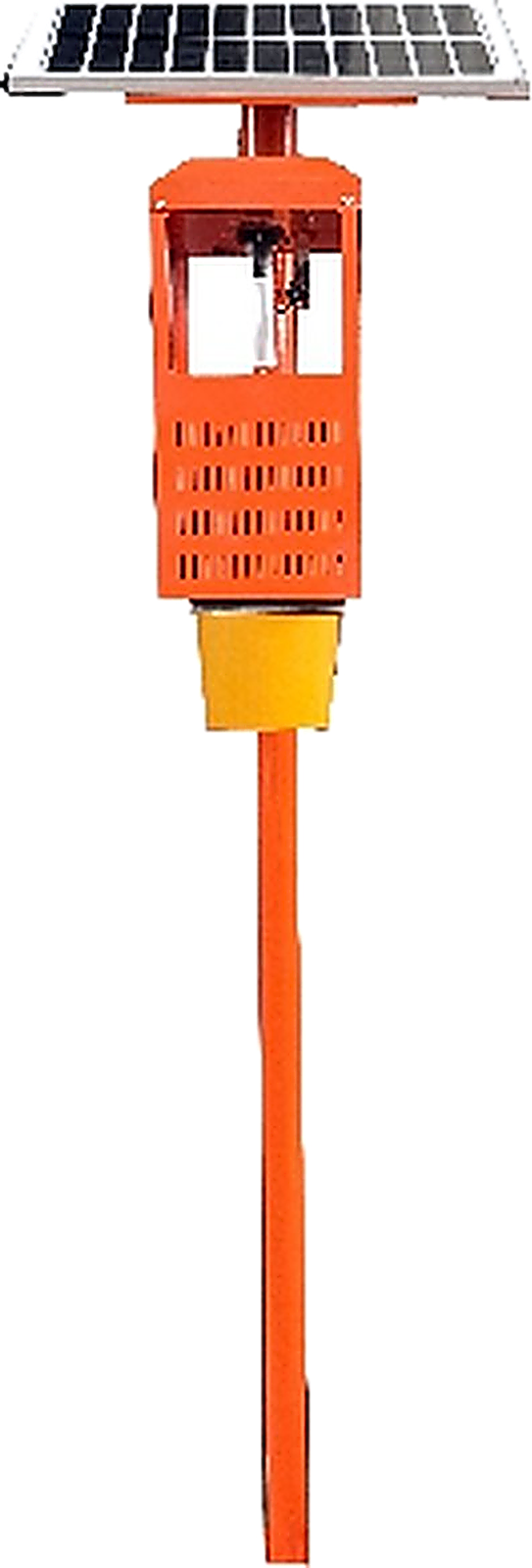
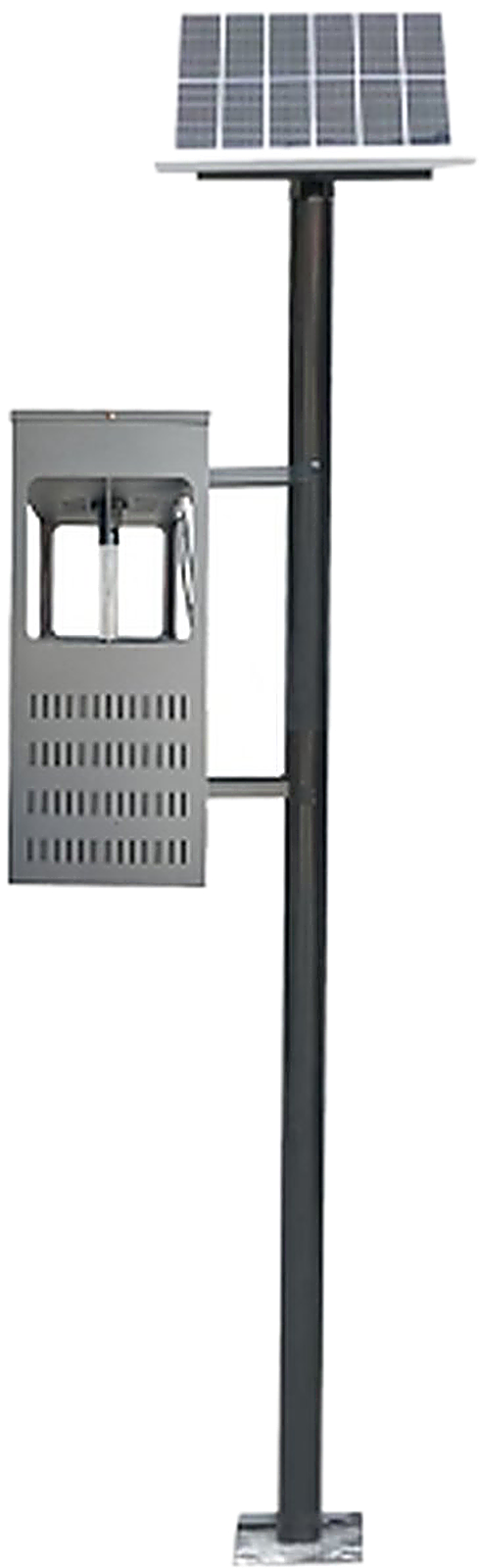
Use this guide alongside the references below to build a complete, defensible programme.
For deeper technical and regulatory context, see the FAO Integrated Pest Management and the EPA safe pest control.
Not if the unit is designed for it. Panels derate in heat and batteries age faster, so oversize the panel and use lithium iron phosphate cells in shade.
Every two to four weeks in windy arid desert conditions, and after any major dust event, to keep charge and airflow at full output.
Yes, if the lamp ballast and battery are rated for a wide temperature range. Check the spec sheet before buying for high-desert sites.
Clear air carries light farther, so coverage per unit can be higher, but confirm spacing in the field rather than relying on the rating alone.
Arid desert deployment rewards planning for heat and dust rather than just counting sunny days. A solar insect killer that is oversized for power, sealed against grit, and tied to the irrigation calendar becomes a dependable backbone for agricultural pest control in dry regions. For off-grid farms where spraying is expensive, it is one of the most practical farm pest management investments available.