
A solar bug zapper vector program starts by learning where dengue and malaria mosquitoes rest, breed, and feed after dark.
A solar bug zapper vector plan works best when devices are spaced by habitat and maintenance is scheduled before peak season, not after pests arrive.
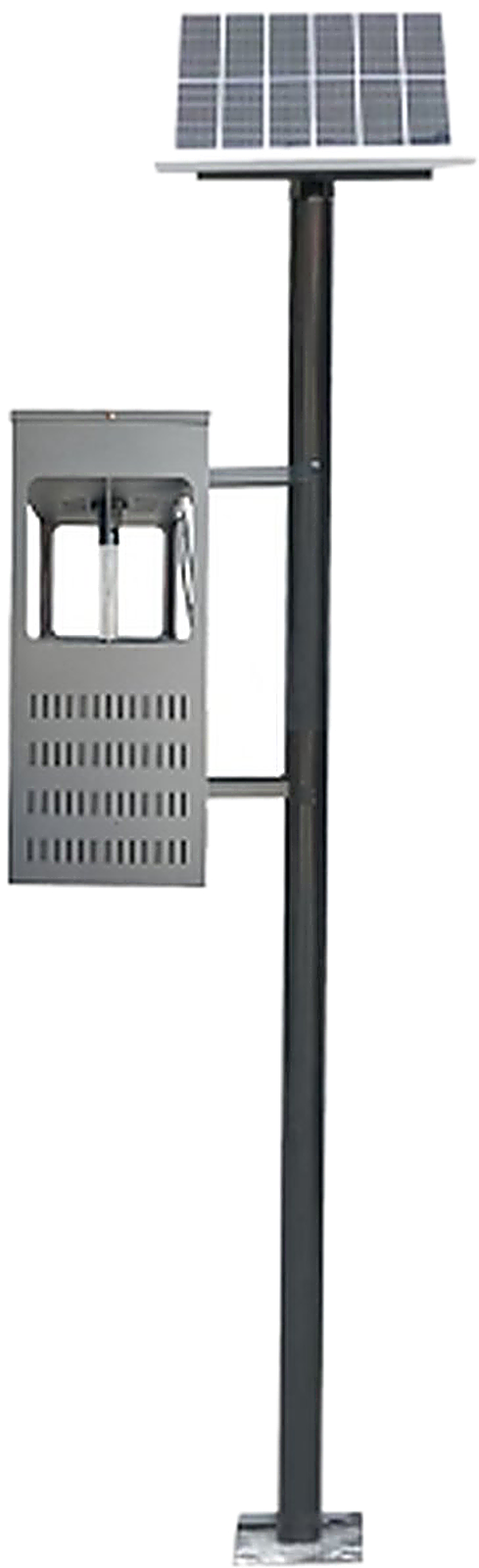
Mosquitoes are among the deadliest animals on the planet. They transmit dengue, malaria, Zika, chikungunya, and yellow fever, putting billions of people at risk across tropical and subtropical regions. Suppressing mosquito populations is one of the highest-leverage public-health interventions available — and the solar bug zapper has become a practical, scalable tool for doing it without constant chemical spraying.
This article looks at how solar-powered mosquito control fits disease-prevention programs, where it works best, and how agencies and NGOs can deploy it.
Spraying insecticides kills adult mosquitoes after they emerge, but resistance builds and coverage is never complete. A complementary, sustainable layer is to continuously reduce the adult population at rest and feeding sites.
Disease vectors breed fast. A gap of a few days in control lets numbers rebound. A solar insect killer operates every night automatically, maintaining pressure on the adult population without waiting for a spray crew or a fuel delivery.
In many endemic areas, over-reliance on insecticides drives resistance in local mosquito strains. Physical traps reduce the share of control that depends on chemistry, protecting the effectiveness of the chemicals that remain essential for outbreak response.
The solar bug zapper draws nocturnal flying insects with UV-A light and eliminates them via an enclosed high-voltage grid or a wind-suction chamber. For vector work the principles are the same ones used in agricultural pest control, simply aimed at the species that bite people.
Effective vector control is about location as much as device count.
Place one solar insect killer every 200–400 m across a settlement, denser near known breeding water. Mount 1.2–1.8 m high, shaded by day and dark-facing by night, away from bright security lights that compete with the UV lure.
Traps are strongest as part of a program, not a stand-alone fix. Borrow the discipline of farm pest management: monitor, reduce breeding, then suppress adults.
This combination is exactly the integrated approach that agricultural and public-health agencies recommend, adapted from fields to frontline communities.
Organizations buying at scale should specify for durability and serviceability.
Many suppliers offer OEM/ODM so an agency can badge devices and tune the UV spectrum to local vector behavior — a useful option for national programs.
Agencies must show results to keep funding. Pair trap deployment with simple monitoring: nightly bite counts at fixed points, monthly mosquito-light-trap counts, and fever cases reported by local clinics. When a solar insect killer zone shows fewer bites and lower case rates than a control area, the program earns renewal and expansion.
Use this solar bug zapper vector guide alongside the references below to build a complete, defensible program.
For deeper technical and regulatory context, see the WHO Vector Control and the EPA safe pest control.
Can a solar bug zapper stop an outbreak by itself? No. Traps are a suppression layer, not a cure. They reduce adult numbers continuously and pair best with larval control and, when needed, targeted spraying during outbreaks.
Do they work on all mosquito species? They attract most nocturnal, UV-responsive species, including common Aedes and Anopheles vectors. Day-biting species are less responsive, so combine with daytime measures.
Are they safe in villages with children? Yes. The grid is enclosed and there is no chemical release. Standard public-siting keeps units out of direct reach.
How many units for a small community? As a starting point, one device per 200–400 m across the inhabited area, denser near water. A village of a few hundred people often needs 5–10 units.
What about cloudy or rainy seasons? Panels charge on diffuse light and batteries carry multi-night reserve, so operation continues through extended cloud and rain common in endemic zones.
The solar bug zapper will not replace medicines or vaccines, but as a continuous, chemical-light adult-suppression layer it strengthens vector control where it is needed most. For clinics, camps, and communities in endemic regions, self-powered traps turn every night into quiet, automatic protection.