
Avocado pest control is a year-round discipline for growers exporting to strict markets such as the EU and US. Avocado is one of the fastest-growing fruit exports in the world, and also one of the most pest-sensitive. Thrips scar the young fruit, mites damage leaves and reduce photosynthesis, and borers threaten branches and tree health. For growers in Mexico, Peru, Chile, Kenya, and beyond, a solar insect killer adds a continuous, chemical-free line of agricultural pest control that protects both yield and export appearance. This article lays out a practical avocado pest control plan built around solar trapping.
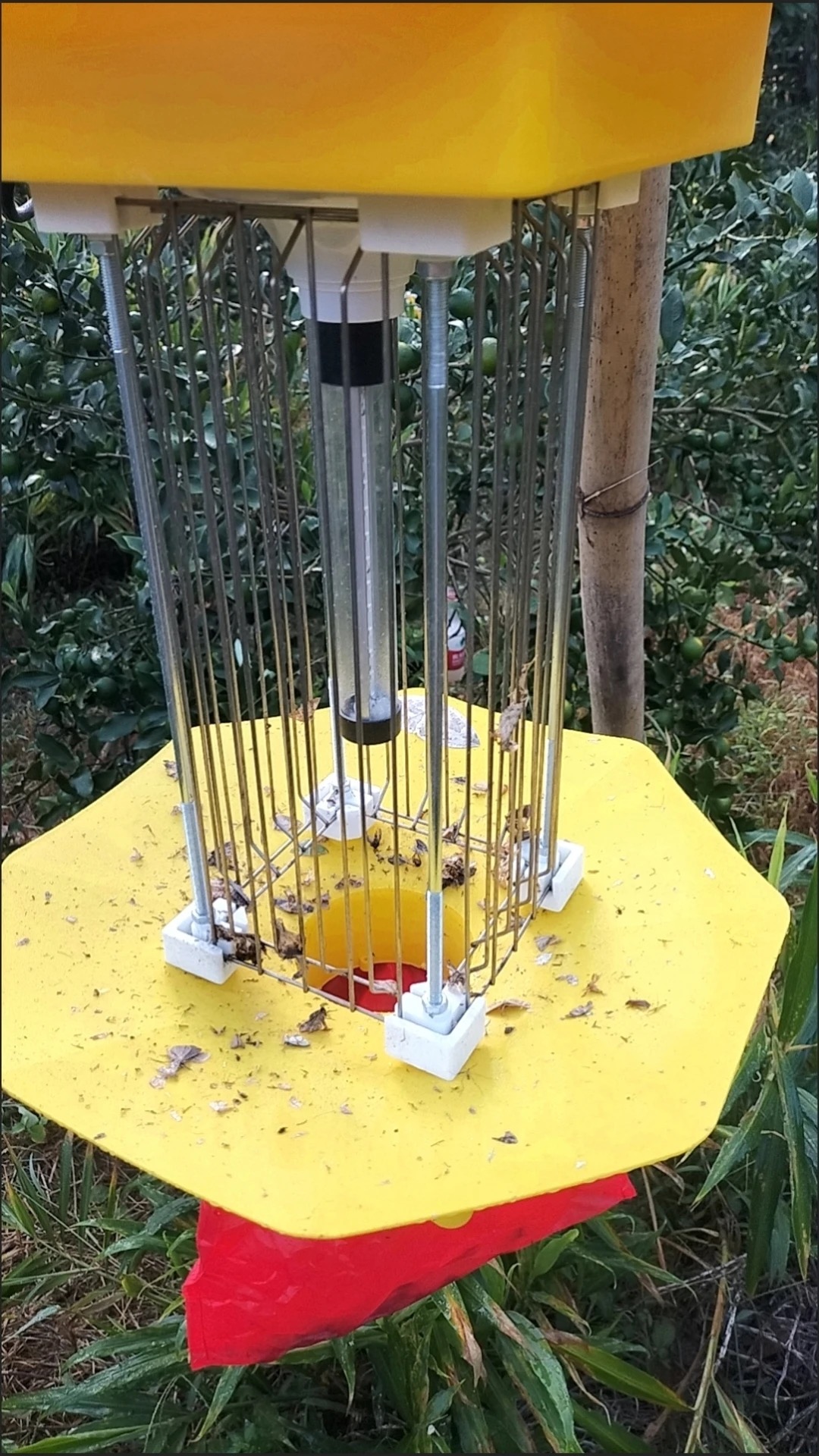
Avocado trees face a rotating cast of flying and crawling pests:
Spraying is the default response, but avocado skin is delicate and residue rules for export (especially to the EU and US) are strict. A solar bug zapper that targets the adult flying stage reduces the next generation before damage begins — a cleaner fit for modern farm pest management.
A solar insect killer attracts adult thrips, moths, and other nocturnal/crepuscular flyers with UV light, then captures them via fan suction or grid. In an avocado orchard, the goal is not to catch every insect — it is to depress the adult population enough that egg-laying and scarring drop below economic thresholds.
Because traps run every night automatically, they provide constant suppression that calendar spraying cannot. That consistency is what stabilizes fruit grade across a long harvest window.
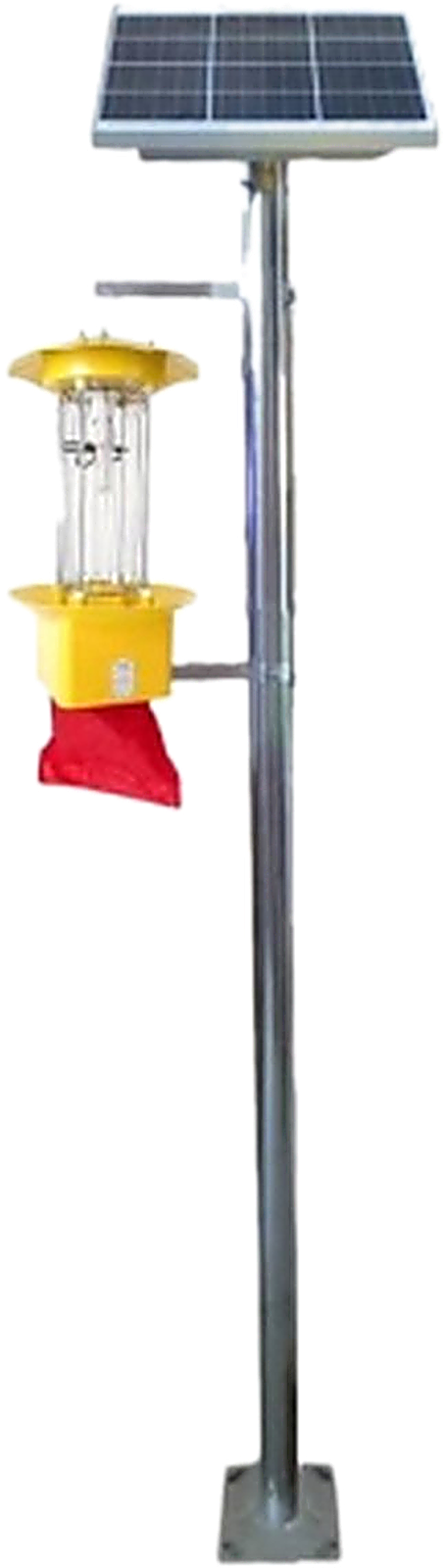
Mount lamps at 1.5–2.0 m — around the lower-to-mid canopy where thrips and moths congregate, and where airflow carries them past the trap.
Run traps year-round in warm regions. In areas with a cool dormant season, start at bud-break and maintain through the final pick. Young-fruit stages are the most scar-sensitive window, so never leave gaps then.
Add a food-based or pheromone lure matched to local thrips/moth species to boost catch. Refresh on schedule and track catch counts to spot population spikes early.
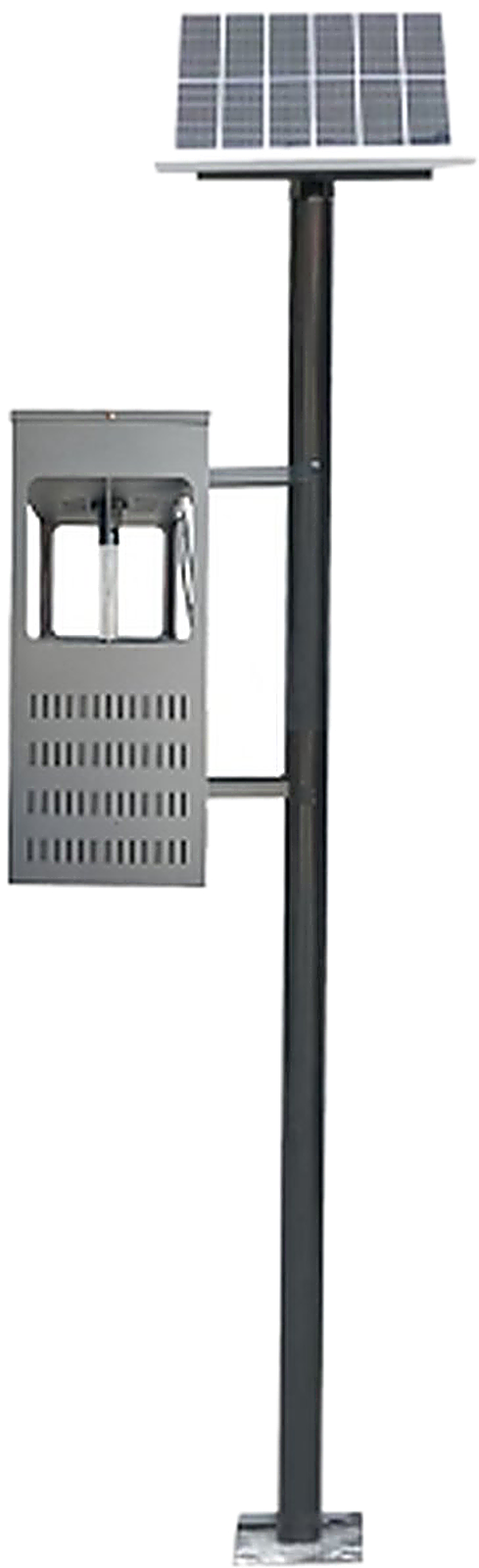
The most resilient avocado programs combine several layers:
This is the essence of agricultural pest control for high-value fruit: trap the flyers, conserve the predators, and spray only when the numbers force it.
Export avocados live or die on appearance and residue. Solar trapping helps on both fronts:
For packhouses paying penalties on downgraded fruit, the trap investment often pays through grade recovery alone.
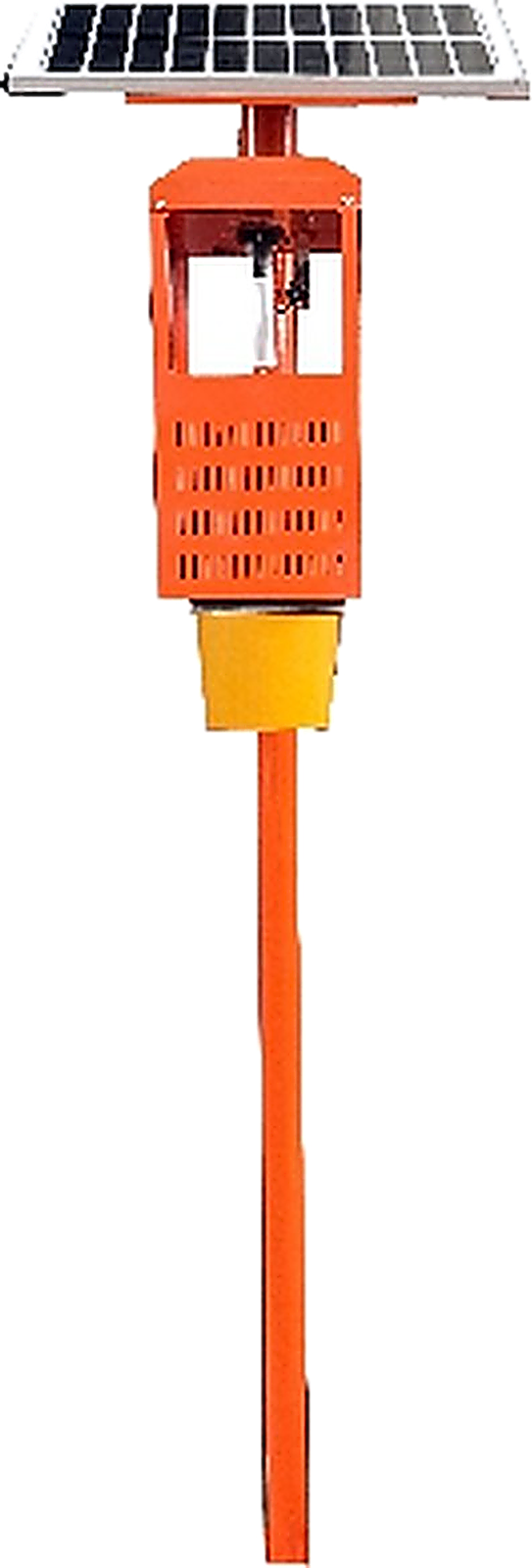
The orchards with the steadiest grades treat avocado pest control as a year-round system, not a spray trigger. Traps run through fruit set, monitoring flags spikes, and sprays stay reserved for thresholds. That rhythm is what keeps scarring and residue risk low. A documented avocado pest control plan also reassures packhouses and buyers that grade protection is engineered, not accidental.
For exporters, avocado pest control built around continuous trapping is the cleanest story to tell strict markets — fewer chemicals, better fruit, defensible records.
Will a solar insect killer stop avocado thrips scarring?
It significantly reduces adult thrips and thus scarring, especially when run continuously through fruit set. Pair with monitoring for best results.
How many traps per hectare for avocados?
About one per 1–1.5 hectares in mature blocks, denser in nurseries and on borders.
Do solar traps help with mites?
They catch the flying stages of some mite carriers but mites themselves need biological or cultural control. Use traps as part of a broader IPM plan.
Are they safe around avocado pollinators?
Yes — avocados are wind-pollinated, and traps target flying pest adults at dusk/dawn, not daytime pollinators.
Can exporters use this for residue compliance?
Fewer sprays means lower residue risk, which supports EU/US export standards. Keep spray records to document the reduction.
What is the core of avocado pest control?
Continuous trapping through fruit set, plus monitoring and targeted sprays only at threshold. That trio is the heart of avocado pest control for export blocks.
Effective avocado pest control protects avocado profitability, and both grade and consistency are threatened by thrips, mites, and borers. A solar insect killer network gives growers a quiet, automatic, chemical-free way to depress pest populations night after night — the backbone of a modern farm pest management plan. For exporters chasing premium grades, the upgrade from reactive spraying to continuous trapping is one of the highest-return moves available.
FOSIBO manufactures solar insect killers and wind-suction traps for avocado and other high-value orchards, with OEM/ODM supply for international distributors.