
Protected cultivation has exploded across warm and subtropical regions: net houses, shade-net structures, and high tunnels now cover millions of hectares of vegetables, fruit, and nursery stock. These mesh-covered houses keep out the worst of the sun and many flying insects, but they are not sealed laboratories. Whiteflies, thrips, leaf miners, and fruit flies still get in, and once inside a net house they breed fast. This guide explains how a solar insect killer fits into net-house and shade-net farm pest management for cleaner, residue-light production.
A net house is a frame covered with insect-proof or shade mesh. The mesh size decides what is blocked. A 40-mesh screen stops whiteflies and larger moths; a coarser shade net mostly cuts light and heat but lets small insects through.
Thrips and leaf miners are tiny enough to pass fine mesh, and every net house has door gaps, vent seams, and repair holes. Insects that enter find a perfect environment: steady temperature, no wind, and dense host plants. That is why net houses still need active agricultural pest control.
Spraying inside a net house is awkward and drifts onto the crop and the workers. Residue rules for export vegetables make blanket spraying risky. Growers need a tool that works continuously without adding chemicals.
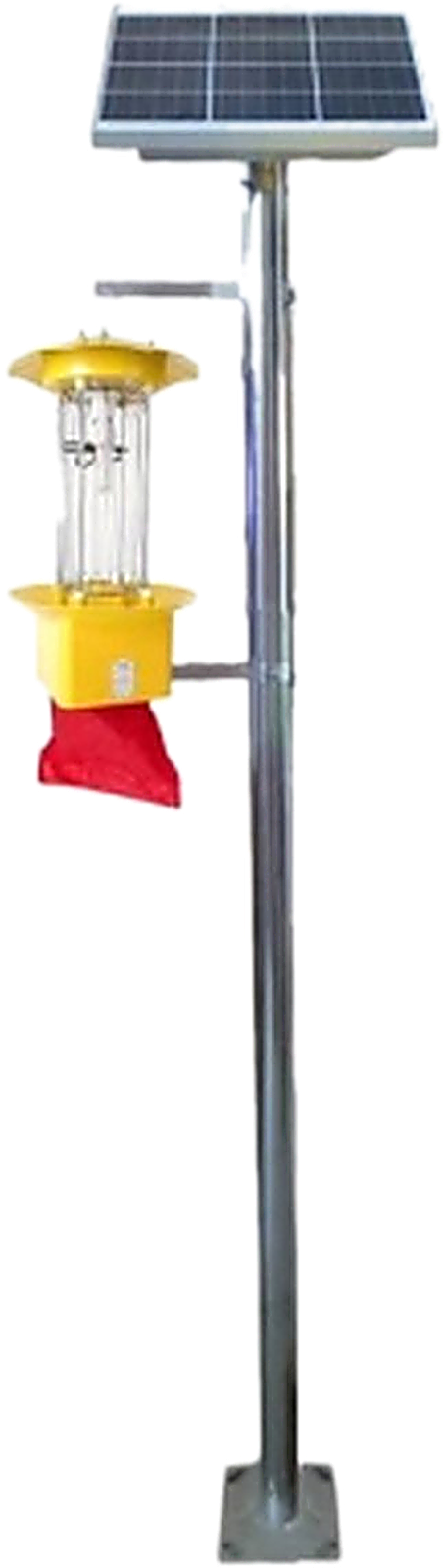
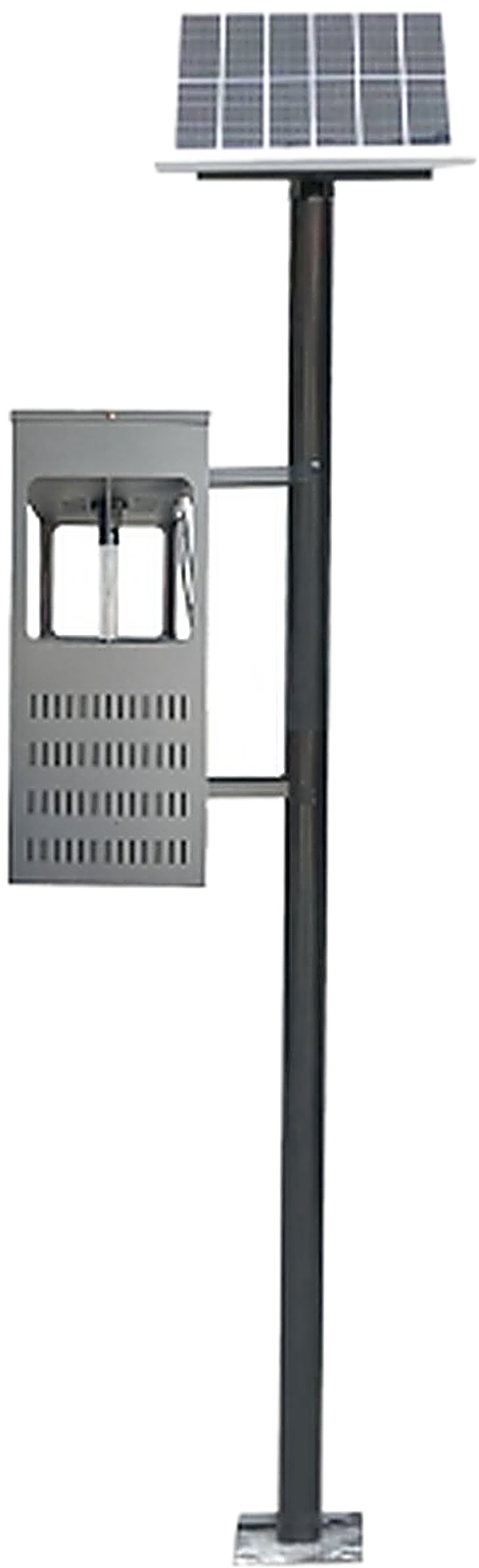
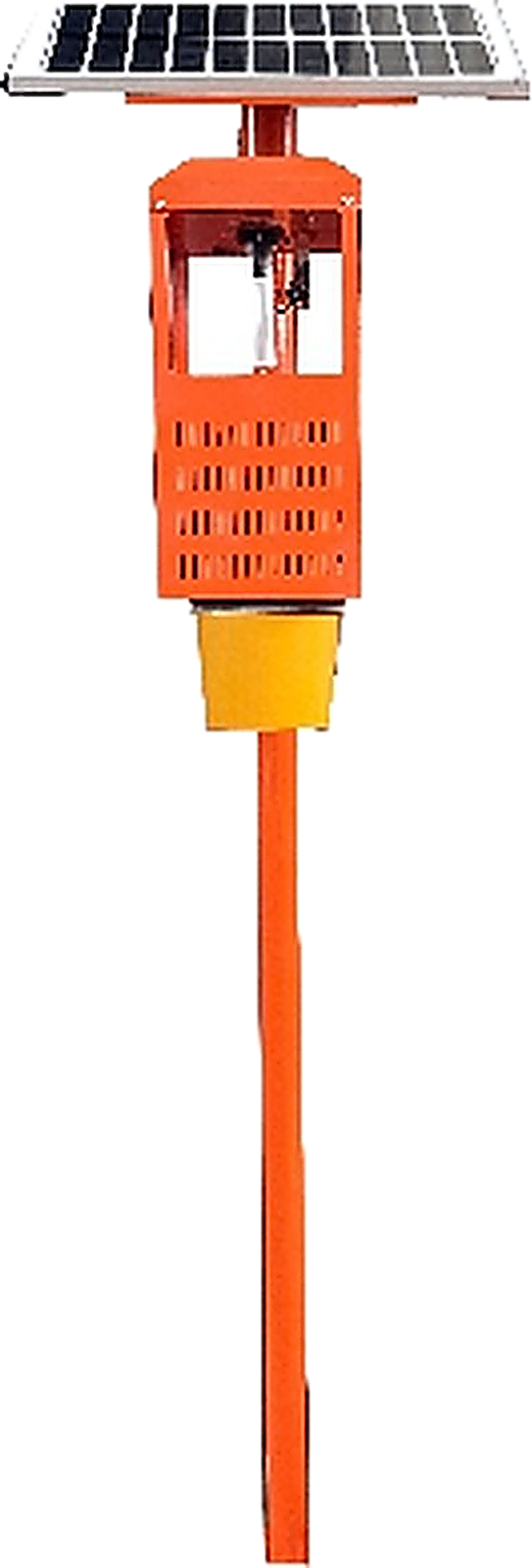
A solar insect killer runs on sunlight and battery, needs no wiring, and works all night. Inside or beside a net house it pulls the adult flying insects that slip through the mesh, breaking the breeding cycle before larvae appear.
The highest insect traffic is at the door and the upwind vent. Placing a solar bug zapper there intercepts pests as they try to enter, and a second unit inside catches anything already through. No trenching, no power connection, just a pole and a bracket.
Shade-net tree nurseries and flower nurseries are ideal because the canopy is dense and the crop stays in place for months. A stationary trap protects the same plants every night, which is exactly the steady pressure a nursery needs.
Different protected crops attract different targets, but the principle is the same: remove the adults, stop the larvae.
Tomato, pepper, cucurbits, and leafy greens under net houses suffer whitefly, thrips, and leaf miner. A light trap at the entry points cuts the adult load so the plants reach harvest with fewer blemishes and less spray.
Orchard and vineyard netting keeps out birds and big moths, but small sap feeders still enter. A solar insect killer covers the gap, supporting a cleaner farm pest management program for high-value fruit.
The trap is one layer of a wider routine. Good net-house IPM also means monitoring with sticky cards, removing infested leaves, and managing humidity so fungal disease does not replace the insect problem.
Check sticky cards weekly. When adult counts rise, the trap is already working in the background; the cards tell you whether a targeted, low-residue spray is justified. This keeps chemical use rare and precise.
Patch mesh holes, seal door gaps, and keep the area around the net house mowed. A solar insect killer performs best when the structure itself is not leaking pests from every seam.

Use this guide alongside the references below to build a complete, defensible program.
For deeper technical and regulatory context, see the FAO Integrated Pest Management and the EPA safe pest control.
No. The net is the first barrier; the trap is the second. Together they form a two-stage defense that is far stronger than either alone.
Position units near vents and doorways, not over flowering rows, and run them mainly at night. That limits contact with bees and other beneficials.
For a standard 500 to 1,000 square meter net house, one unit at the upwind vent and one inside the doorway is a practical start. Larger houses add units along the long walls.
The trap uses no chemical and no open flame. Workers simply avoid touching the collection tray, which is standard hygiene for any pest-control equipment.
Net houses and shade nets are a powerful first barrier, but they are not pest-proof. Adding a solar insect killer at the entry points and inside the structure gives growers a continuous, residue-free layer of agricultural pest control. For protected vegetable, fruit, and nursery cultivation, that two-stage defense is one of the simplest upgrades a manager can make to clean up grade and cut spray dependence.