
Few pests damage fruit value faster than tephritid fruit flies. The Mediterranean fruit fly (Medfly), Queensland fruit fly (Q-fly), and oriental fruit fly wreck export consignments, trigger border rejections, and force costly bait-spray rounds. A well-placed solar insect killer gives growers a chemical-free line of defense that protects both the crop and its residue-free status. This guide explains how light-trapping fits a modern agricultural pest control program against fruit flies.
Fruit flies lay eggs inside ripening fruit. A single infested fruit can hatch dozens of larvae, and a few infested boxes can get an entire shipment rejected at import inspection. Key challenges:
Because the adult fly is the stage that mates and lays eggs, catching adults before they reproduce is the highest-leverage intervention — exactly what a solar bug zapper targets.
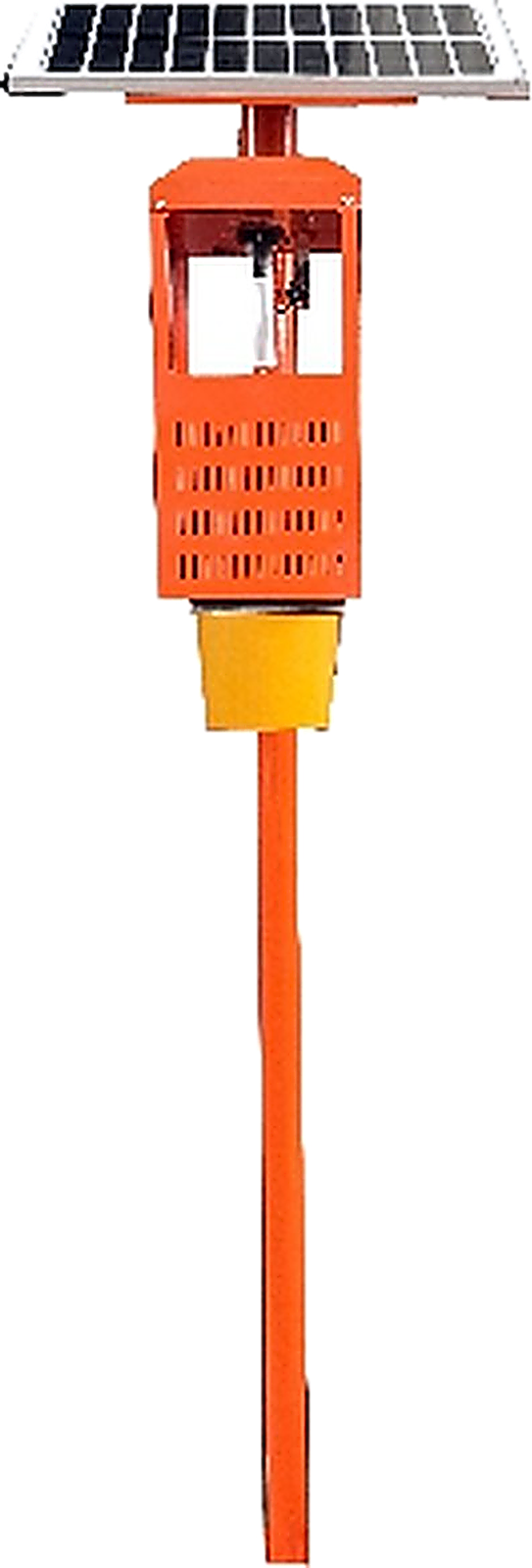
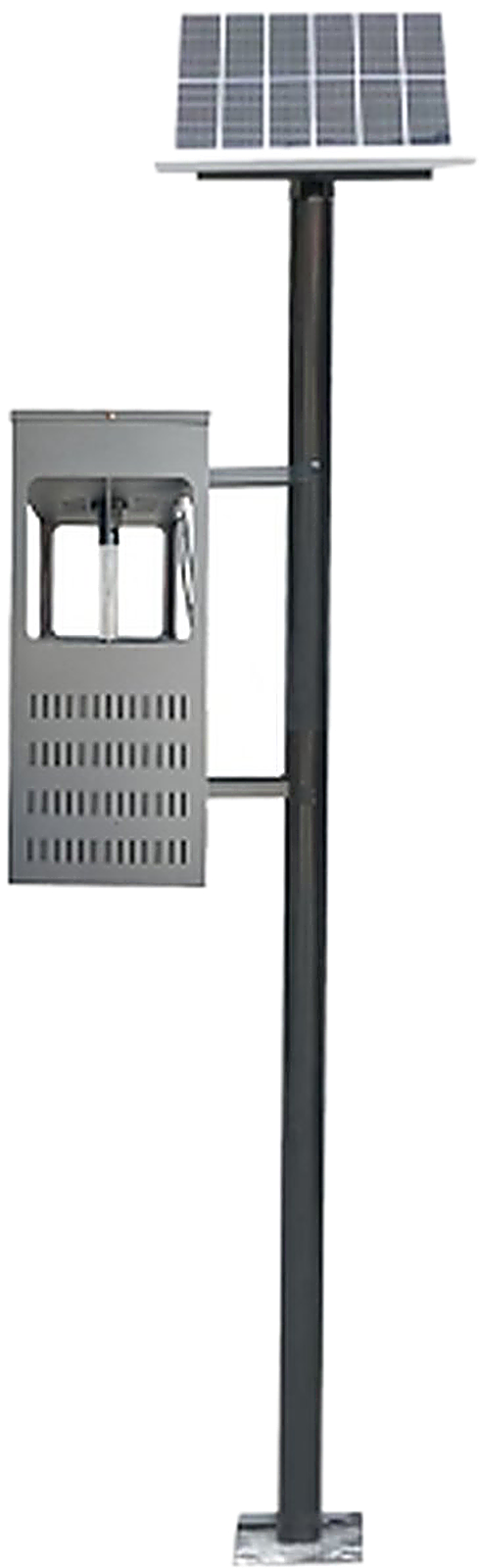
Fruit fly adults are strongly attracted to specific light wavelengths, especially in the UV-A and blue range. A solar insect killer combines:
Positioned at orchard edges, near packing areas, and around greenhouses, units intercept flies moving between wild host trees and the crop — a core tactic in farm pest management around fruit zones.
Medfly attacks citrus, stone fruit, figs, and many tropical fruits across the Mediterranean, parts of Africa, and the Americas.
Growers using light-trapping report fewer adult flights near harvest and cleaner trap-card counts during export windows.
Q-fly is the dominant threat to Australian horticulture — tomatoes, stone fruit, and citrus. Backyard and perimeter trapping is a recognized community and commercial tactic.
A solar insect killer running autonomously suits Australia’s sunny, off-grid orchard blocks.
Oriental fruit fly hits mango, guava, banana, and citrus across Asia and the Pacific. Its wide host range makes border control critical.
Light-trapping reduces the adult population that would otherwise lay eggs in market-ready fruit.
A solar insect killer should not stand alone against fruit flies. The strongest programs combine:
This layered approach preserves residue-free export eligibility far better than spray-only cycles.
When sourcing a fruit-fly agricultural pest control device, verify:
Fruit fly pressure is not constant through the year. Aligning trap density with the pest calendar maximizes return on each solar insect killer.
Two to three weeks before fruit colors, increase unit density at edges and hotspots. Catching adults before the first eggs are laid prevents the exponential spike that defines a fruit-fly outbreak.
During the warmest, wettest weeks, run units every night and empty catch chambers weekly. Combine with sanitation of fallen fruit so survivors cannot complete their life cycle on the ground.
Keep a reduced baseline active through the off-season to suppress overwintering adults near wild hosts, lowering the starting pressure for next year’s crop.
What makes tephritid pressure so expensive is timing. Adults emerge, mate and lay within a window of a few weeks, and a consignment that clears a border inspection in one week can be rejected the next for reasons nobody can see from the outside. Trapping compresses that uncertainty into a nightly number a packhouse manager can act on.
The practical rule most commercial blocks converge on is to run light traps continuously through the ripening window rather than reacting after bait-spray thresholds are hit. Bait spray still has a place at the block edge, but it works better as a targeted correction on top of continuous catch data than as the primary control. Buyers who ask for a residue statement increasingly want the trap log that sits behind it.
One more planning note for distributors: the trap body, the lure and the replacement catch surface are three separate service items with three different replacement intervals. Quoting them as a single consumable price understates the annual cost, and it is the first thing a serious grower will challenge when the quote is reviewed.


Use this guide alongside the references below to build a complete, defensible program.
For deeper technical and regulatory context, see the FAO Integrated Pest Management and the EPA safe pest control.
Q: Can a solar insect killer replace bait sprays for fruit flies? A: It is a powerful suppression layer but works best combined with monitoring, sanitation, and targeted lures.
Q: Where should I place units in an orchard? A: At edges bordering wild hosts, near packing areas, and at known hotspots, with overlapping catch radii.
Q: Does light-trapping harm beneficial insects? A: Proper spectral tuning and placement minimize beneficial catch; it is far safer than broad insecticide use.
Q: Which fruit flies respond best to light traps? A: Medfly, Q-fly, and oriental fruit fly adults are all attracted to the tuned spectrum and are caught effectively.
For export-focused growers, a solar bug zapper tuned to fruit-fly attraction is a practical, residue-free way to protect fruit value from the adult stage onward.