
Northern Europe — led by the Netherlands, Denmark, and Germany — runs the most capital-intensive, technology-driven greenhouse horticulture on earth. In this region a solar insect killer is not a rural novelty but a precise tool inside a fully controlled-environment agricultural pest control program. This case study looks at how Dutch and Northern European growers integrate light-trapping into high-value tomato, cucumber, and pepper production.
Dutch glasshouses alone cover more than 9,000 hectares and produce some of the highest yields per square meter in the world. Three factors shape their pest strategy:
A solar bug zapper that targets flying adults without harming beneficial insects fits this philosophy — provided it is placed and tuned correctly.
In Westland and Venlo-style greenhouses, whitefly, thrips, and leafminer are the recurring threats. Growers run a layered defense:
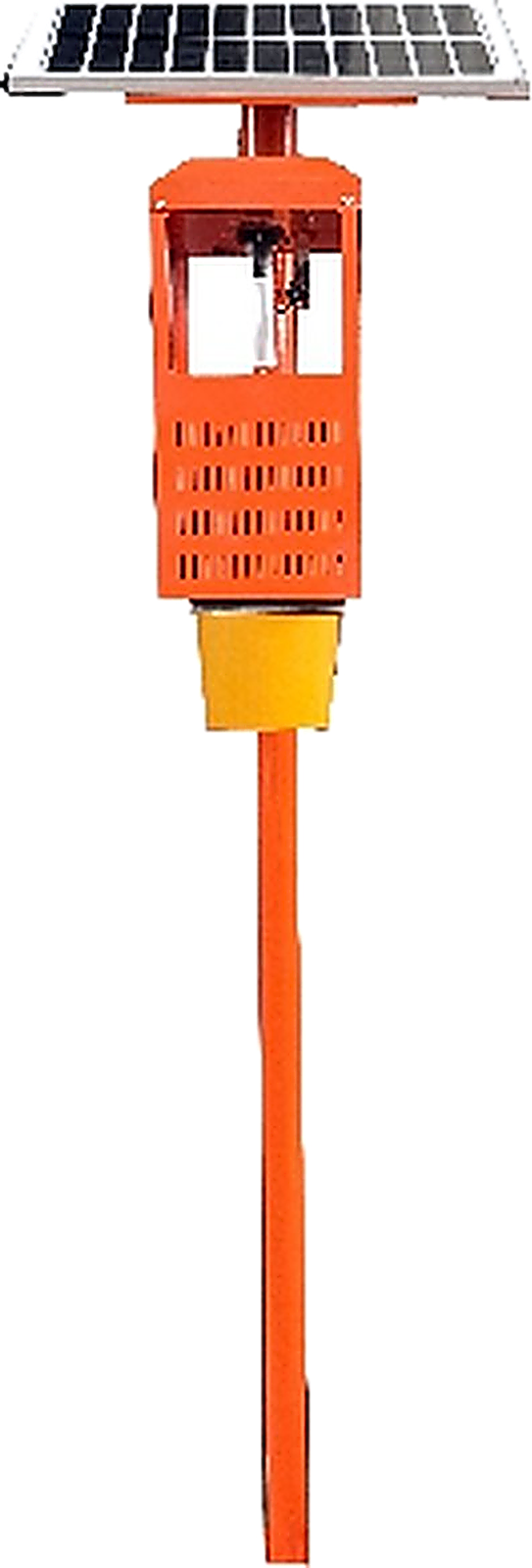
Growers mount pole or hanging solar insect killer units at canopy height along the greenhouse perimeter and near doorways, where pests enter during staff movement. Because the houses are lit and heated year-round, the units’ solar charging is supplemented by the facility’s own power, but the autonomous trap logic remains identical to field units.
The traps are positioned away from banker-plant zones and away from parasitic-wasp release points, so beneficial insects are not drawn into the catch cone. This spatial separation lets the same house run both strategies without conflict — a model of modern farm pest management.
Growers report fewer adult whitefly flights near doorways and a slower buildup of thrips on sticky-card counts, buying time for predatory mites to establish. The trap is a monitoring-and-suppression layer, not a standalone cure.
In Germany and Denmark, organic and premium herb producers face aphids and fungus gnats. Here the solar bug zapper supports strict organic certification:
Units are placed at vents and along walkways, with UV output tuned toward the spectrum that attracts the target flying pests. Because herb houses are lower and denser, units are spaced closer than in field crops.
Combined with yellow sticky cards and predatory gall midges, growers see steadier aphid suppression and fewer emergency biological releases. The residue-free status required for organic retail is preserved because no sprays are added.
Northern European buyers are sophisticated. If you supply this market, expect questions about:
A solar insect killer sold here must be presented as an IPM component, not a silver bullet.
The upfront cost of a controlled-environment IPM program is high, but Northern European growers justify it through premium residue-free prices and reduced crop loss. Light-trapping lowers the frequency of beneficial-insect re-release and extends the usable life of each biological control investment — a clear win for agricultural pest control economics.
Northern European growers treat IPM as a data loop, not a one-time setup. The solar insect killer contributes by providing a steady stream of caught adults that managers cross-reference with sticky-card counts and predatory-insect release logs.
A sudden jump in caught whitefly or thrips signals a breach at a doorway or screen, prompting an immediate inspection of vent seals. A steady decline after a biological release confirms the program is working. This feedback lets growers adjust spacing or add units before damage appears on fruit.
Because houses run through winter under supplemental light, pest pressure does not fully disappear. Growers keep a baseline of units active year-round and scale density up before each crop cycle. The result is a calmer, more predictable agricultural pest control environment and fewer crisis interventions.
What separates a working install in Northern Europe from a wasted one is documentation. Growers in the region already log climate, irrigation and nutrient data per compartment, so adding trap catch to that record costs almost nothing and turns a hardware purchase into evidence at the next buyer audit.



Use this guide alongside the references below to build a complete, defensible program.
For deeper technical and regulatory context, see the FAO Integrated Pest Management and the EPA safe pest control.
Q: Do solar insect killers work indoors without sunlight? A: The trap logic works, but in low-light houses the panel may need grid supplement; the catch mechanism is unaffected.
Q: Will the trap kill beneficial insects? A: If placed away from release and banker zones, catch of beneficials is minimal; spectral tuning further reduces it.
Q: Is this suitable for organic certification? A: Yes, as a non-chemical physical control it supports organic programs when documented properly.
Q: What certifications matter most in Northern Europe? A: CE and RoHS are baseline; buyers also value IP ratings and clear serviceability.
The Netherlands and Northern Europe show that a solar bug zapper earns its place inside the world’s most advanced greenhouses — as a precise, beneficial-safe layer of a broader IPM system.