
Solar insect killers give oilseed growers a chemical-free, grid-free tool for agricultural pest control that fits the open-field layout of these rotations. Sunflower and canola are high-value oilseed crops, but both face sharp early-season and flowering pest pressure. Sunflower moth and canola flea beetle can slash yields before the crop even reaches head fill.
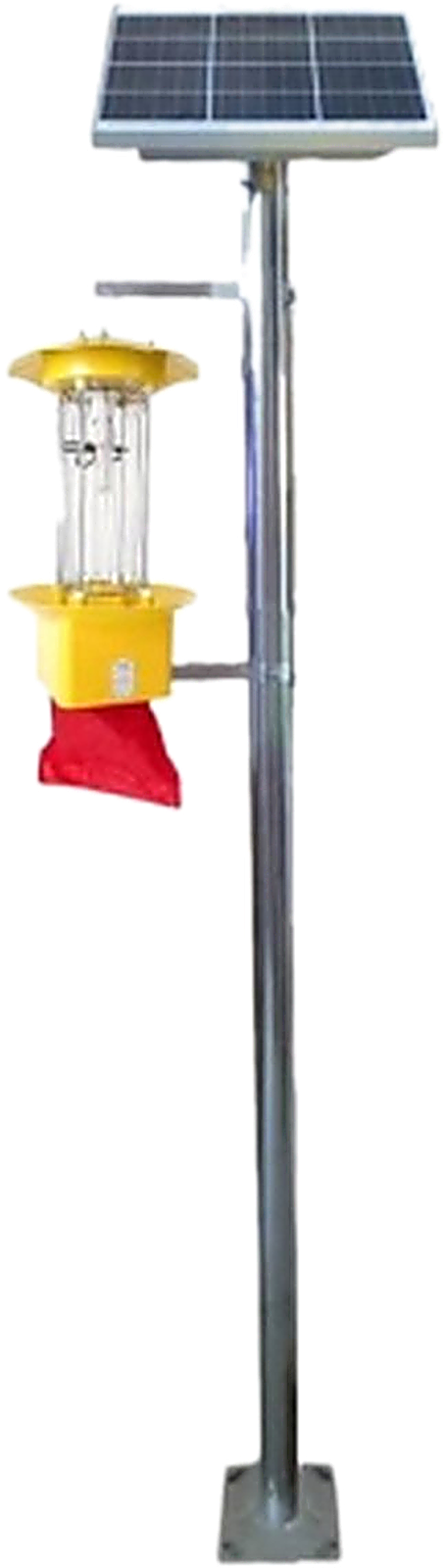
Because many of these are night-active or strongly light-oriented at emergence, a solar bug zapper placed at field edges catches adults before population spikes.
The damage is not just cosmetic. Sunflower moth larvae feed directly on the seed, so every infested head loses both weight and oil; canola flea beetle feeding on seedlings reduces stand and, later, pod set. Lost oil content at harvest is a permanent hit to grower income that preventive trapping helps avoid.
Oilseed buyers pay on volume and quality. Seed damaged by moth larvae or stressed by early-season beetle feeding produces lower oil yield and poorer crush value. A solar insect killers protecting the flowering and fill windows therefore protects the two variables that matter most at the elevator: tonnes per hectare and oil percentage. For contract growers, that protection can be the difference between a base and a premium grade.
Sunflower and canola are grown in large, flat, sunny blocks — ideal for panel charging. A solar insect killers needs no cables across the field, so it is cheap to deploy and move between rotations. For farm pest management, that means you can protect the critical seedling and flowering windows without adding spray passes.
Most migrating adults enter from edges. Line the upwind border with lamps during emergence and bloom to intercept moths and beetles early.
Run units from crop emergence through flowering — the two periods where damage translates directly into lost yield and oil quality.
The tray shows what is flying. A rise in sunflower moth counts signals it is time to scout heads; a flea-beetle spike tells you seedling pressure is high.
Oilseed crops sit in rotations with cereals and legumes, so broad-spectrum sprays can harm the whole system. A solar insect killers is selective by design and protects the beneficials that keep aphids in check. It also reduces the selection pressure that drives insecticide resistance — a growing concern in canola flea beetle management.
Our OEM/ODM program supports distributors with custom pole heights and private-label options so agronomy resellers can bundle lamps with seed and crop-protection advice.
Sunflower and canola usually sit in rotations with cereals and legumes, so a blanket insecticide pass intended for oilseed can also knock back the predators that later keep aphid and mite pressure down in the following crop. By using a solar insect killers for targeted edge interception instead, you keep those beneficials alive across the rotation — a quiet but real win for whole-farm farm pest management.
Oilseed seasons are shorter than tree crops, so keep upkeep tight:
Will a solar killer stop flea beetles on its own? It reduces adult pressure at edges but should be combined with treated seed and scouting during the first two weeks, when seedlings are most vulnerable.
Does it help with pollinator health? Yes. By lowering blanket sprays during flowering, it protects bees that are essential for sunflower and canola seed set.
How many units per hectare for oilseed? One per 1–2 hectares along margins is a sensible start; adjust using your trap counts and local pressure.
Can I reuse the same units next season? Absolutely. With basic off-season storage, a quality solar insect killers serves multiple rotations, improving return on investment.
For sunflower and canola growers, a solar insect killers is a chemical-free agricultural pest control layer that intercepts moths and beetles at field edges during the highest-risk windows. Paired with scouting and rotation-aware IPM, it supports cleaner, more resilient farm pest management and protects both yield and oil quality.