
Senegal’s farming landscape stretches from the Sahelian groundnut basin to the irrigated rice schemes of the Senegal River Valley. Pest pressure in these zones is shaped by a short rainy season, long dry spells and strong movement of moths between fields. For smallholders with no reliable grid power, a solar insect killer offers a way to monitor and suppress night-flying pests without diesel generators or daily battery charging.
The following scenario is an illustrative deployment model based on typical smallholder conditions, not an independently audited field trial. The numbers are planning estimates meant to show how a program is evaluated; actual results must be confirmed with local measurements.
Rain arrives in a narrow window, crops are planted close together, and the stem borers, armyworms and beetles that survive the dry season converge on the first green growth. In Senegal, pest counts can double within a week, so a monthly scouting visit is too slow to catch an outbreak.
Many plots sit beyond the reach of mains electricity. Irrigated rice schemes have water control but often no reliable power at the field edge. A solar bug zapper that runs from dusk to dawn and needs only periodic chamber emptying fits these conditions far better than a mains-powered light trap.
Millet, sorghum, groundnut and cowpea are often grown in neighboring plots. A pest controlled in one field can reappear from the next within days. Any Senegal program therefore has to be planned across a group of farms, not a single plot.
In this model, four cooperative groups each received six solar insect killer units. Traps were set at field borders, near irrigation channels and beside aggregation points such as residue piles. Spacing followed the prevailing wind so that moths moving into a block met a trap before reaching the crop. One nightly count per trap was recorded by a trained farmer.
The Senegal layout deliberately mixed monitoring points and suppression points. Two traps per group were used purely for data, while the others formed a loose barrier around the most vulnerable fields. This approach is typical of area-wide farm pest management in smallholder landscapes.
Each group received a one-day session on trap assembly, panel cleaning, chamber emptying and simple identification of the main moth and beetle groups. Records were kept on a laminated sheet: date, trap number, count, crop stage and any spray applied. The act of writing the count every morning turned an abstract pest problem into a visible trend.
Across the modeled Senegal sites, rising trap counts preceded visible larval damage by roughly five to ten days. That lead time was the most valuable outcome. Farmers could concentrate scouting on the blocks with the highest catches instead of walking every field equally.
Because treatments were tied to a trap threshold rather than a calendar, the modeled program cut routine insecticide applications by about a third in the monitored plots. The remaining sprays were better timed and targeted at the fields that actually needed them. This is the core economic argument for agricultural pest control tools that generate information as well as kill insects.
Chamber emptying took minutes per trap, while manual night scouting with a torch had been slow and inconsistent. In Senegal, where labor is often the limiting resource during the planting rush, that time saving mattered as much as the reduction in spray cost.
Individual traps give weak results when neighboring fields are untreated. Group-level planning is the single most important design decision in a Senegal deployment.
The first season should be treated as a mapping season. Counts identify the hot spots; the second season can then focus traps where they will have the greatest effect.
Dust reduces charging efficiency. A simple weekly panel wipe and a shaded, ventilated battery box extended the modeled service interval and reduced failed nights.
Complex forms are abandoned after two weeks. A one-line daily entry is enough to build a useful multi-season picture.
Early planting, resistant varieties, synchronized sowing and residue management all lower the pest baseline. A solar insect killer works best as part of that package, not as a stand-alone fix.
Replacement tubes, collection chambers and fasteners should be in the initial quotation. A Senegal program that has no local spares will stall after the first failure, regardless of how well the traps performed initially.
Non-target catches must be checked, especially near flowering habitat or water. Traps should be mounted away from bee flight paths and positioned so that children and livestock cannot reach the collection chamber. At the end of each season, insect material should be composted or disposed of according to local guidance rather than dumped into irrigation channels.
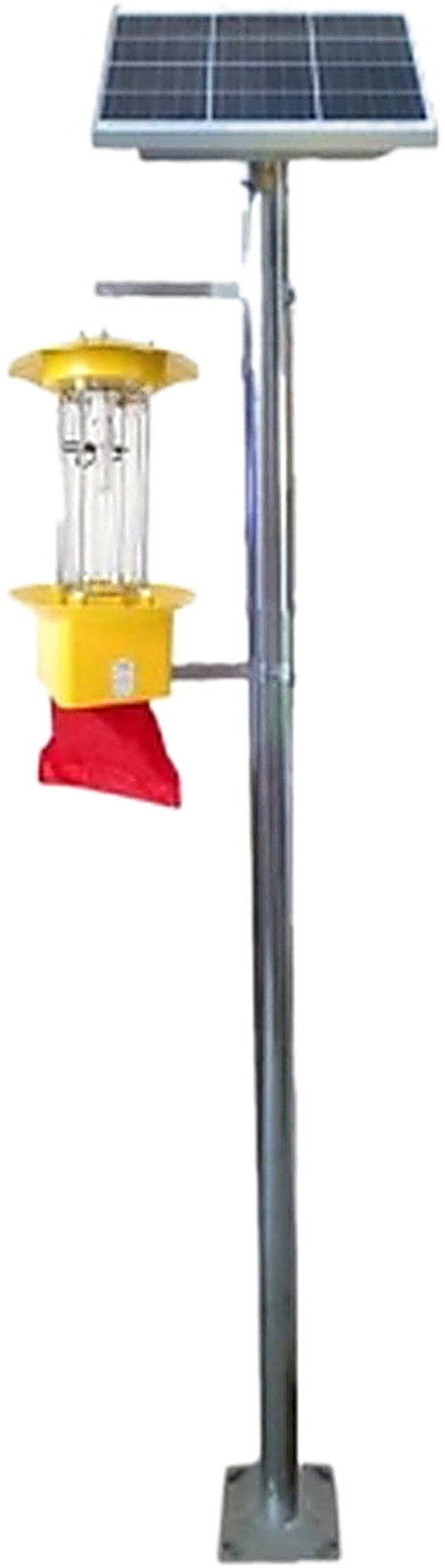

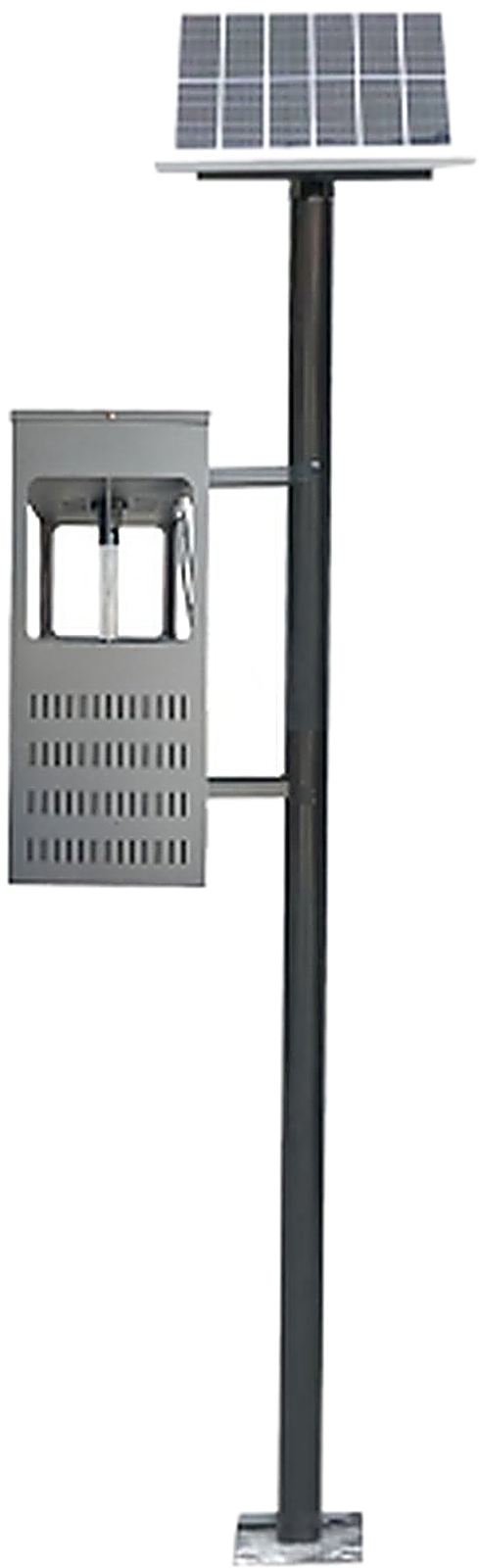
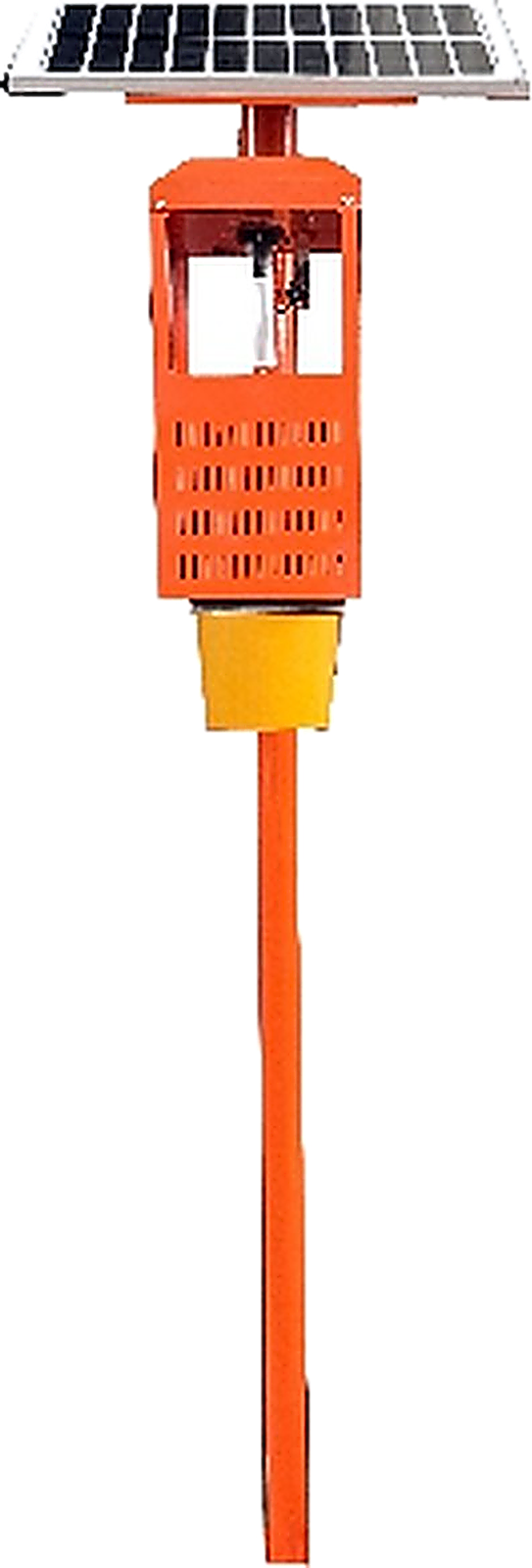
Use this guide alongside the references below to build a complete, defensible programme.
For deeper technical and regulatory context, see the FAO Integrated Pest Management and the EPA safe pest control.
Do solar insect killers work in Senegal’s dusty dry season? Yes, provided panels are cleaned regularly and batteries are sized for several cloudy nights. Dust management is part of routine maintenance, not an optional extra.
Which crops benefit most? Rice, millet, sorghum and cowpea all have major night-flying pests. In Senegal, the strongest case is usually in irrigated rice and mixed cereal plots where monitoring is currently weak.
How many traps does a village need? Start with one trap per two to three hectares in the highest-risk blocks, then adjust using the first season’s catch map and the cooperative’s budget.
Can the program reduce insecticide use? It can, when trap thresholds are agreed in advance and farmers trust the counts. The modeled program cut routine sprays by about a third; verify the figure with your own trial before making claims.