
Ukraine is one of the world’s breadbaskets — a vast expanse of black-soil steppe producing sunflower, wheat and maize for both domestic use and export. War, logistics shocks, and tight EU residue rules have pushed farmers toward resilient, low-input agricultural pest control. Across several oblasts, the solar insect killer is emerging as a practical tool in that strategy. This field report explains what Ukrainian growers are seeing on the ground.
Ukrainian agriculture is large-scale, mechanized, and export-dependent. A single rejected shipment at a EU border over residue can erase a season’s margin. At the same time, input shortages and fuel price swings make chemical-heavy programs risky. A solar bug zapper that needs no fuel, no grid, and almost no labor fits a farming system under constant pressure to do more with less — the essence of modern farm pest management.
Sunflower faces sunflower moth and various noctuid larvae; wheat contends with cereal leaf beetle, aphids and stem borers; maize battles corn borer and armyworm. Most of these adults fly at dusk and are strongly light-attracted. That makes a solar insect killer a natural fit: it intercepts the winged generation every night before eggs are laid in the next crop.
Sunflower moth and related moths lay eggs in the flowering head, and larvae feed on developing seeds, cutting yield and oil content. Growers placing solar insect killers around field margins report fewer moths fanning into the crop at dusk. Because the trap runs on sunlight, it keeps working through the long Ukrainian summer even when diesel for generators is scarce.
Winter and spring wheat suffer from cereal leaf beetle and aphid complexes that explode in warm spells. A solar bug zapper positioned along windbreaks and headland catches the alate adults as they move between fields. Combined with scouting, it lets growers delay the first insecticide round — protecting both residue budgets and beneficial predators that keep aphids in check.
European corn borer and fall armyworm are among the costliest maize pests in the region. Both moths are strongly drawn to UV light. Ukrainian agronomists trialing a solar insect killer at maize edges note a reduction in moth pressure during the vulnerable silking window, when larval feeding hurts kernel set most. The devices also double as a cheap monitoring signal for when armyworm flights peak.
Perhaps the biggest lesson from Ukraine is resilience. A solar insect killer has no supply chain dependency on imported chemical actives and no need for stable fuel. In a season when logistics falter, a device installed once keeps protecting the crop. That independence is why cooperative unions in several oblasts now list solar traps in their shared agricultural pest control playbook.
EU-bound grain and oilseed face strict residue testing. Every chemical round a solar bug zapper helps avoid is one fewer line in the compliance log and one less rejection risk. Ukrainian exporters increasingly value physical control precisely because it is defensible: no active ingredient, no MRL exposure, clean documentation for buyers in Germany, Poland and beyond.
A typical rollout across Ukraine starts at field edges and hotspots, then expands along headlands and shelterbelts. Catch trays are checked weekly and shared with the local extension agent. Over a season, the solar insect killer becomes both a control device and a data source, feeding the cooperative’s broader farm pest management dashboard.


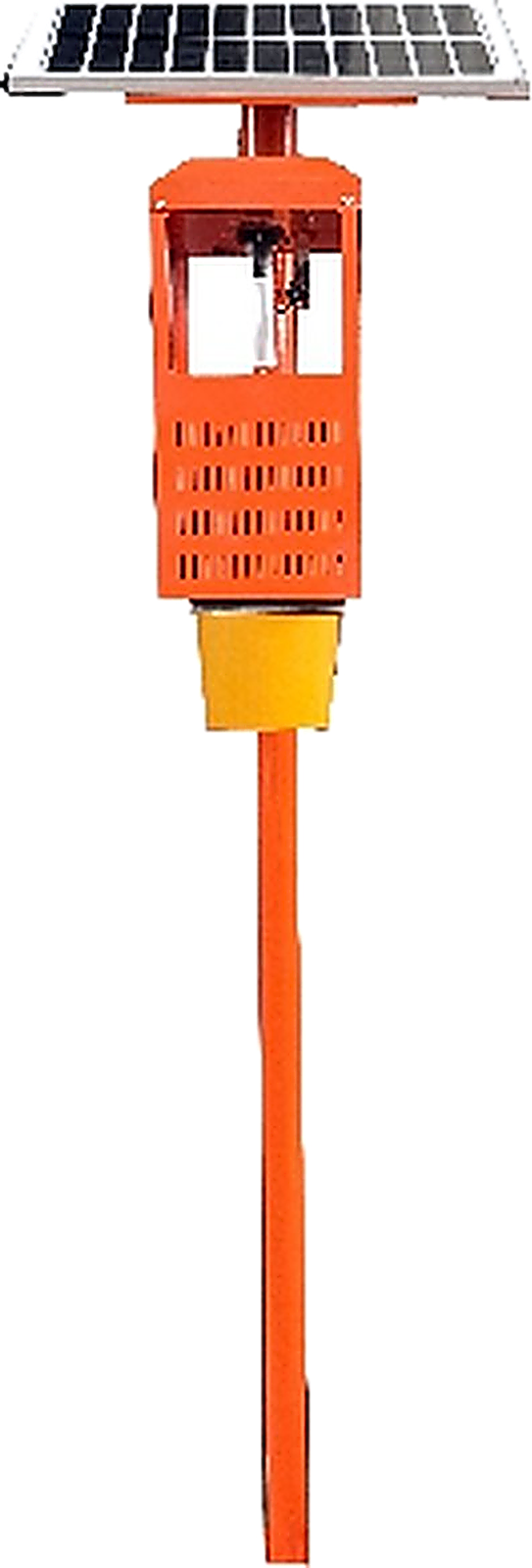

Use this guide alongside the references below to build a complete, defensible programme.
For deeper technical and regulatory context, see the FAO Integrated Pest Management and the EPA safe pest control.
Sunflower, wheat and maize see the clearest gains because their key pests — sunflower moth, cereal leaf beetle, corn borer and armyworm — are light-attracted adults. A solar insect killer intercepts them nightly at field margins before egg-laying.
Yes. Because a solar bug zapper needs no grid or fuel, it scales to broad acreage by placing units along edges and hotspots. Many large holdings and cooperatives run them as a shared, low-maintenance layer of agricultural pest control.
Each night of trap operation replaces potential insecticide rounds, lowering residue risk on EU-bound grain and oilseed. A solar insect killer leaves no active ingredient, so compliance logs stay clean and rejection risk at the border drops.
Not entirely. They excel against flying adults but not soil or root pests. Ukrainian growers use the solar insect killer as the backbone of farm pest management and keep targeted sprays for outbreaks the trap alone cannot contain.