
Many of the world’s most valuable crops — tea, coffee, cardamom, citrus, olives, and terraced rice — grow on slopes and terraces where flat-field rules do not apply. Wind moves differently on a hillside, water runs off instead of pooling, and a panel that is perfect on level ground can shade itself on a tilt. This guide covers how to deploy a solar insect killer on hilly terrain and terraced farms so it actually performs.
On a slope, insect flight, light throw, and drainage all behave differently from a flat field. Ignoring the terrain leads to shaded panels, waterlogged bases, and gaps in coverage.
Warm air rises up a slope at night, carrying moths and beetles along the contour. Pests often concentrate along the uphill edge and in the cooler gullies, so trap placement should follow those corridors rather than a grid.
Terraces shed water fast. A trap base sat in a runoff path will erode or tip, while one placed on a stable riser stays put. Good farm pest management on slopes starts with picking ground that will not wash away.
A solar insect killer needs a stable, sun-exposed base. On slopes that means adapting the standard pole mount rather than forcing a flat-field setup.
Set the panel tilt to the site’s latitude and face it toward the equator. On a terrace wall, bracket the pole to the retaining structure so it cannot lean. Keep the light head at or just above the crop canopy where the target adults fly.
Use a deeper concrete footing on the downhill side and a guy line on exposed ridges. A solar bug zapper that survives a storm season pays for itself; one that topples does not.
Flat-field spacing assumes uniform flight. On terraces, space traps by contour line and gully mouth instead.
Place the first units at the uphill field edge and at each gully where cool air pools. Those are the pinch points where night-flying pests gather. Fill inward only after the edges are covered.
On multi-level terraces, mount one unit per two to three steps rather than one per flat area. The light throw carries across a short drop, so you can cover more ground with fewer devices.
Hill farms see stronger, gustier wind and more driven rain than valley fields, so hardware choice matters.
Select a unit with a high IP rating (IP65 or better) and corrosion-resistant fittings, especially on coastal or humid slopes. Wind-driven rain finds every seam a calm field would never test.
Exposed ridges attract strikes. A simple surge protector on the charge controller and a grounded pole reduce the risk of losing the unit and the battery in one storm.
Steep ground adds risk during servicing, so design for safe access from day one.
Lay a simple access path along the contour so the battery and panel can be reached without scrambling. Tag each unit with its terrace number so crews can find and service it quickly.
Site traps away from springs, irrigation lines, and play areas. Because the device adds no chemical residue, it fits neatly into a low-input agricultural pest control plan, but physical siting still matters.
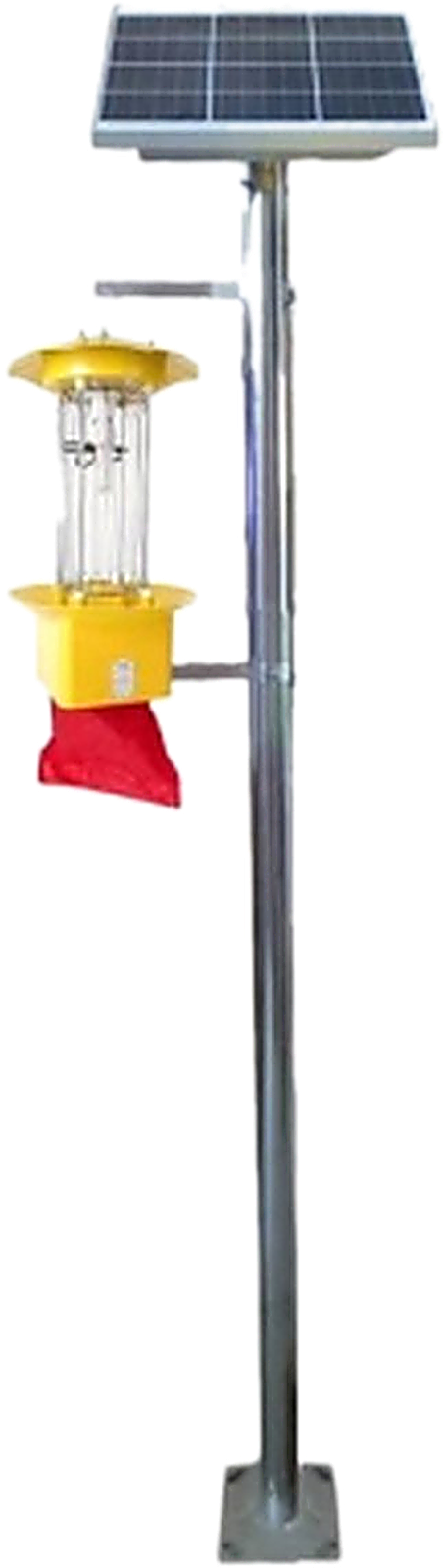

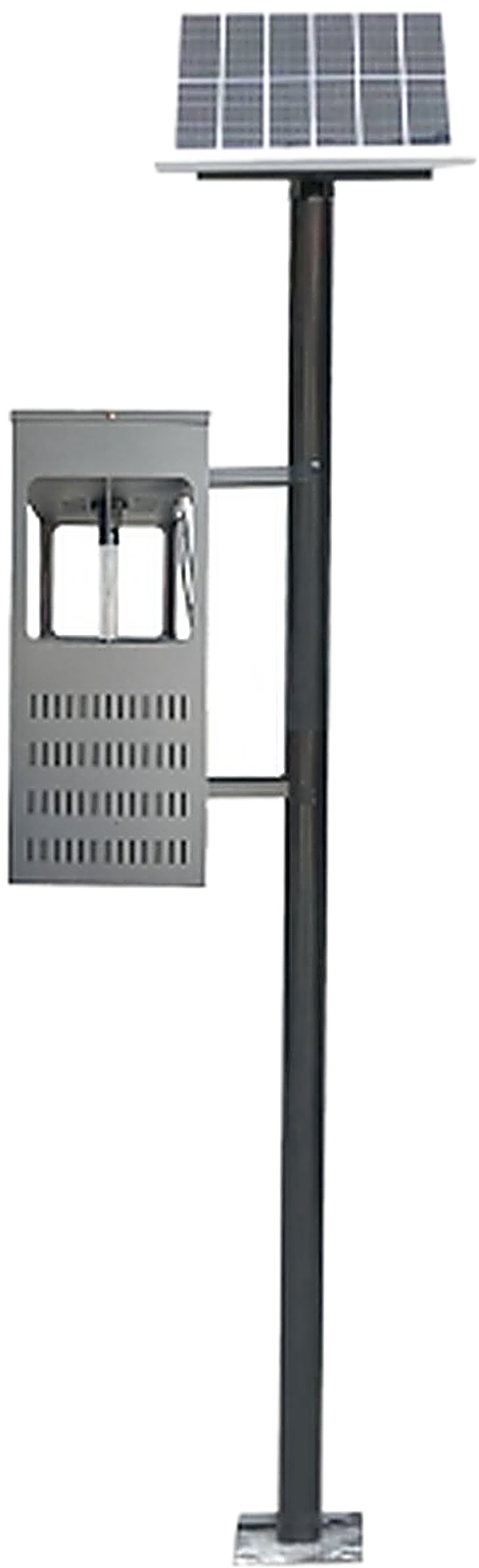
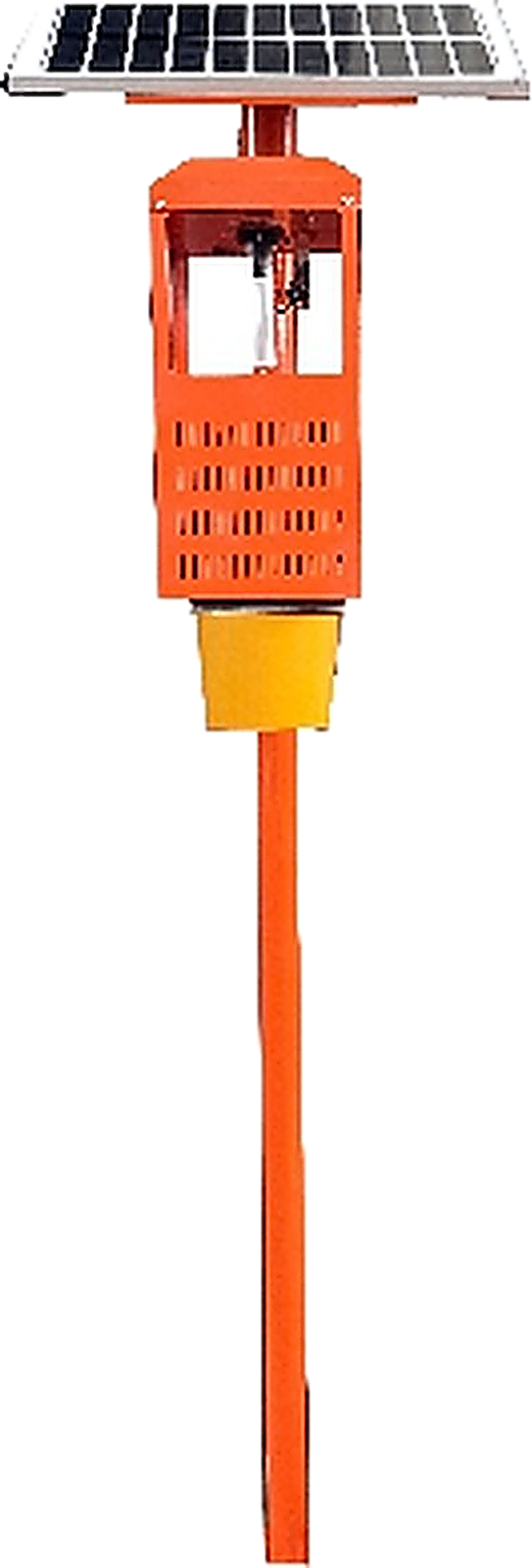
Use this guide alongside the references below to build a complete, defensible program.
For deeper technical and regulatory context, see the FAO Integrated Pest Management and the EPA safe pest control.
Yes. With a properly anchored, tilt-adjusted mount it performs as well as on flat ground, and the uphill pest corridors often make placement easier to plan.
Use a deeper downhill footing, a guy line on exposed ridges, and bracket mounts to terrace walls. Anchoring matters more on slopes than on flat fields.
Only if mis-aimed. Set the tilt to latitude and face it equator-ward; on a terrace wall that usually means angling slightly outward from the riser.
Because light throw carries across short drops, roughly one unit per two to three terrace steps covers well, fewer than the flat-field rule of thumb would suggest.
Hilly terrain and terraced farms are not a barrier to a solar insect killer — they are a different deployment problem. Follow the contours, anchor against slip and storm, pick weatherproof hardware, and you get the same adult-control benefit as a flat field, often with fewer units. For slope growers, that makes farm pest management both practical and cost-effective.