
When farmers look for chemical-free agricultural pest control, two very different tools come up: the powered solar insect killer and the passive bat box or bird house. Both attract predators of crop pests, but they work through opposite mechanisms — one kills adults directly with light, the other invites vertebrates that eat insects across the landscape. This comparison helps you decide which fits your farm pest management plan, and why many operations use both.
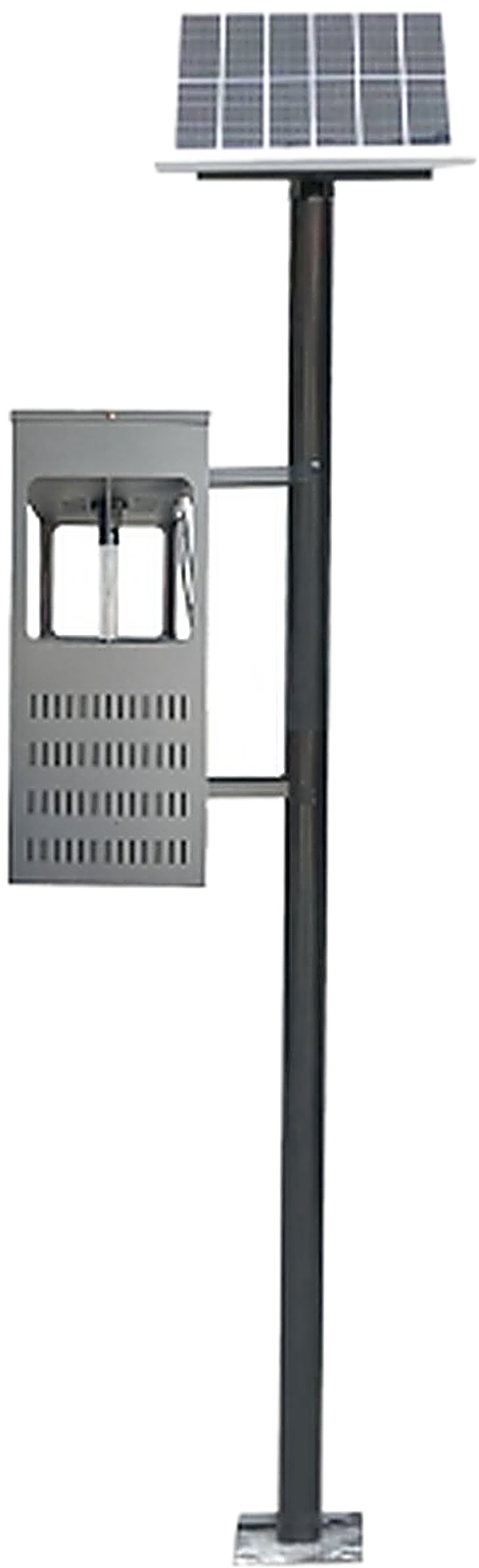
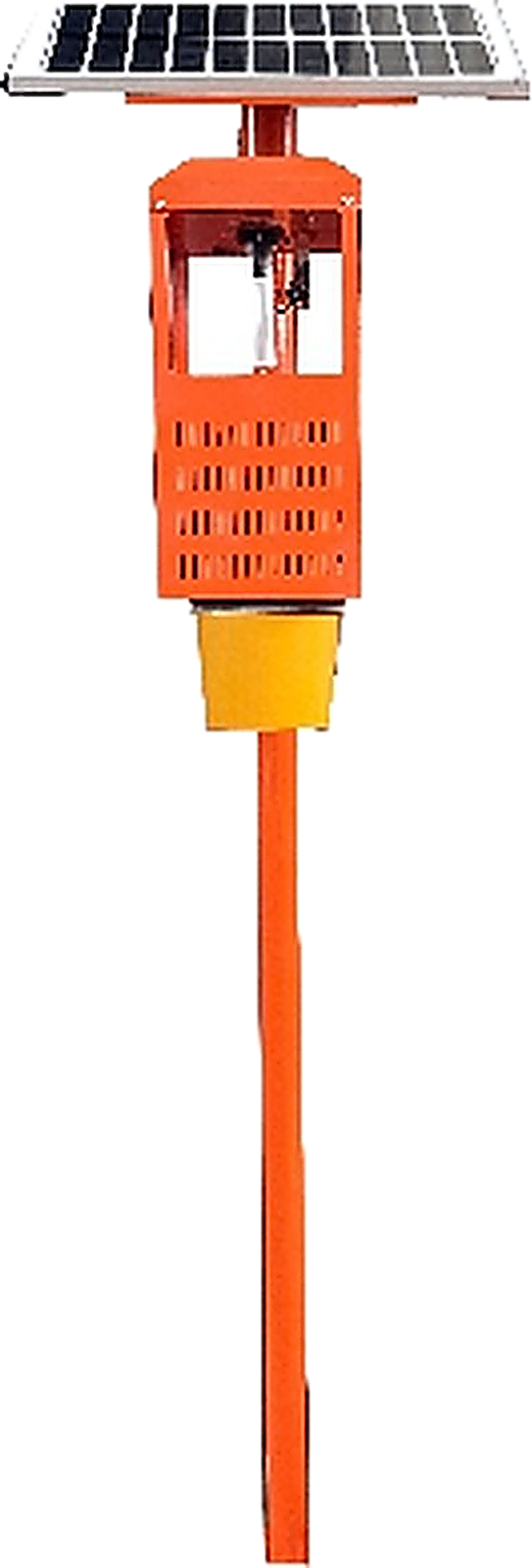
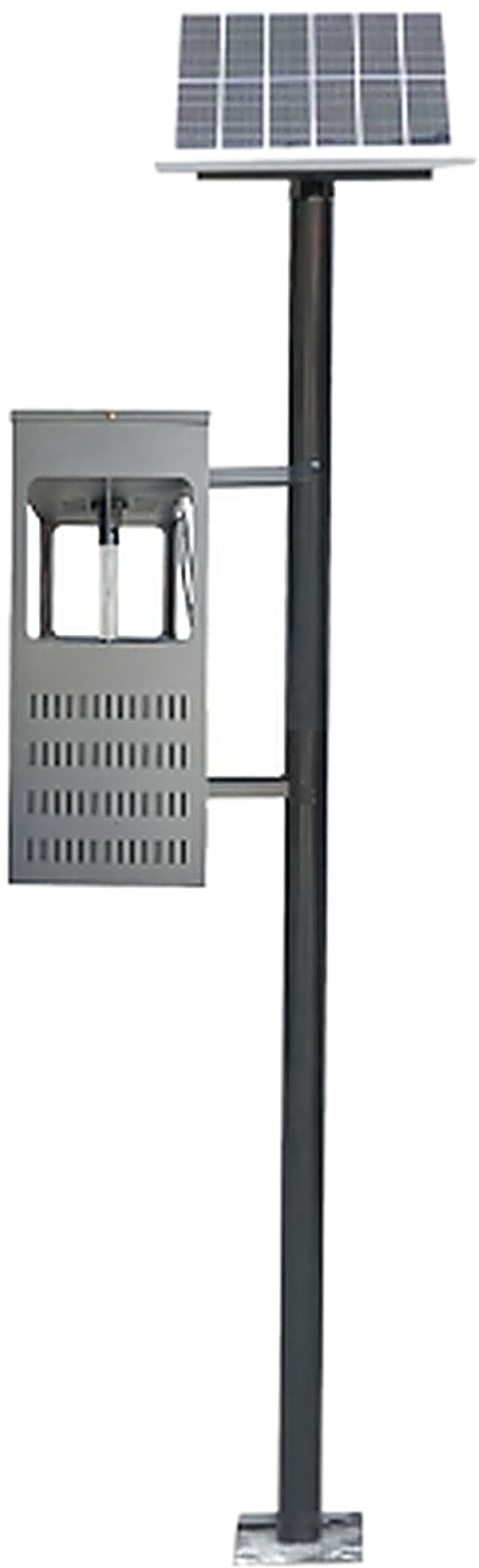
A solar bug zapper (or wind-suction model) uses a UV or LED lamp to exploit insect phototaxis, then captures or kills the attracted adults overnight. It is targeted at flying adults — moths, beetles, leafhoppers, and flies — and runs autonomously off a solar panel.
A bat box or nest box provides roosting or nesting habitat for insectivorous vertebrates. A single bat can consume thousands of flying insects per night; swallows and martins take crop-damaging flies and moths on the wing. These are habitat-based, not device-based, controls.
| Factor | Solar Insect Killer | Bat Box / Bird House | |——–|——————-|———————-| | Mechanism | Light trap kills adults | Habitat attracts predators | | Speed of effect | Same night | Weeks to establish colony | | Target | Flying adults | Broad aerial insects | | Power need | Solar panel + battery | None | | Upfront cost | Medium per unit | Low per box | | Maintenance | Clean trap, replace battery | Inspect, predator-proof | | Weather limit | Needs charged battery | Colony may migrate seasonally | | Scalability | Add more units | Limited by territory |
The solar insect killer delivers predictable, measurable suppression from night one. Capture counts tell you pest pressure, and placement is flexible — a unit can move to a hotspot. For farm pest management programs that must hit residue limits or protect a premium crop, that certainty matters.
Habitat augmentation builds a self-sustaining predator population that patrols a wide area, including pests a trap cannot lure. Bats also control mosquitoes and flies around farm buildings, an amenity benefit. Once established, the recurring cost is near zero, and the biodiversity story supports eco-labeling and agritourism.
Choose a solar insect killer when you need immediate, controllable suppression of a specific flying-adult complex in orchards, paddies, or greenhouses, and when you want data to guide sprays.
Choose bat boxes and bird houses when you are building a long-term, low-input, biodiversity-friendly system and can wait a season for the predator base to develop.
The two are complementary, not competing. A common agricultural pest control design pairs a perimeter of solar insect killer units with bat boxes on field edges and martin houses near storage. The devices handle immediate adult pressure; the vertebrates provide area-wide, year-round predation and knock down pests the traps miss. Together they reduce both chemical use and the risk of any single method failing.
A bat box costs little but delivers value only after colonization. A solar insect killer costs more up front yet pays back through avoided sprays and saved labor from the first season. For most commercial operations, the device is the dependable backbone; habitat features are the durable bonus layer.

Use this guide alongside the references below to build a complete, defensible program.
For deeper technical and regulatory context, see the FAO Integrated Pest Management and the EPA safe pest control.
Q1: Will a solar insect killer hurt the bats I am trying to attract? Position traps away from box entrances and use low-glare, suction-type units to minimize non-target impact; bats forage widely and are not drawn to the lamp.
Q2: How long until bat boxes control pests? Colonies may take one to two seasons to establish and fluctuate with weather, so do not rely on them alone in year one.
Q3: Can bird houses increase pest control enough to skip devices? Rarely for commercial scale; birds help but cannot match the nightly, targeted catch of a solar insect killer during peak flight.
Q4: Which is better for organic certification? Both qualify as non-chemical tactics, but check your standard — some certifiers scrutinize powered light traps more closely than passive habitat.
A solar insect killer and bat boxes or bird houses solve the same problem through different paths: direct nocturnal kill versus recruited vertebrate predation. For resilient agricultural pest control, use the device for immediate, measurable suppression and habitat features for lasting, self-renewing pressure. The farms that win are the ones that deploy both.