
A solar insect killer looks simple from the outside: a lamp, a fan or grid, and a solar panel. But the difference between a trap that runs every night for five years and one that dies after the first cloudy week is almost always hidden in the power system. If you are a distributor, an importer, or a farm manager specifying units for agricultural pest control, understanding how to size the solar panel and battery is the single most valuable spec skill you can build.
This guide walks through wattage, amp-hours, autonomy days, and climate derating in plain language, so you can read a supplier’s datasheet and know whether the numbers actually hold up.
Most buyers focus on the UV tube or LED and the kill mechanism. Those matter, but they are useless if the trap cannot power on. A solar bug zapper draws a steady load every night: the attractant light, the fan or electric grid, and the control board. In tropical wet seasons or northern winters, the sun may disappear for days. The battery must bridge that gap, and the panel must refill it afterward.
Get the sizing wrong and you get three failure modes:
Good farm pest management depends on consistency. A trap that works 9 nights out of 10 still lets the 10th night’s generation breed.
Start with the load. A typical solar insect killer consumes:
Assume a real-world operating power of 8–15 W. Insects are most active after dusk, so estimate 8–10 hours of runtime per night.
Energy per night = power × hours.
That 90 Wh is your baseline. Everything else scales from it.
“Autonomy” means how many sunless nights the system survives without dropping below a safe depth of discharge. For lead-acid, never exceed 50% depth of discharge. For LiFePO4, 80% is safe.
Target at least 2–3 autonomy days for reliable agricultural pest control in rainy regions.
Battery capacity needed (Wh) = nightly energy × autonomy days ÷ usable fraction.
So a 12 V, 30 Ah LiFePO4 pack is the practical minimum for a 10 W trap with three-day autonomy. A 7 Ah lead-acid unit advertised for the same trap will not survive a wet week.
The panel must replace the nightly draw plus losses, and it must do so in the weak sunlight of the local worst-case season. Two rules of thumb:
For a 10 W nightly load, a 30 W panel is the floor; 50 W is comfortable. Remember that a panel rated at 50 W produces 50 W only at perfect noon sun. Real daily yield is a fraction of the nameplate, so oversizing is cheap insurance.
This is where many importers get burned. A sizing that works in Kenya’s dry season fails in a Malaysian monsoon.
If your farm pest management plan spans climates, spec to the worst site, not the average.
When a supplier quotes a solar insect killer, check four numbers and sanity-check them against the math above:
If the numbers do not add up, the unit is undersized regardless of the marketing copy.
Wind-suction solar bug zapper models use a fan instead of a grid, which spreads the load but runs longer. Grid models spike current at the moment of a catch. Both are fine; just size the battery for the actual continuous draw, not the peak.


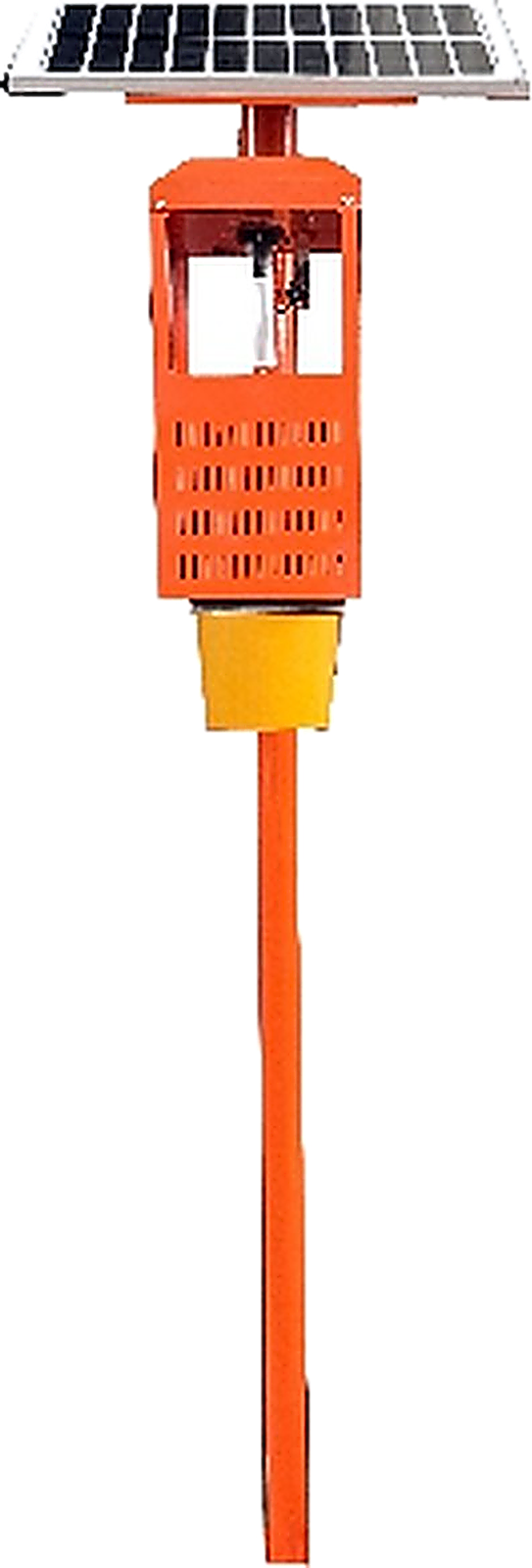
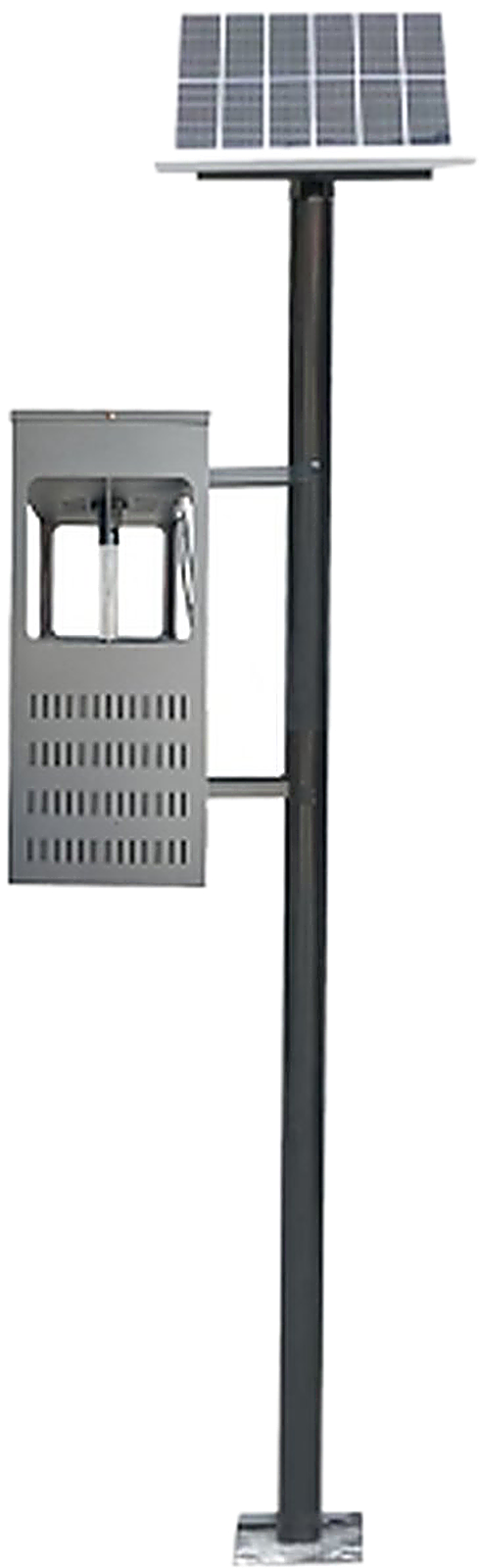
Use this guide alongside the references below to build a complete, defensible program.
For deeper technical and regulatory context, see the FAO Integrated Pest Management and the EPA safe pest control.
How many autonomy days do I really need?
For most farms, 2–3 days prevents gaps during normal weather. In monsoon or winter regions, specify 3–4 days.
Is LiFePO4 worth the extra cost over lead-acid?
Yes for multi-season use. It tolerates deeper discharge, lasts 3–5× longer, and weighs less, which matters for pole-mounted solar insect killers.
Can I add a bigger panel later?
Usually yes if the charge controller accepts the current. Oversizing the panel is the safest upgrade; a weak battery cannot be fixed by sunlight alone.
What kills batteries fastest?
Chronic over-discharge and heat. Size for autonomy and keep the pack out of direct afternoon sun inside a vented enclosure.
Sizing a solar insect killer is not guesswork. Work backward from nightly watt-hours, give the battery real autonomy, and let the climate set the panel size. Distributors who master this spec language stop receiving “the trap stopped working” complaints and start shipping agricultural pest control that survives the field. For deployment spacing and crop-specific placement, see our related farm pest management guides.