
Greenhouses concentrate heat, humidity, and host plants in one enclosed space, which makes them perfect for crops—and perfect for pests. Whitefly, thrips, aphids, and leafminers explode under glass and poly tunnels where there are no cold nights or predators to check them. A solar insect killer greenhouse operators install pays for itself by stripping flying adults out of the air before they reach your transplants. This guide shows how a solar insect killer fits a modern agricultural pest control program inside controlled-environment houses.
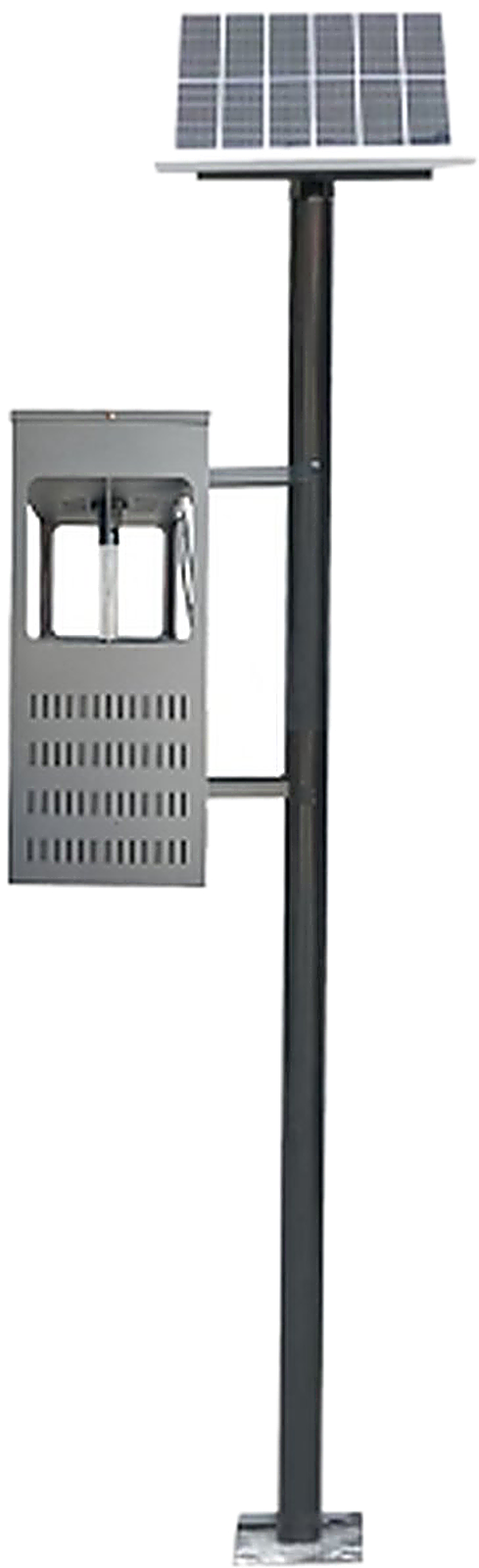
In an open field, predators, wind, and temperature swings keep pest numbers bounded. Inside a greenhouse, the climate is tuned for the crop, not the enemy. Whitefly populations can double in a week; thrips ride every new seedling tray through the door. That is why farm pest management under glass must start with exclusion and continuous adult removal rather than calendar sprays. A solar bug zapper pulls the flying stage out of the air 24/7, lowering the egg-laying adult pool that drives every outbreak.
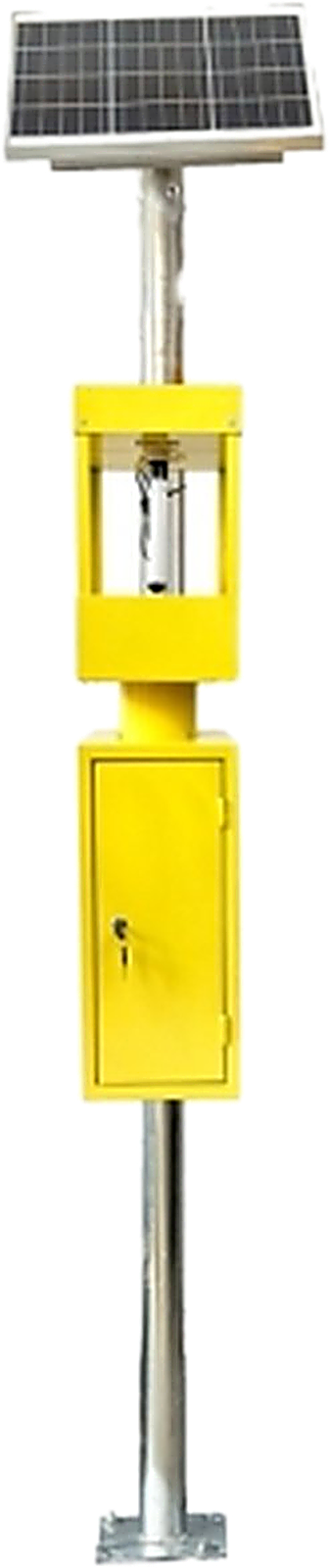
The unit mounts on a post or truss, charges from the roof-light hitting its panel, and runs the UV-LED lure through the night. Caught insects drop into a tray you inspect during scouting. In a solar insect killer greenhouse layout, the lamp becomes a fixed monitoring point—you learn which bench or bay is heating up before damage shows on leaves.
Unlike a spray that hits only treated surfaces, the lure attracts adults from across the house. Fewer adults means fewer eggs on the underside of leaves.
The tray tells you what is flying. A jump in thrips tells you to check the latest shipment of plugs; a whitefly spike points to a specific bay.
Because the trap targets flying pests, it pairs cleanly with banker plants and predatory mites already used in greenhouse IPM.
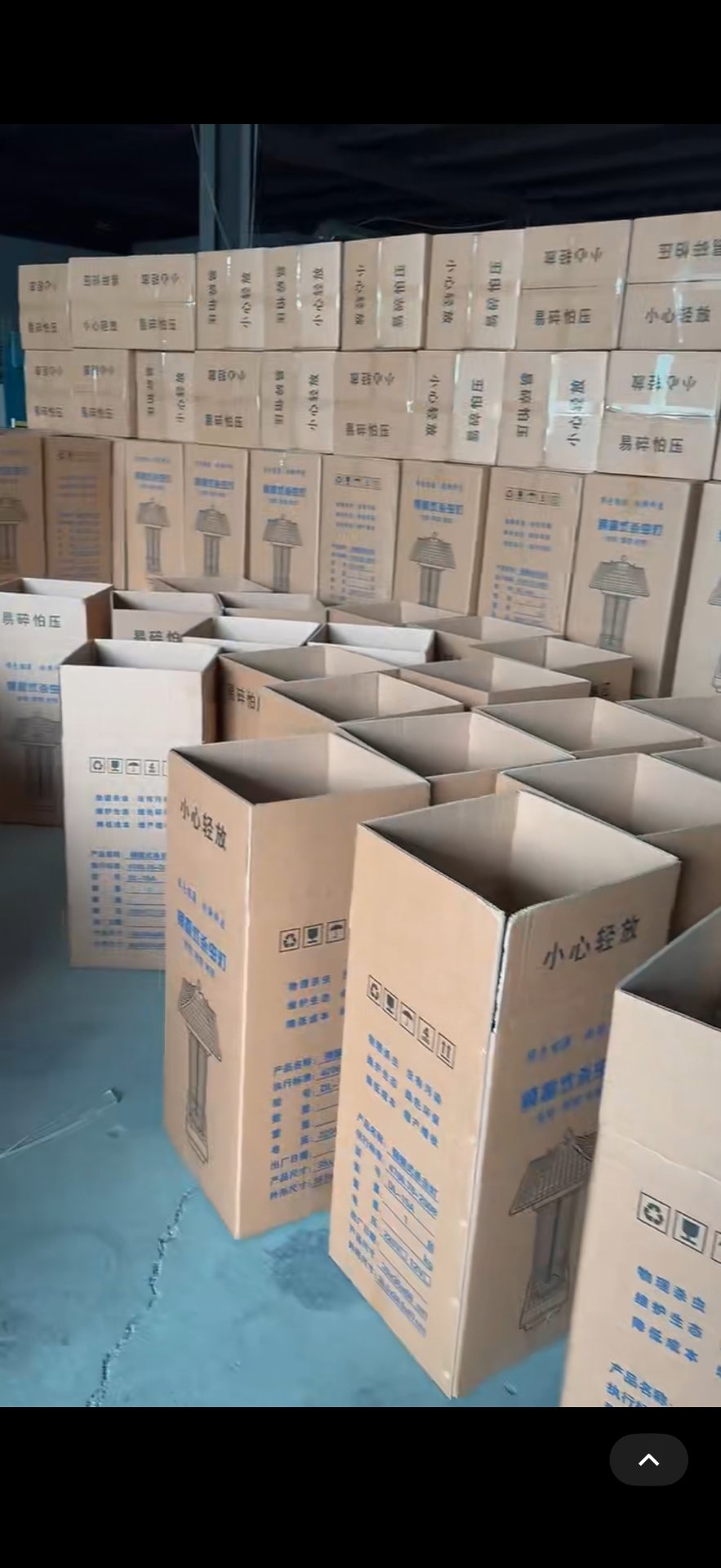
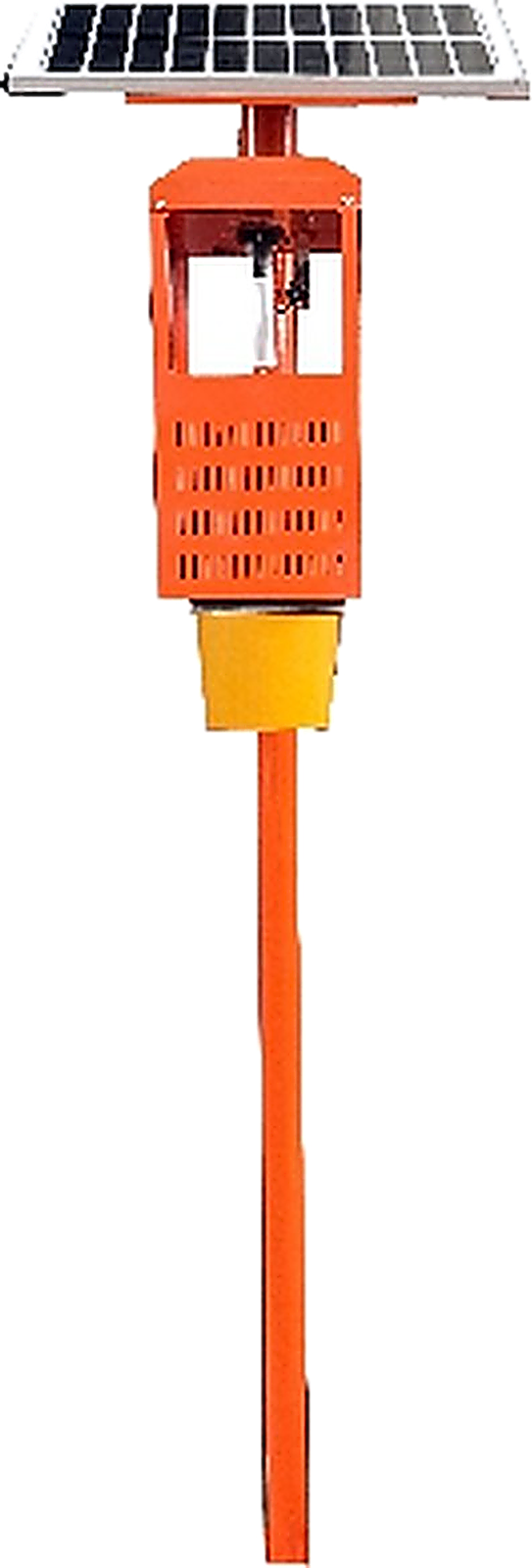
Protected crops sell on grade and continuity. A solar insect killer greenhouse installation has no electricity bill and a multi-season lamp life, so the math is mostly labor for tray checks versus saved spray passes and rejected trays. For export and premium retail, fewer residues and cleaner packs are themselves a margin. Our OEM/ODM program supports custom voltages, pole kits, and private-label branding for distributors bundling lamps with agronomy services.
Do solar insect killers replace greenhouse sprays?
No. They are a prevention layer within IPM. They cut adult numbers and spray frequency but pair with selective products when outbreaks cross action levels.
Will the light harm beneficial insects or pollinator hives inside the house?
The lamp targets nocturnal flying pests. Day-active pollinators are largely unaffected, especially when units sit at house edges and vents rather than inside bloom rows.
How many units do I need per greenhouse?
Start with one per 200–400 m² of high-value house, then adjust using your tray-scouting data.
Can the unit handle greenhouse humidity and condensation?
Yes. The sealed, IP-rated housing is built for enclosed, high-humidity environments common under glass and poly.
A solar insect killer greenhouse setup is a low-running-cost, chemical-free tool that fits protected-crop IPM by mass-trapping whitefly, thrips, and aphids, enabling early scouting and protecting beneficial insects. Used at doors, vents, and edges with disciplined monitoring, it lowers spray load and supports higher-grade agricultural pest control across the house.