
A site survey decides whether a solar insect killer earns its place. Put the unit in the wrong spot and it will still catch insects, but the catches may tell you very little about the crop you are trying to protect. Shade reduces charging, a hedge can block the flight path, and a trap set too close to a packing shed will mostly sample the insects that already live there. A proper site survey turns placement from guesswork into a repeatable decision.
This guide sets out eight steps for surveying a farm before a single pole is installed. It is written for estate managers, distributors and IPM advisors who need a deployment plan that can be handed to a field crew.
A site survey has three jobs. First, it identifies where the target pests are likely to enter the crop. Second, it confirms that a solar-powered device can operate reliably at that point. Third, it checks that the location is safe and practical for the person who will empty the collection chamber every morning.
If the survey cannot answer those three questions, the placement is not ready. The output should be a simple map with numbered points, noting the crop, the reason for each position and any access constraint.
Start with a base map or a satellite printout. Mark crop blocks, variety, planting date and any history of pest outbreaks. Walk the block boundaries with the grower and record where damage was worst last season. Those edges are often the first places where a migrating moth population arrives.
A site survey that ignores pest history becomes a solar access exercise. Keep the biology first and the engineering second.
Every site survey has to test the light budget, because a solar insect killer needs enough direct light to recharge its battery after a full night of operation. Visit the site at least twice, once in the morning and once in the afternoon, and note where shadows from trees, buildings and poles fall. Winter and early spring shadows are longer than summer ones, so a spot that looks sunny in June may be shaded in March.
As a rule, choose a position with at least six hours of unobstructed sun. Where that is impossible, increase panel capacity or plan a battery swap rather than accepting a trap that quietly stops running at 3 a.m.
Night-flying insects move with the wind, and the trap should sit where that movement funnels them. Field edges, shelterbelts, irrigation channels and the lee side of a ridge are common concentration points. Note the prevailing wind direction for the season that matters most.
Drainage matters too, so a site survey should note where water stands after rain. A low spot that holds water will corrode the base and make access miserable after rain. A slightly raised, well-drained position is almost always better.
Nearby residue piles, unharvested fields, hedgerows, compost heaps and storage sheds can all harbor insects that recolonize the block. Mark these on the map and place a trap between the source and the crop where practical.
This is where a site survey becomes a farm pest management tool. If two fields share the same refuge, the two owners should coordinate rather than each buying a single trap and hoping for the best.
Note flowering plants, bee hives, bat roosts, bird nesting areas and water bodies close to each candidate point. A solar bug zapper near a hive or a flowering hedgerow may take useful pollinators; a unit over a pond raises disposal questions. Where risk is high, move the trap or fit a species-selective modification.
Also check that children, livestock and vehicles cannot reach the pole. A collection chamber at waist height beside a farm track is a liability; the same trap moved ten metres into the headland is not.
The person who services the trap must be able to reach it in the dark, in wet conditions and at the end of a long season. Mark the nearest track, gate and safe parking point. Estimate walking time from the store, because a ten-minute walk to each of twenty traps changes the labor budget completely.
In areas with a theft or vandalism history, note sightlines from the farmhouse and consider a locked mounting bracket. Security is part of the survey, not an afterthought.
At each point of the site survey, sketch what the mounting will involve. Is the ground soft enough for a direct-buried pole, or is a concrete footing needed? Is there a rock layer, an irrigation line or a cable run below the surface? How tall must the pole be to clear the crop canopy and keep the light source visible above neighboring plants?
Photograph each position from two directions. Photos plus a short note are more useful than a memory when the installation crew arrives three weeks later.
Number the final points and assign each one a purpose: monitoring, mass trapping or boundary defense. For monitoring, one solar insect killer per two to three hectares is a common starting density. For mass trapping, grids are tighter and the budget rises sharply, so set expectations before the crew starts digging.
Add a review date to the site survey. A placement plan should be revisited after the first season using the catch map, the damage map and the maintenance log. The best agricultural pest control decisions are the ones that get corrected with real data.

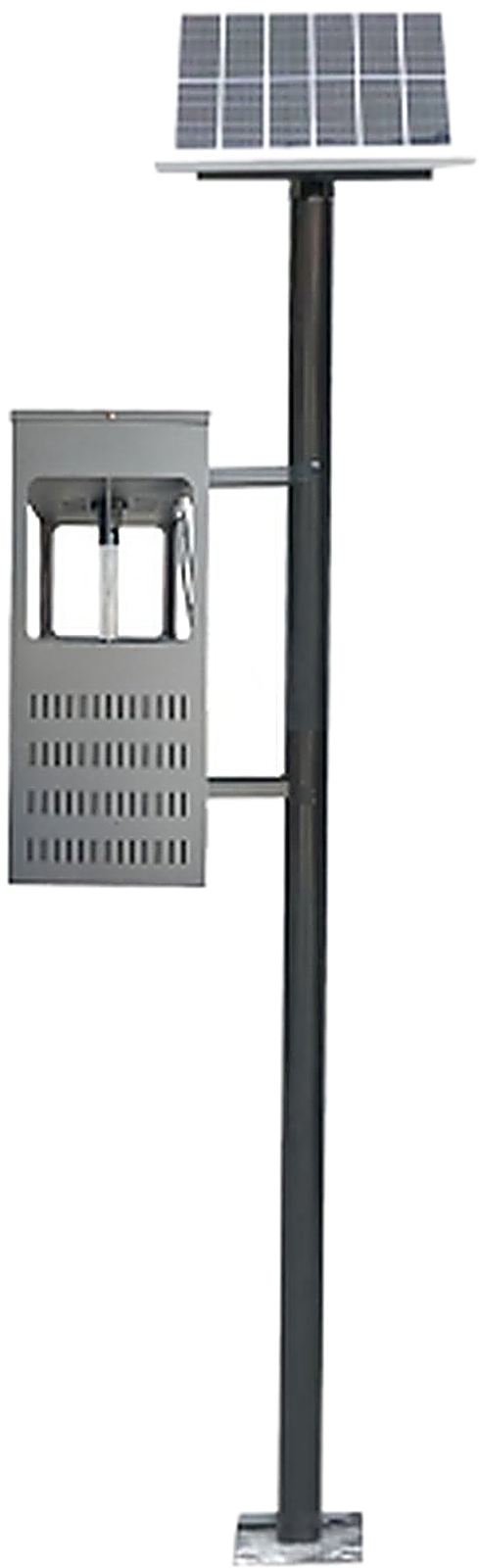
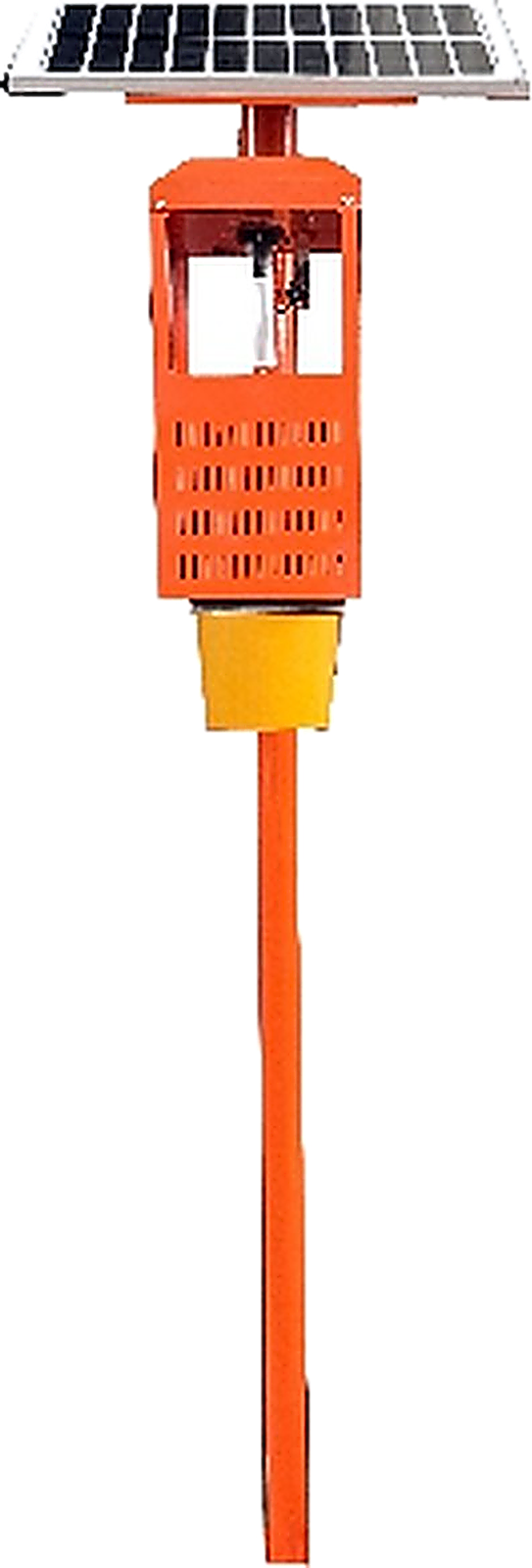
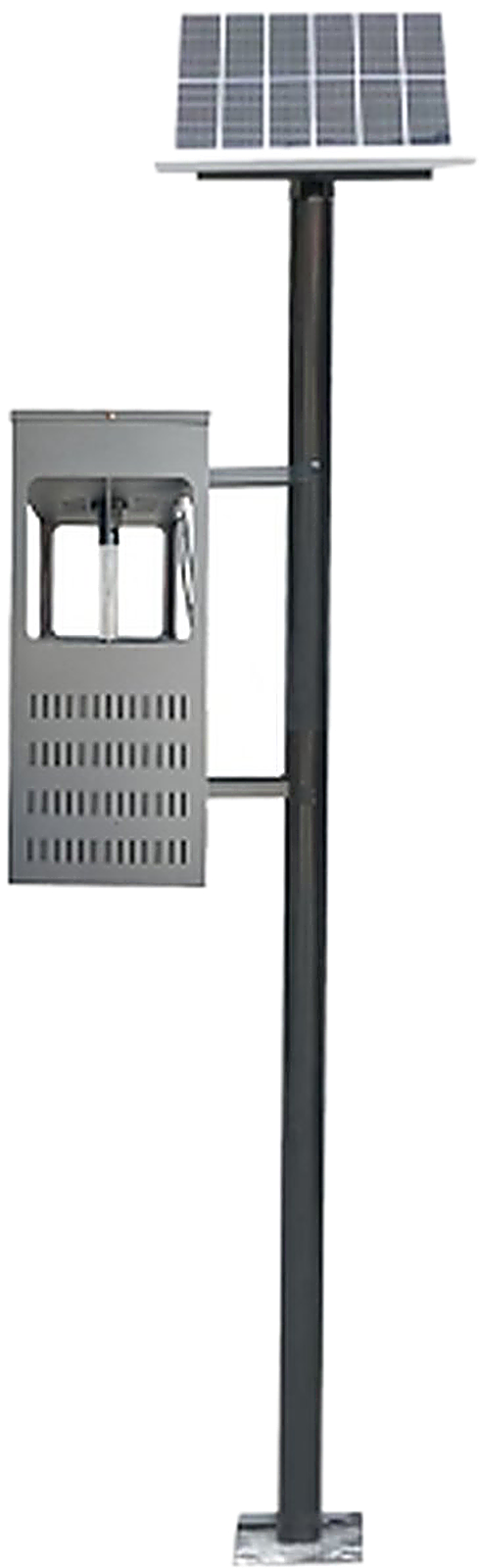
Use this guide alongside the references below to build a complete, defensible programme.
For deeper technical and regulatory context, see the FAO Integrated Pest Management and the EPA safe pest control.
How long should a site survey take? A small farm can be surveyed in half a day. Large estates with several crops and multiple managers often need two visits at different times of day to capture shadow and wind properly.
Do I need a GPS unit? Not necessarily. A labeled satellite printout or a phone map with numbered pins is enough, provided the field crew can find the same points later.
Can the survey be done in one visit? Only in simple, flat landscapes. Two visits give a much better read on shade and wind, and the second visit is often when the most important correction is made.
Who should carry it out? Ideally the IPM advisor and the person who will service the traps together. The advisor understands pest movement; the operator knows which tracks flood and which gates are locked.