
A single codling moth can be responsible for a whole bin of wormy apples. The female lays eggs on fruit shortly after petal fall, the larvae tunnel into the core, and the damage is invisible from the outside until the fruit is cut or starts to drop. Effective codling moth control is therefore a timing problem as much as a pest problem: you have to know when the moths fly, and you have to act before the eggs hatch.
This guide explains how to combine night monitoring, degree-day models, mating disruption, sanitation and selective treatment into a program that works in commercial apple, pear and quince orchards. A solar insect killer is one part of that program, not a replacement for the rest.
After hatching, the larva crawls briefly across the fruit surface and then bores into the calyx or the side of the apple. Once inside, contact products have almost no effect. A calendar spray program that misses the egg-hatch window leaves the grower with nothing to do but watch the damage accumulate.
In temperate orchards there may be two generations a year; in warmer regions a third partial generation is common. Flight peaks drift with temperature, and the second generation often overlaps with the first. A program that relies on one treatment per season simply cannot cover that spread.
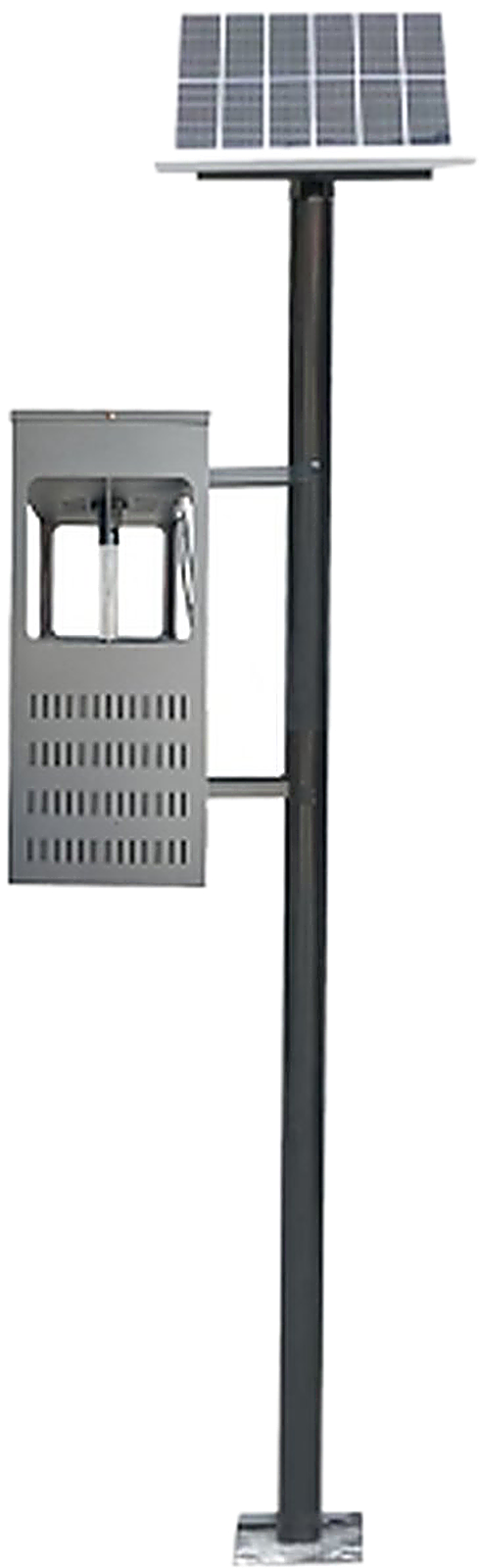
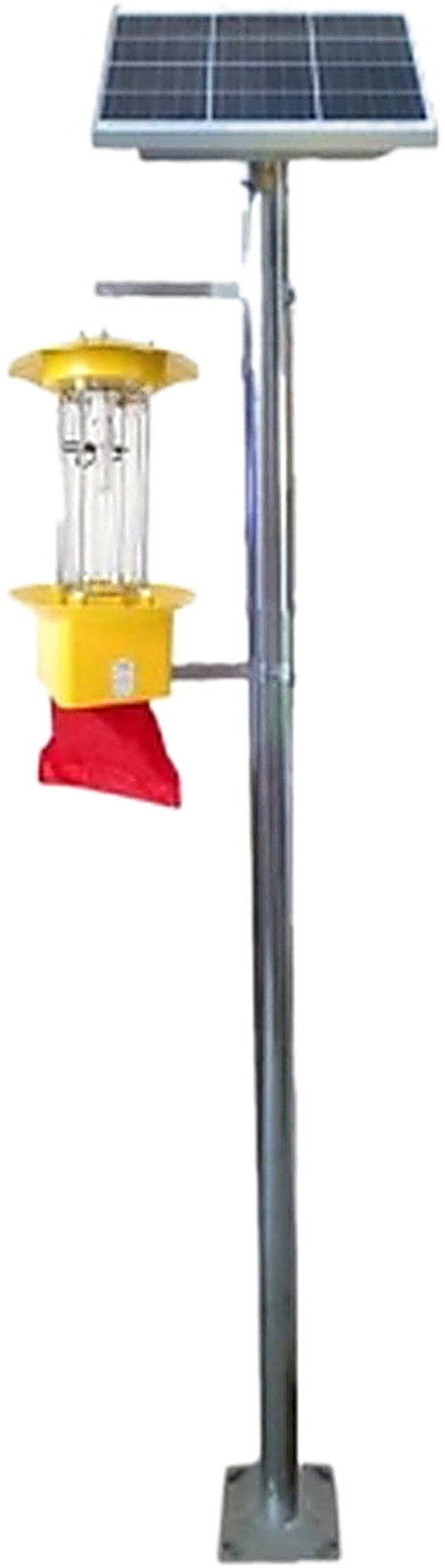
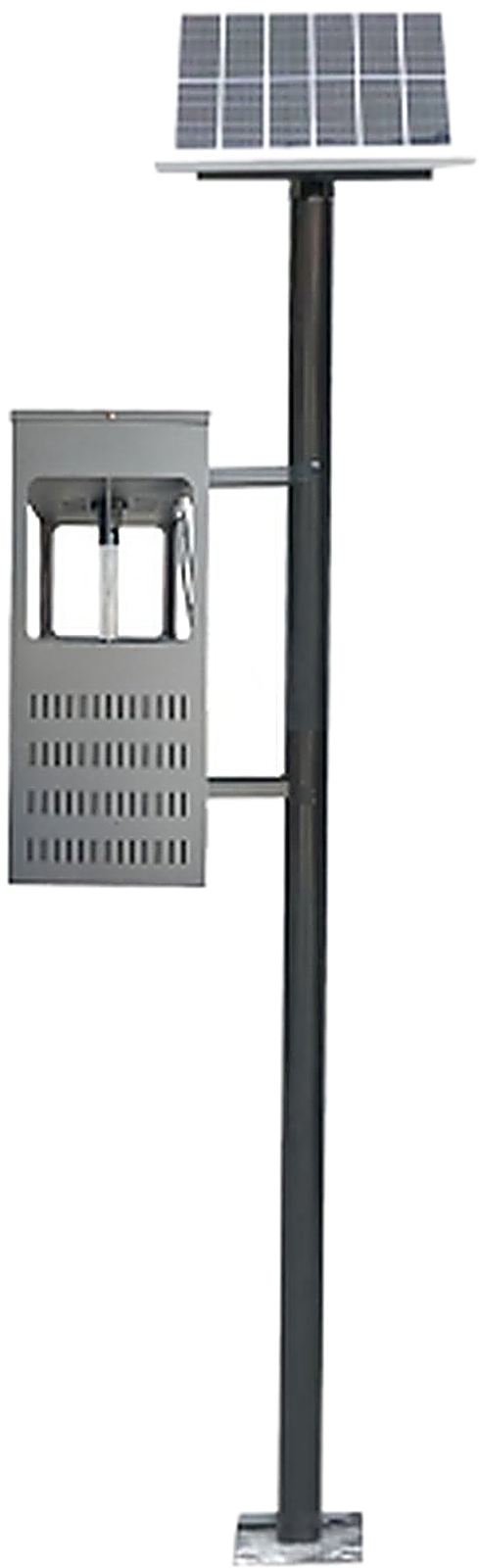
Hang traps at orchard edges, near hedgerows and close to packing or storage areas where moths rest during the day. One unit per two to three hectares is a practical starting point for monitoring; denser grids turn monitoring into mass trapping. A wind-suction solar bug zapper samples the night flight without mains power, so it can sit at the far corner of a block where no cable reaches.
Check the codling moth trap chamber every morning and record the count by block and by night. A sharp rise after a warm, calm evening is the earliest reliable signal that egg laying is about to increase.
Trap captures tell you that moths are flying; temperature tells you what the larvae are doing. Accumulate degree-days above the local lower threshold from biofix, the first sustained catch of the season. When the model approaches the egg-hatch window for your region, intensify scouting. This double check is the backbone of modern codling moth control, because it prevents both early sprays that wash off and late sprays that arrive after the larvae are safe inside the fruit.
No single tool carries the season. The list below shows how the pieces fit together, and why the order matters.
Remove mummified fruit, prune out loose bark on trunks and main limbs, and clear dropped fruit during the season. Codling moth larvae overwinter under bark or in debris and are the source of the first flight. Sanitation is the cheapest tactic on this list and the one most often skipped.
Pheromone dispensers confuse males and reduce successful mating across a block. They work best in reasonably large, square plots and when installed before the first flight. Keep light traps outside the treated block or use them as monitoring points only, so the disruption program is not undermined by local trapping.
A solar insect killer gives you a nightly data stream instead of a weekly guess. Plot counts against degree-day accumulation and mark each treatment on the same chart. Over two or three seasons the chart becomes a farm-specific calendar that is more accurate than any regional average.
Look for codling moth eggs on leaves near fruit clusters, frass on the fruit surface and entries around the calyx. In high-pressure blocks, inspect a fixed sample of fruit per tree rather than walking a random row. Record findings beside the trap counts.
When trap counts and degree-days agree, apply a selective product aimed at eggs and newly hatched larvae. Choose materials compatible with your export market and with beneficial insects. Broad-spectrum sprays at the wrong moment kill parasitoids and make the next generation harder to manage.
Trichogramma wasps, lacewings and predatory mites all attack codling moth eggs or young larvae. Avoid spraying during their peak activity and maintain flowering strips outside the crop rows. This fits naturally with farm pest management plans that aim to reduce chemical use without losing yield.
Cut a sample from every bin and record the percentage of damaged fruit by block. Compare that number with the trap chart. If codling moth damage is concentrated in one corner, the problem is usually placement or an untreated border, not the product.
The practical rule is simple: act between the flight peak and the egg hatch, not after the first wormy fruit appears. In a two-generation orchard, the first window is around petal fall to early summer and the second is in mid to late summer, but local temperature shifts both by weeks. That is why the trap and the degree-day model belong together.
After any treatment, keep the trap running. A second spike three or four weeks later indicates a surviving population and tells you where to focus the next intervention.

Use this guide alongside the references below to build a complete, defensible programme.
For deeper technical and regulatory context, see the FAO Integrated Pest Management and the EPA safe pest control.
Can a light trap alone control codling moth? No. A solar insect killer reduces adult numbers and gives excellent early warning, but sanitation, mating disruption and well-timed selective treatment are still needed in a commercial orchard.
Do light traps interfere with pheromone dispensers? They can if placed inside the disruption block. Keep monitoring traps at the perimeter and treat catches as a relative index rather than an absolute population count.
How many traps does a hectare need? One unit per two to three hectares is typical for monitoring. High-pressure blocks or irregular orchards may need a denser grid; adjust after the first season using your own catch maps.
When should the trap be switched on? From the first expected codling moth flight in spring through the end of the second generation. Solar-powered units make that continuous nightly schedule practical without wiring.