
The Colorado potato beetle can strip a field to bare stems in weeks, and it has earned a reputation for ignoring the chemicals that used to work. Growers who wait for visible defoliation are already behind. Effective potato beetle control starts with catching the first adult flight, reading egg masses before they hatch, and spreading the workload across several tools rather than one more spray.
This insect is unusually good at defeating simple programs. A female can lay several hundred eggs over a long season, larvae feed openly on foliage, and adults fly into nearby fields as neighboring crops are harvested. Potato beetle control fails most often because it is timed to the calendar instead of to the insect.
Resistance is the second reason. Populations in many growing regions have developed tolerance to multiple insecticide classes. A product that delivered clean control a few seasons ago may now leave survivors that repopulate the field within days. That is why modern agricultural pest control programs treat chemicals as one component, not the whole plan.
A third problem is hidden damage. Early feeding reduces leaf area, which reduces tuber bulking even when plants recover. By the time the loss is obvious at harvest, no intervention can recover it.
Overwintered adults emerge in spring and feed on volunteer potatoes and weeds before moving into planted rows. Females deposit yellow egg masses on leaf undersides. Small larvae hatch and feed on new growth; larger larvae consume whole leaflets. This is the stage where scouting decisions have the greatest effect.
After pupation in the soil, new adults emerge and feed heavily before laying another generation. These are the insects a light trap can sample. Adult movement often peaks in warm, calm periods, and a solar insect killer switched on at dusk records that movement every single night without labor.
Walk a W pattern through the field and check the underside of leaves in the upper canopy, where egg masses are most common. Count egg masses, small larvae, and large larvae separately, because the same total number has very different consequences at planting and at tuber bulking.
Record crop stage, variety, and weather with each count. A threshold that is acceptable in a vigorous late-season crop may be unacceptable on young plants. Many extension services publish local thresholds; use those as a starting point and adjust with your own field history.
Trap counts are the second data stream. Check the collection chamber at the same time each morning and plot the number of beetles captured. Egg mass density is the cleanest early measure of potato beetle pressure, and a rising three-night catch trend is the warning that adult activity is increasing, even before those masses are easy to find.
A solar bug zapper does not replace scouting. It makes scouting precise. When catch numbers jump, you know to inspect field edges and the nearest host plants immediately. When catches stay low for a week, you can safely delay an intervention and preserve beneficial insects.
Put traps along the upwind edge and near the entry points where adults are likely to arrive. On larger fields, distribute units rather than clustering them, and keep them clear of tall machinery and dense foliage. A consistent placement record makes year-to-year comparisons meaningful.
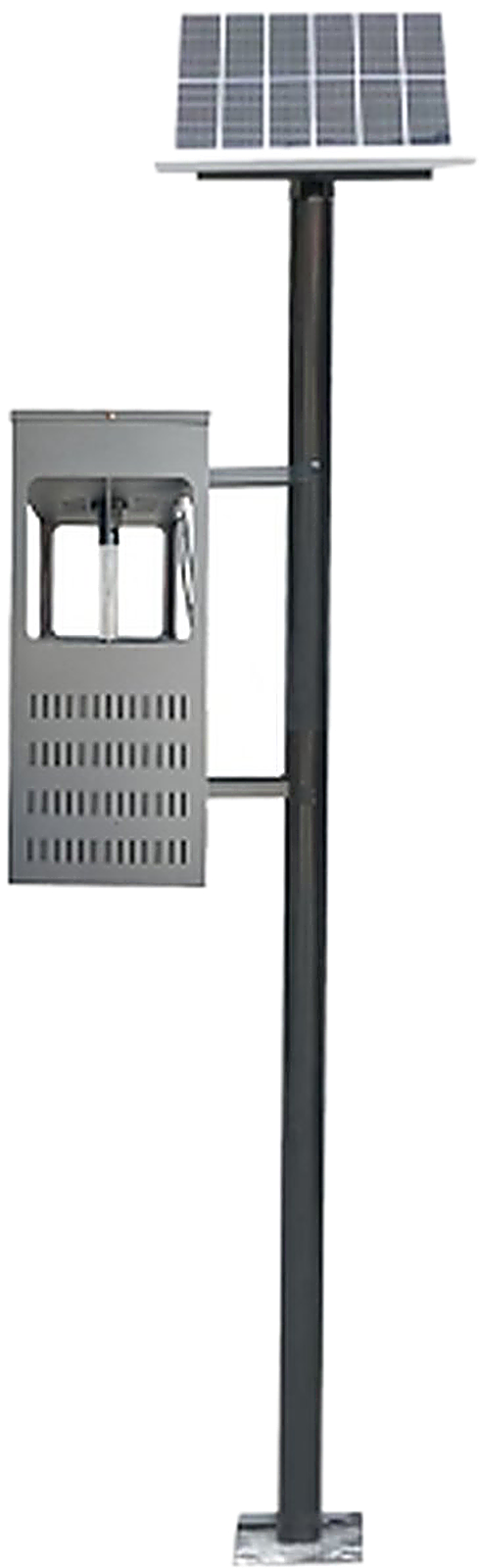
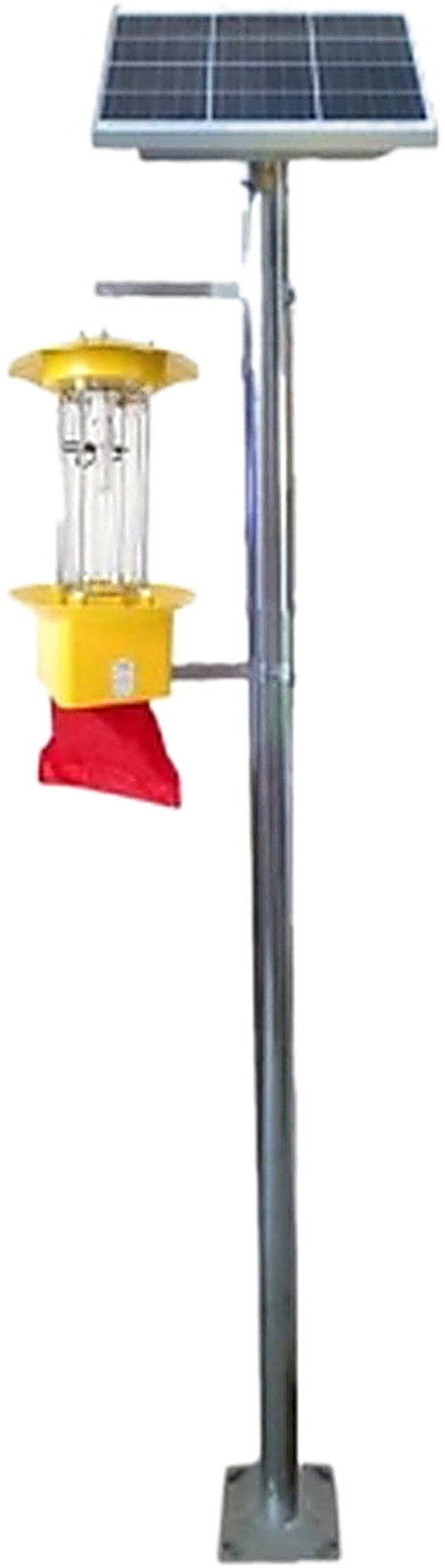
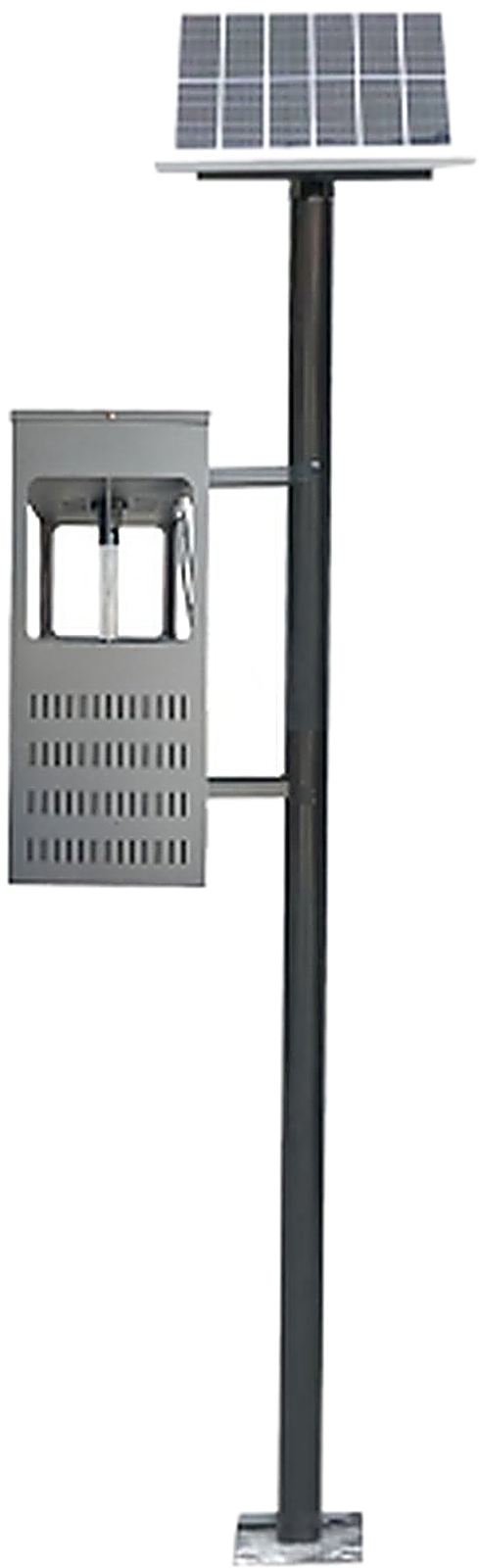
Wind suction collection pulls insects into a chamber without an exposed electrified grid. That matters for farm pest management because it reduces the risk of fragments falling into crop foliage and keeps the trap usable in dusty, humid conditions. A robust solar insect killer with a serviceable chamber can be emptied in seconds during a morning walk.
1. Before planting: remove volunteer potatoes and solanaceous weeds, rotate away from last year’s potato block where possible, and inspect stored seed for hitchhiking adults. 2. Emergence: set out monitoring traps before the first expected adult flight, not after the first defoliation. 3. Early vegetation: scout twice weekly for potato beetle and mark the first egg masses with field flags so you can track hatch timing. 4. Peak larval period: prioritize biologicals and targeted products, rotate modes of action, and treat only the sections that exceed threshold. 5.
Hill and bulking: keep trap records running to detect reinvasion from neighboring fields. 6. Harvest and cleanup: remove cull piles and volunteers, which otherwise carry beetles into the next season. 7. Review: compare trap counts, spray events, and yield by block to refine next year’s plan.
Rotate products by mode of action group, never by brand name alone. Avoid repeated applications of the same group within a generation, and keep untreated refuges where practical so susceptible insects remain in the population. Combining chemical, biological, physical, and cultural tactics is the foundation of integrated pest management and slows resistance far better than any single new molecule.
Keep records of every application: date, product, group, rate, and field. Those records are also useful when buyers ask for residue documentation.
Spraying on a fixed calendar ignores the insect’s actual timing. Placing one trap in the center of a large field gives a weak signal. Emptying the collection chamber only when it looks full destroys your nightly data. And assuming that every beetle seen is a Colorado potato beetle can waste money — check the distinctive stripes and egg color before acting.

Use this guide alongside the references below to build a complete, defensible programme.
For deeper technical and regulatory context, see the FAO Integrated Pest Management and the EPA safe pest control.
No. It catches adults and provides excellent monitoring data, but larvae and eggs are on the plants. Use the trap as an early-warning and suppression tool inside a broader program.
Before the first expected adult emergence. Establishing a baseline is what makes later changes in catch numbers meaningful.
Daily during emergence and peak flight, then two or three times a week once activity settles. Use the same time each day for comparable records.
Careful placement and species-selective light spectra reduce non-target catches. Keep traps at field edges rather than inside flowering strips.
Nightly trap counts paired with crop stage. Together they explain why an outbreak happened and when the next one is likely.
Potato beetle control is won by noticing the first flight and acting on evidence. A solar insect killer gives you that evidence every morning, so each decision is smaller, earlier, and cheaper than the last.