
Pollen beetle adults arrive just as oilseed rape buds open, and a field that looks perfect in April can lose much of its yield potential ten days later. Effective pollen beetle control depends on catching that narrow window, because once flowers are fully open the crop can tolerate far more damage than most growers expect. A solar insect killer adds a nightly layer of protection during the adult flight, without adding another spray pass to an already busy spring calendar.
The pollen beetle is a major pest of canola, rapeseed, and mustard across Europe, Canada, and parts of Asia. Adults chew into closed buds, and the damaged buds either abort or produce poorly filled pods. Yield loss is worst when large numbers feed during the green bud stage, before the crop has time to compensate with additional branching.
Pollen beetle control also matters because the insect has developed resistance to several pyrethroid groups in many regions. A spray that worked five seasons ago may now give disappointing results. That is pushing growers toward diversified agricultural pest control programs in which light traps, monitoring, and carefully timed treatment share the workload.
Overwintered adults emerge as soils warm and fly toward flowering brassicas. They are strong colonizers and can appear in a field within days of bud formation, especially when nearby oilseed rape or wild mustard is already flowering.
After feeding, females lay eggs in buds and larvae feed inside them for roughly two weeks before dropping to the soil to pupate. The next generation appears near harvest, feeds briefly on green pods, and then seeks overwintering sites in field margins and litter.
This biology explains why pollen beetle control is a spring priority. The adult immigration period is short, visible, and measurable, which makes it a good target for trapping and threshold-based decisions.
Walk the field edge and the interior separately, because immigration starts at the boundary. Tap flowering stems over a white tray and count adults per plant at several points. Record the crop stage alongside the count, since the same insect density means very different things at green bud and at full flower.
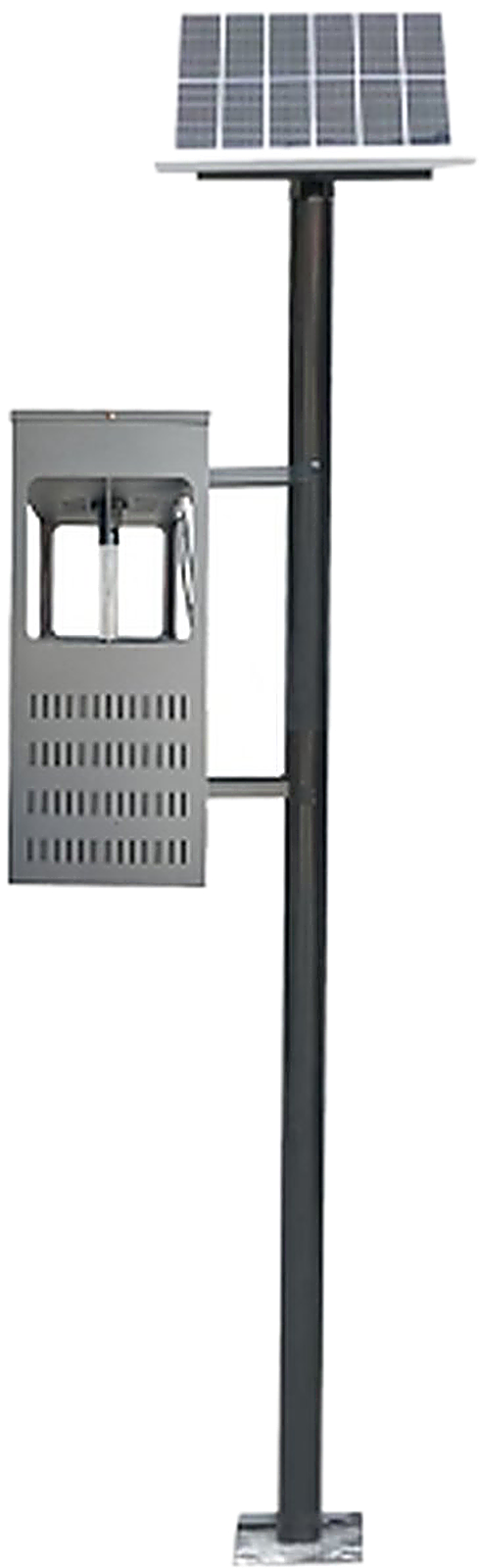
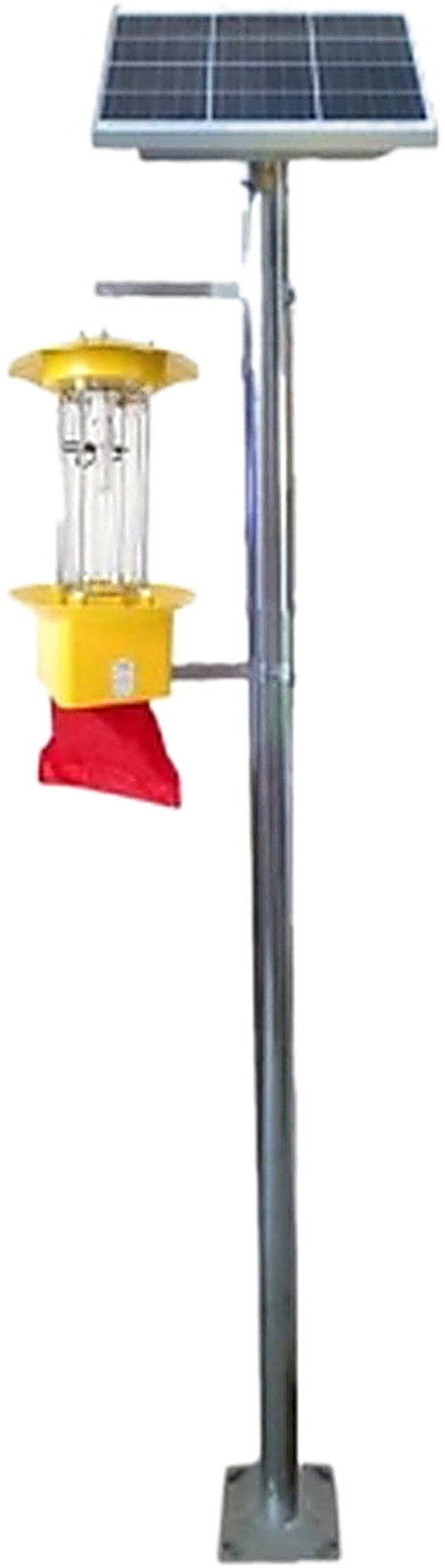
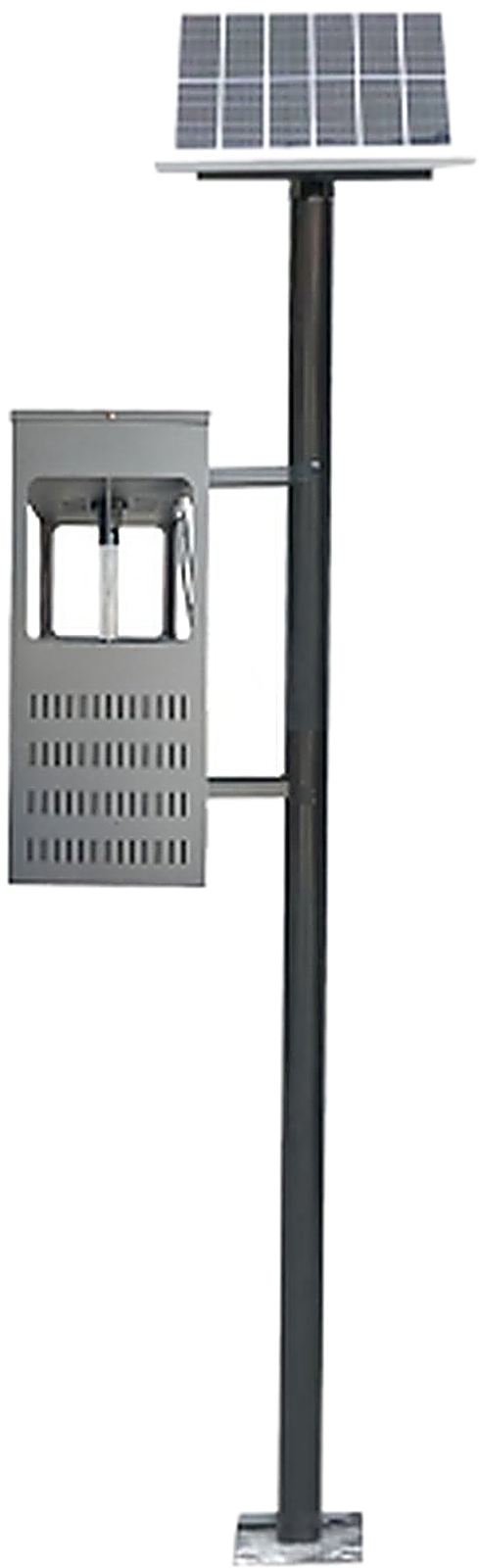
A simple trapping program makes scouting more consistent. A solar bug zapper placed at a field edge captures a nightly sample that can be counted in the morning. Rising catch numbers are an early signal that immigration is underway, often before damage is obvious to the naked eye.
Adults fly on warm, sunny days, but many also move between flowering fields in the late afternoon and at dusk. A solar insect killer charges during the day and switches on automatically at dark, covering the movement window that daytime scouting cannot observe. Continuous nightly operation turns the trap into a trend monitor as well as a suppression tool.
Wind suction capture pulls insects into a contained collection chamber rather than holding them on an open grid. For pollen beetle control this matters because samples stay intact and countable, debris is reduced, and the unit is safer around livestock and operators. Clean catch data are what make the trap useful inside a farm pest management plan.
Placement determines whether the trap intercepts colonizing beetles or simply lights an empty paddock.
A single central trap rarely gives useful pollen beetle control in a large block. Beetles arrive from the perimeter, so a boundary line of units produces better interception and a clearer picture of pressure.
Use local economic thresholds rather than a calendar. In many regions, treatment is justified only when counts exceed a set number of adults per plant during the bud stage. If a spray is needed, choose an active group that is still effective locally and rotate modes of action to slow resistance.
Manage volunteer oilseed rape and wild mustard around the field, and avoid placing new canola directly beside a flowering field of the same crop. These steps reduce the local population before immigration begins and make spring control easier for every tool in the program.
The most frequent error is spraying after petal fall, when the crop is no longer vulnerable and the benefit is minimal. The second is relying on one insecticide group season after season. The third is judging a trap by the number of insects caught in one night instead of the trend across two weeks. Light trap captures reflect weather as well as population, so interpret them alongside crop stage and field scouting.
Another mistake is placing units in the middle of a dense canopy. Poor visibility reduces catch, and the operator assumes the pest is absent. Raise the lamp, clear vegetation beneath it, and check that the collection chamber is empty before drawing conclusions.

Use this guide alongside the references below to build a complete, defensible programme.
For deeper technical and regulatory context, see the FAO Integrated Pest Management and the EPA safe pest control.
Adults typically move into oilseed rape as temperatures rise and green buds appear. Exact timing varies by latitude and season, which is why local scouting and nightly trap counts are more reliable than a fixed calendar date.
Yes. Adults are attracted to ultraviolet light during dusk flight and are captured by suction or a grid. A solar insect killer is best used as a monitoring and suppression layer rather than a complete replacement for scouting and threshold decisions.
On many farms, yes. Careful sowing dates, removal of volunteer brassicas, resistant varieties where available, and consistent light trapping can hold populations below damaging levels. High-pressure seasons may still require one well-timed treatment.
It depends on field size and shape. Start with units along the main immigration edge, then add traps on additional boundaries if catch counts remain high in the interior. Always follow the coverage rating of the specific model you buy.
Pollen beetle control is a matter of timing: scout the edge, trap the flight, and treat only when the count says so. A solar insect killer supplies the nightly record that makes every other decision sharper, and it keeps working through the bud stage when the crop is least able to absorb damage.