
Push pull IPM is one of the most elegant ideas in agricultural pest control. Instead of attacking insects head-on, you push them away from the crop with a repellent plant and pull them toward a trap crop or attractant, where they can be removed. Adding a solar insect killer to that layout gives the strategy a night-time kill mechanism, turning a passive trap into an active attraction-and-kill system.
The push pull IPM strategy has two parts. The push is a repellent intercrop planted among the main crop to drive pests away. The pull is an attractive border plant that draws pests to a predictable location. Farmers then concentrate control effort on the pull strip rather than treating the whole field.
The classic example comes from African smallholder maize systems: desmodium planted between maize rows repels stem borers and suppresses striga weed, while napier grass on the border pulls borers in. The same logic applies to many crop systems. Repellent herbs, aromatic border plants, and carefully chosen trap crops can redirect a wide range of flying pests.
A solar insect killer adds a third element. The pull crop brings adults into a defined area, and a well-placed trap removes a share of them during their dusk flight. The result is a stacked effect: fewer eggs laid in the crop, fewer adults returning the next night, and a measurable catch record that shows whether the strategy is working.
The push side of push pull IPM depends on plants that interfere with host location. Aromatic species such as desmodium, marigold, mint, or basil can mask the scent of the main crop. Some also support beneficial insects that attack pest eggs and larvae.
Interplant the repellent crop within the main crop rows, not just at the edge. The goal is to make every part of the field harder for a female insect to find. Keep the repellent species from becoming a weed itself, and choose one that suits your climate and market. In a vegetable system, a low-growing aromatic border between beds can serve the same purpose without competing with harvest.
The pull crop must be genuinely more attractive than the cash crop. Plant it in a narrow border strip or in discrete patches at field corners, where it is easy to monitor and manage. Common pull crops include napier grass for stem borers, mustard or radish for aphids, and flowering plants that draw adult moths and flies.
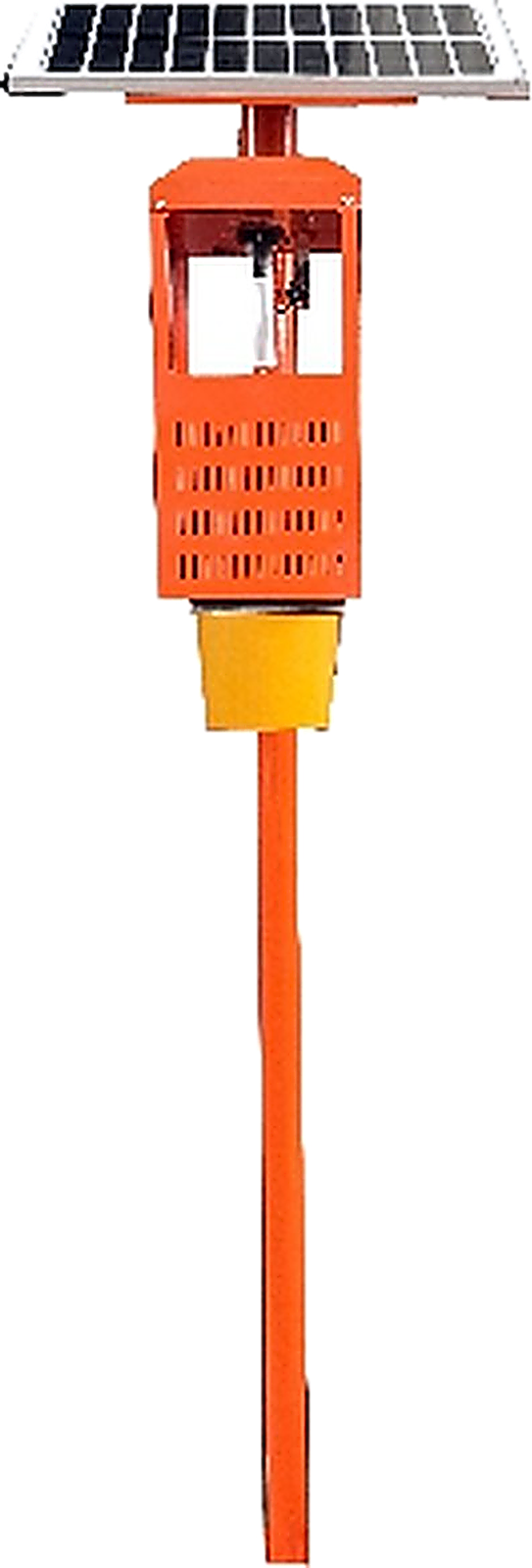
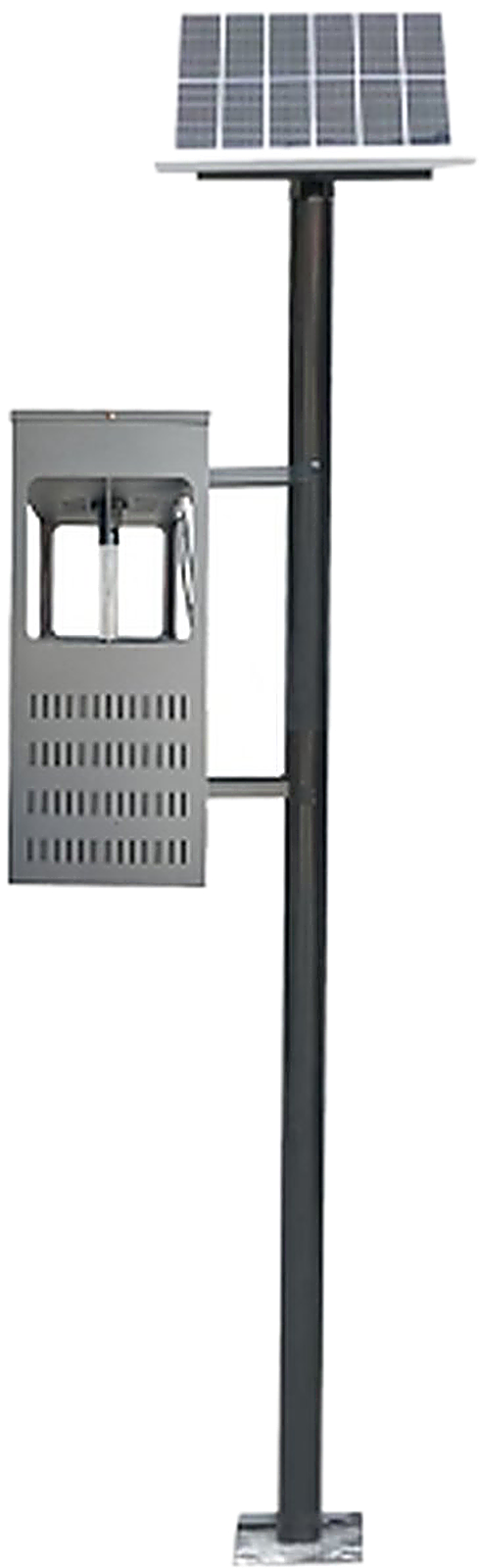
Once the pull strip is established, concentrate your solar insect killer units along it. Place the lamp just above the trap crop canopy so the light and the plant scent work together. A solar bug zapper positioned over a pull border catches adults that arrive to feed or lay eggs, which is far more efficient than scattering traps across the field.
Push pull IPM works best when the pull strip is established before the pest flight begins. Plant border crops early enough that they are attractive when adults emerge. Start the solar insect killer at the same time, so the trap is active from the first night of the flight window rather than after damage appears.
One of the strongest benefits of combining push pull IPM with a solar insect killer is the data. Nightly catch counts tell you when the pull strip is drawing pests and whether the regional population is rising.
Use these records to decide whether to add traps, replace a repellent species, or intervene with an approved biopesticide. Farm pest management becomes a measured process instead of guesswork.
Push pull IPM is a framework, not a single product. It combines well with other nonchemical tools.
Beneficial insects released or conserved in the push strip can parasitize pest eggs and larvae. Flowering repellent plants provide nectar for parasitic wasps and hoverflies. The solar insect killer removes adults, while the beneficials attack the stage that survived.
Remove infested pull crop material before pests complete their life cycle. Destroy fallen fruit and plant debris that offer alternate hosts. Without sanitation, a pull strip can become a breeding ground that undoes the benefit.
Where monitoring shows a genuine outbreak, a targeted biopesticide applied only to the pull strip keeps chemical use low. Broad spraying across the whole field would kill the beneficial insects that the push component is meant to support.
Push pull IPM takes planning. You need land for a border crop, seed or planting material for the repellent species, and a season or two to see the full effect. It also requires observation: a pull crop that fails to attract pests is wasted space, and a repellent that becomes a host can make the problem worse.
A solar insect killer has its own limits. It captures a broad range of night-flying insects, so avoid placing units directly beside flowering habitat where beneficial insects concentrate. Clean the lamp and collection tray regularly, because a dirty trap draws fewer insects and skews your monitoring data.


Use this guide alongside the references below to build a complete, defensible programme.
For deeper technical and regulatory context, see the FAO Integrated Pest Management and the EPA safe pest control.
No. The principle scales. Large farms use wider repellent strips and larger trap crop blocks, often with remote monitoring. The solar insect killer simply covers a defined attraction zone, regardless of field size.
Expect a full season to evaluate the layout. The push and pull crops must establish first, and pest populations respond over several generations. Catch counts from the solar insect killer give earlier feedback on whether adults are being drawn into the trap zone.
Usually yes, provided the repellent and trap crops and any inputs meet your certifier’s rules. Keep records of plantings, trap placements, and catch logs to support the audit.
Often less, and sometimes none for the targeted pest. The goal of push pull IPM is to keep populations below damaging levels using habitat design and trapping, reserving any spray for verified outbreaks.
Push pull IPM turns field layout into a pest control tool. Repel pests from the crop, attract them to a border, and remove the adults with a well-placed solar insect killer. The system lowers chemical dependence, produces useful monitoring data, and fits cleanly into a wider agricultural pest control plan built on observation rather than routine spraying.