
Flea beetles are among the first and most destructive pests of young transplants. These tiny, jumping beetles punch rows of pinholes through cotyledons and seedling leaves, stunting growth and opening the door to disease. For growers who want protection without a heavy spray program, a solar insect killer offers a safe, off-grid way to suppress adult flea beetle populations. This guide walks through seven practical control steps you can apply on brassica, solanaceae, and cucurbit plantings.
A single adult flea beetle can riddle a seedling with dozens of feeding pits in a single day. Because the insects overwinter in field margins and rush into beds at emergence, the damage is concentrated exactly when plants are least able to recover. Stripped cotyledons mean weaker root systems, slower canopy development, and lower marketable yield.
Effective agricultural pest control starts with understanding the flea beetle lifecycle. Adults feed on foliage in spring, lay eggs at the base of host plants, and the larvae mine roots before pupating in the soil. That dual above-and-below-ground habit is why a single tactic rarely works — you need to cut the adult flight window while protecting roots culturally.
Economic losses are not limited to holes. These beetles transmit bacterial wilt in solanaceae and spread diseases in crucifers, so a small pocket of infestation can cascade through an entire block. A well-sited solar bug zapper reduces the adult reservoir before it ever reaches your seedlings.
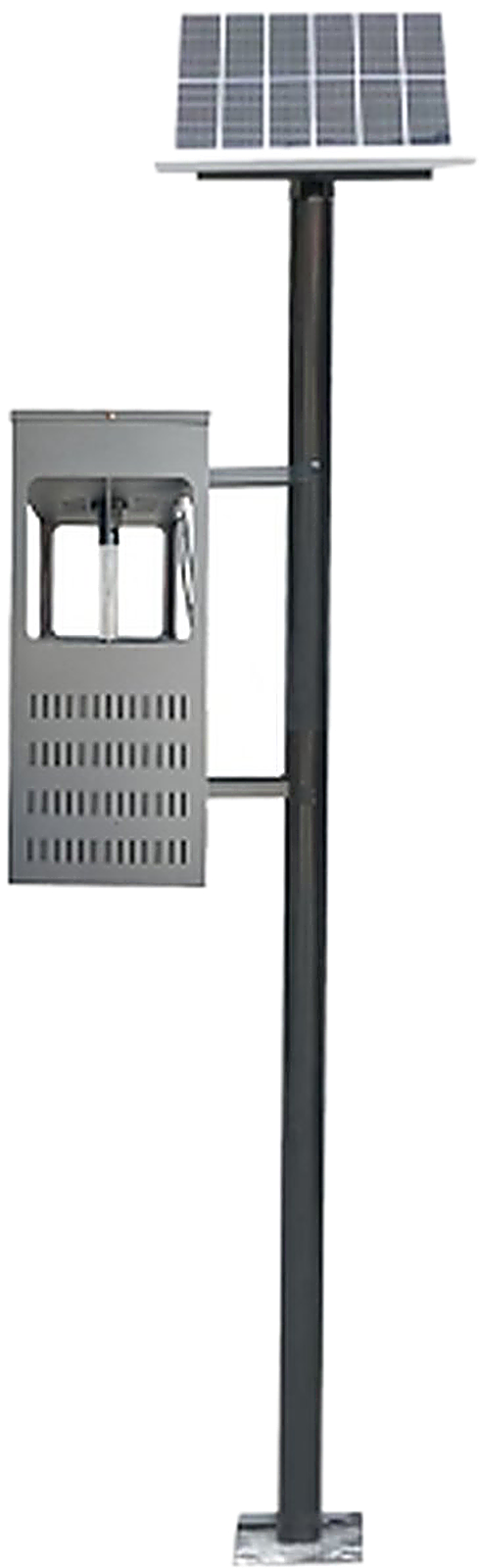
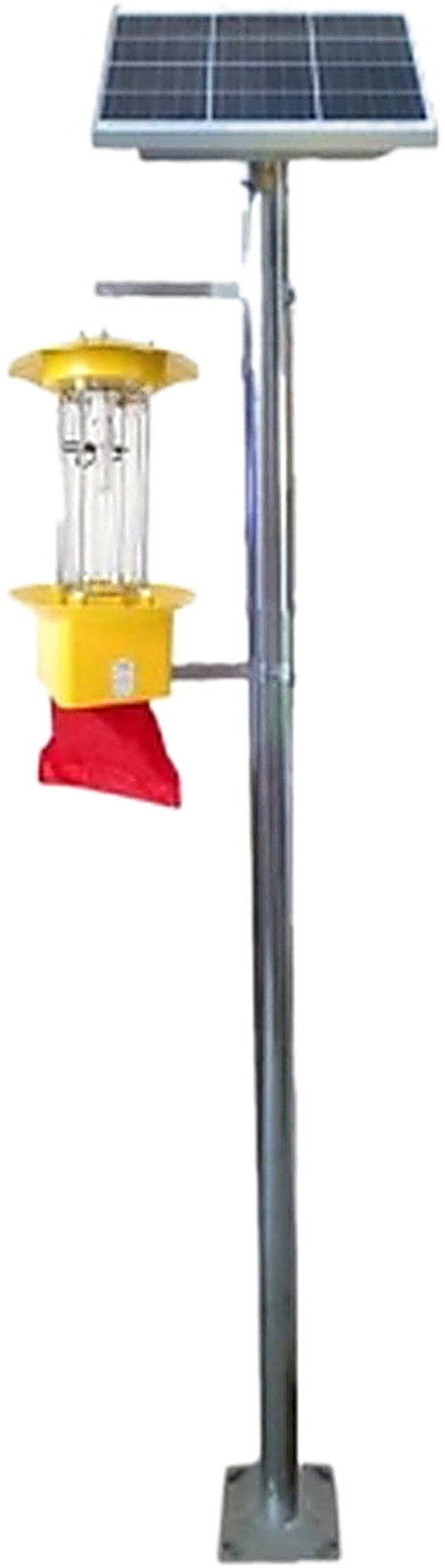
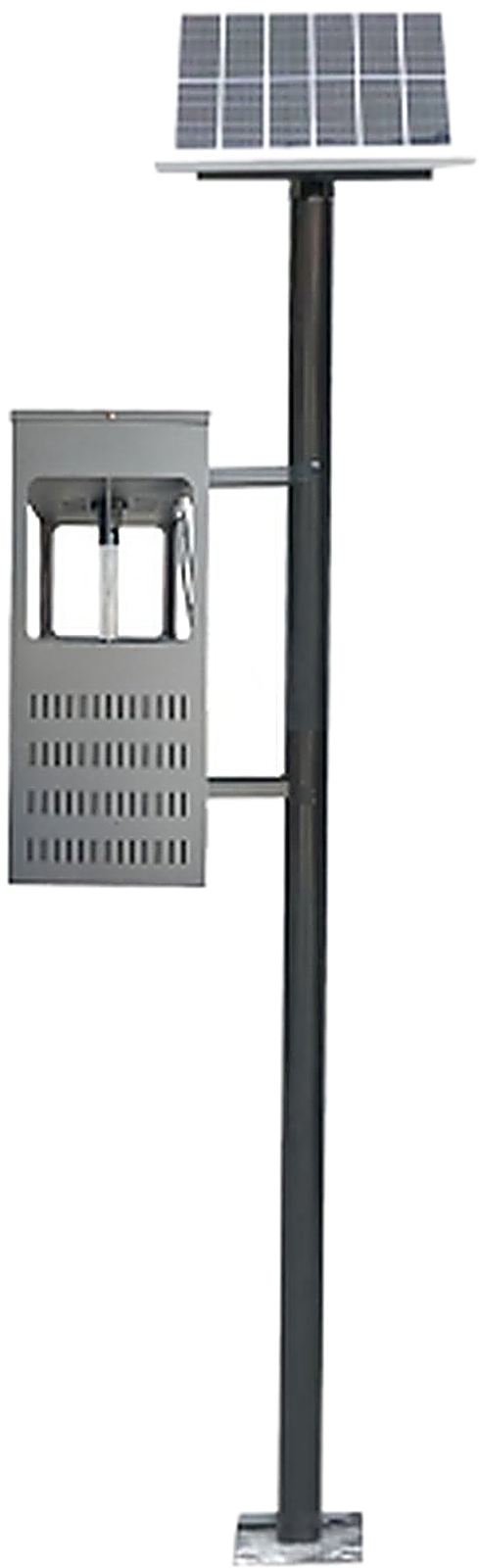
Modern units use wavelength-tuned UV LEDs to mimic the light spectrum that draws adult flight. A low-noise wind-suction fan pulls them into a collection chamber where they dehydrate. Unlike grid-zappers, this design avoids sparks and reduces risk to beneficial insects that share the field.
Because the device is powered by its own solar panel and battery, it keeps working through outages and in remote fields. Continuous operation matters since adult beetles are most active in warm, sunny mornings and again at dusk. A grid-independent solar insect killer never takes a day off, which is critical during the short transplant window.
Walk your beds daily for the first two weeks after transplant and check the underside of young leaves with a hand lens. Mark hotspots on a map. Early detection lets you place devices where they matter most and prevents a small pocket from becoming a farm-wide outbreak.
Position each unit just above the crop canopy, where flea beetle adults congregate and take flight. For row crops, stagger units along field edges and the center. Correct placement is the single biggest factor in suppression, because a well-sited trap intercepts far more flying insects than one placed too high or too low.
Yellow sticky cards estimate population trends. Use them next to your devices so you can see whether adult flea beetle counts are falling. Monitoring turns control from guesswork into measurable farm pest management and tells you when to add units or shift tactics.
Light floating row covers physically exclude adults during the vulnerable first three weeks. Pair covers with your solar devices at the field margins so any insects that slip past the barrier are still intercepted. Remove covers at flowering to protect pollinators.
Stressed, slow-growing seedlings suffer the worst pitting. Switch to drip irrigation and water early in the day so foliage dries quickly. Healthier plants tolerate light feeding and let your solar insect killer program do the heavy lifting on adults.
Predatory ground beetles, spiders, and parasitic wasps suppress larvae and adults. Because wind-suction capture is selective, you can run biological control and a solar insect killer together for layered agricultural pest control that is both safe and resilient.
Never rely on a single method. Rotate monitoring, trapping, cultural covers, biologicals, and your solar devices season to season. Integrated control protects yield and keeps your program effective year after year, even as weather and crop mixes change.
A solar insect killer is not a silver bullet, but it is a safe, repeatable backbone for farm pest management. Pair it with scouting, row covers, and beneficial insects to build a resilient IPM plan that reduces spray dependence and protects pollinators. Over a full season, the combination typically lowers scout hours and spray passes while stabilizing output for the grower.
For a broader strategy, see our guides on integrated pest management and greenhouse pest control.

Use this guide alongside the references below to build a complete, defensible programme.
For deeper technical and regulatory context, see the FAO Integrated Pest Management and the EPA safe pest control.
Yes. Adult beetles are strong diurnal fliers drawn to UV wavelengths, and wind-suction capture removes them before they settle and feed on seedlings.
Most farms place 1 unit per 0.2 to 0.5 hectare depending on crop height and pest pressure. Start at field edges and dense hotspots, then expand inward as counts fall.
Yes. Because the method is physical and chemical-free, it is safe to run right up to harvest, leaving no residue on produce and no pre-harvest interval to track.
Yes. A solar bug zapper works especially well in high tunnels and greenhouses where pressure builds fastest, provided there is daylight to recharge the panel during the day.