
Most trap programmes do not fail on hardware; they fail on routine. This operator training SOP gives field teams eight repeatable steps, from site assessment to shift handover, so catch counts stay comparable week to week and the devices keep earning their place in the block.
A solar insect killer only performs as well as the people who install, run, and read it. Too many pest programs fail not because the hardware is weak but because the field team was never shown the routine. A clear operator training plan turns a box of traps into a dependable layer of agricultural pest control.
Good operator training also protects workers and data. When everyone follows the same steps, catch counts become comparable week to week, and farm pest management decisions rest on facts instead of memory.
Before a single pole goes in the ground, walk the block with the operator. Mark field margins, water lines, and worker paths. A solar bug zapper belongs at row ends and windward edges, never blocking machinery lanes.
Operators remember steps better when they understand the reason. Explain that adults enter from margins and that edge placement intercepts them early. This single point of training prevents the common mistake of clustering traps in the field centre.
Show the team how to secure the pole, angle the panel toward the equator, and lock the trap head. Even though a solar insect killer uses low voltage, treat the battery with respect and keep tools insulated.
Include a 30-second check in the operator training: panel clean, no shade from new growth, trap head seated. Small habits like this keep the trap running through the season.
Train operators to confirm the light switches on at dusk and the fan runs. A dead trap is worse than no trap because it hides pest pressure. Log the startup status on the daily sheet as part of standard farm pest management.
Empty and count the tray on a fixed weekday. Use the same container and the same method every time so counts stay comparable. A solar bug zapper is only as useful as its recorded catch history.
Date, block, trap ID, weather, and rough counts by group (moth, beetle, thrips, other). This dataset feeds agricultural pest control decisions and proves activity to buyers asking about residue management.
A good operator training programme teaches operators to watch trends, not single readings. One high count may be wind; three rising weeks is a signal to scout. This discipline is what separates real farm pest management from random reacting.
Every few weeks, wipe the light tube and clear the fan intake. Show operators how to spot a weak battery or a cracked panel before it fails. A little preventive care here avoids a midnight call during peak flight season.
Although a solar insect killer has no high-voltage grid, teach basic safety: do not service during a storm, keep children away from the battery, and report strange smells. Safe habits are the easiest part of the routine to skip and the most important to keep.
When shifts change, the outgoing operator hands over the log and flags any anomaly. Good farm pest management depends on this continuity. Keep the SOP sheet near the tool shed so the routine stays visible.
The most frequent training gap is placing traps too close together, which wastes coverage and battery life. Another is skipping the weekly count during the harvest rush, when pest pressure is highest. A short stand-up at season start resets these habits.
Post the SOP sheet in the tool shed and review it at each shift change. A visible routine keeps farm pest management consistent when staff rotate, and it makes agricultural pest control auditable for buyers.


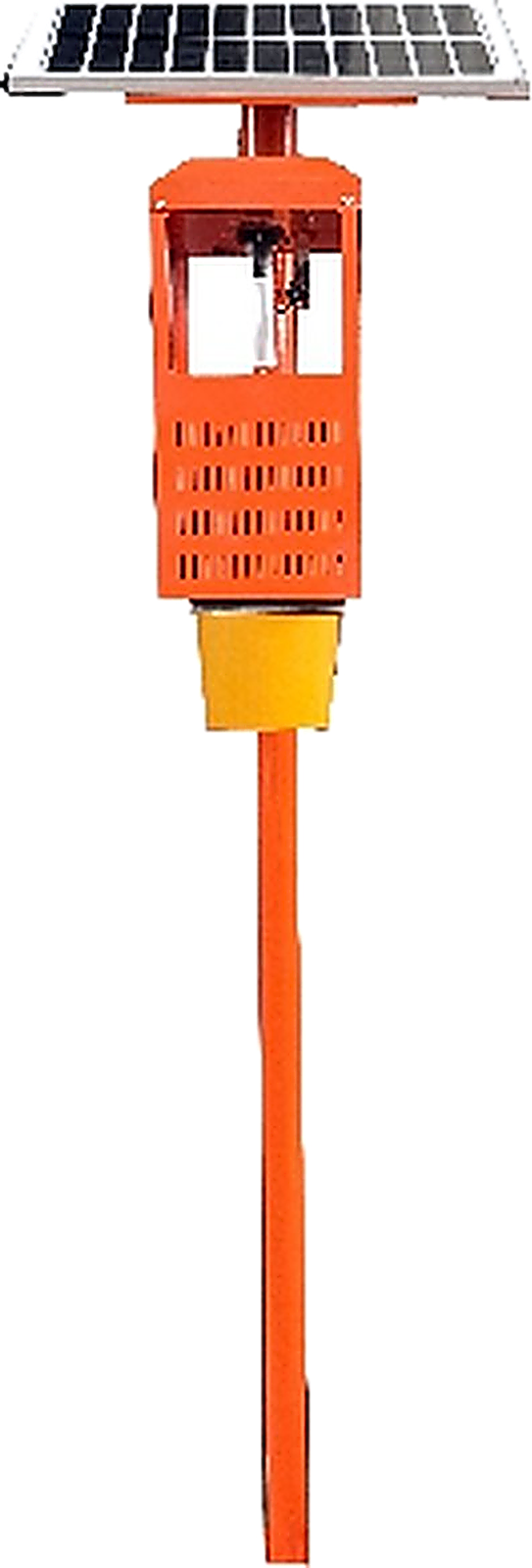

Use this guide alongside the references below to build a complete, defensible programme.
For deeper technical and regulatory context, see the FAO Integrated Pest Management and the EPA safe pest control.
A practical session runs about half a day: walk the block, install one trap together, then service it the following week. Refresher training each season keeps the routine sharp.
No. The solar insect killer is low-voltage and tool-light. Training focuses on placement, counting, and basic cleaning, not wiring.
Backfill the date and note the gap. Consistent logging asks for honesty in the log; a missing entry is better flagged than invented, because farm pest management trends depend on real data.
Yes. The core steps are identical; only spacing and pest groups change. Keep one master SOP document and add a crop-specific appendix for each block.
Yes. Blocks with disciplined operator training catch problems earlier and spray less, which lowers cost and residue risk across the whole agricultural pest control programme.