
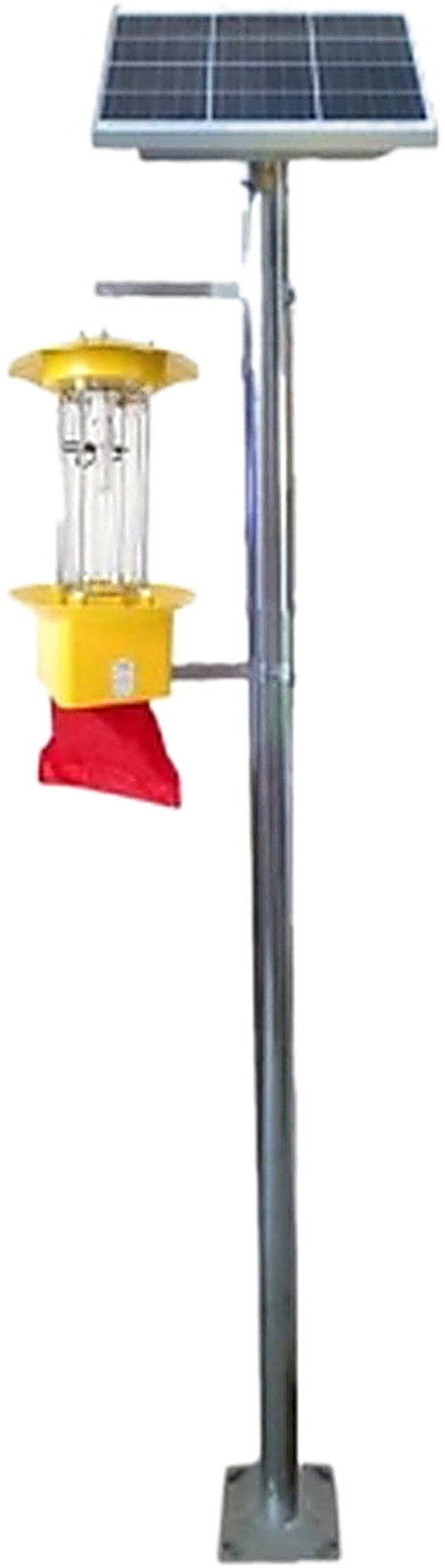
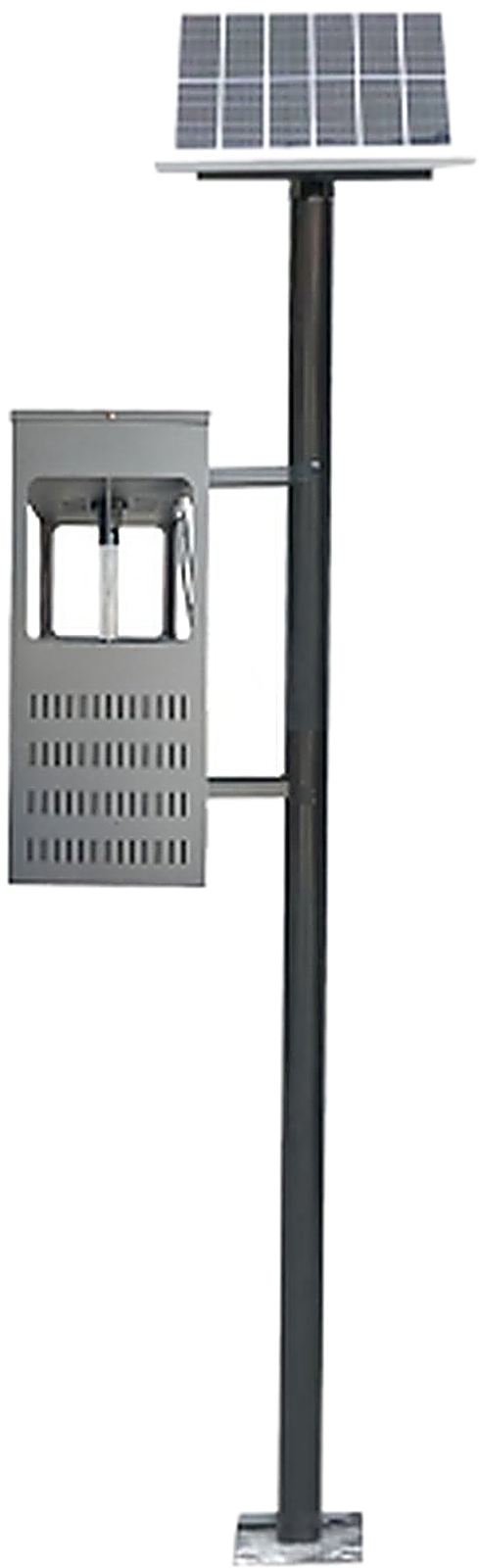
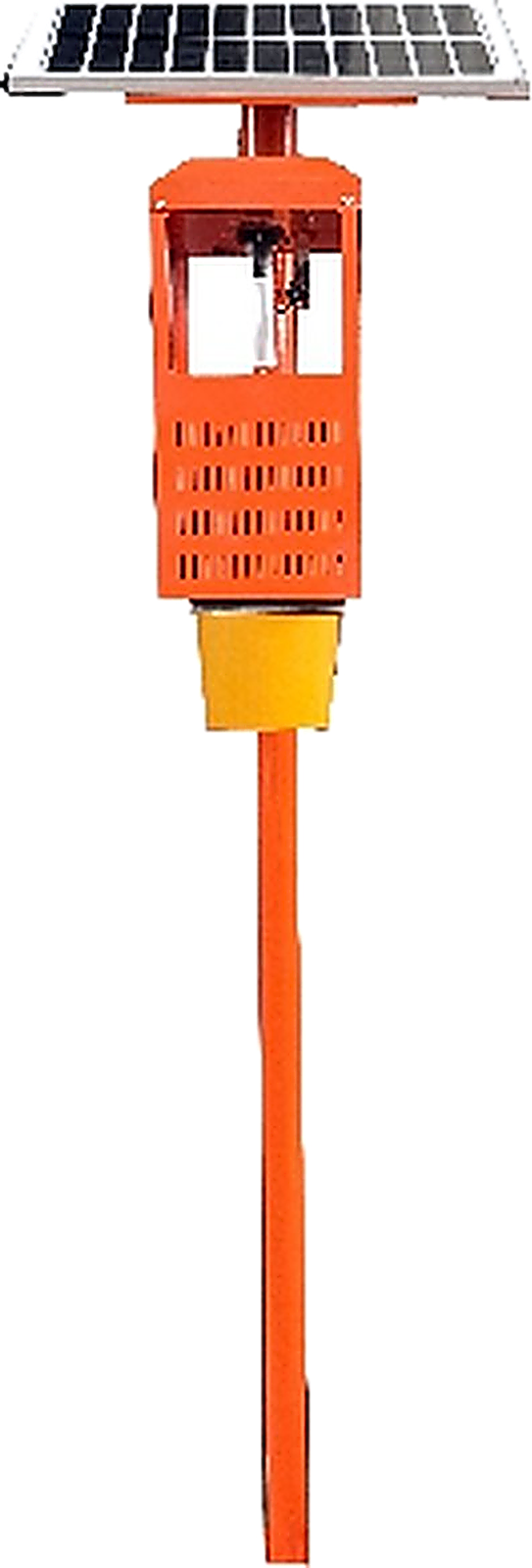
Few pests are as frustrating as the leaf miner. The damage shows as pale, winding tunnels inside the leaf — and by the time you see them, the larva is already protected under the cuticle where sprays cannot reach. The smart move is to stop the adult fly before it lays eggs. That is where a solar insect killer earns its place in leaf miner control and broader agricultural pest control.
A leaf miner is not one species but a lifestyle. The larvae of certain flies (Agromyzidae), moths, and beetles burrow between the upper and lower leaf surfaces, eating the green tissue and leaving characteristic serpentine mines. Common hosts include:
Because the larva lives inside the leaf, contact insecticides rarely work once mining starts.
The weak point of every leaf miner is the adult stage. Flies emerge from the soil, mate, and fly to fresh foliage to lay eggs. They are small, weak fliers, and strongly attracted to specific light wavelengths at dawn and dusk. A solar bug zapper placed at crop height intercepts them during these windows, collapsing the next generation’s egg load.
This is the cornerstone of farm pest management for miners: reduce adults, and you prevent mines before they form.
Place cards at canopy level to count adult flies. Rising counts signal the moment to ramp up trapping.
Position a solar insect killer along the upwind border and between blocks. Edge placement intercepts immigrants before they reach the center of the bed.
Run traps through dusk and the early-morning flight period. Many leaf miner flies are most active in low light, so coverage during those hours matters more than all-night operation.
Remove heavily mined leaves and rotate hosts. Destroying old foliage cuts the pupae waiting in the soil.
Wasps such as Diglyphus and Opius attack miner larvae inside the mine. Avoid broad sprays so these allies keep working alongside your traps.
In tomato and bean, leaf miner control with traps plus sticky monitoring typically cuts mining by more than half across a season. Seedling nurseries benefit most because a few protected leaves mean a clean transplant.
Citrus leaf miner attacks flush growth and twists young leaves. A solar insect killer near new flush reduces adult traffic and protects the tender growth that sets next year’s crop.
For row crops sold on appearance, even light mining destroys market value. Traps at field edges keep the visible damage below buyer thresholds.
| Method | Targets | Residue | Best timing |
|---|---|---|---|
| Solar insect killer | Adult flies | None | Dawn/dusk flight |
| Systemic spray | Larvae (limited) | Yes | After mines appear |
| Sticky cards | Monitoring | None | Continuous |
The table shows why a solar insect killer fits agricultural pest control that must stay residue-low: it acts on the vulnerable adult, not the protected larva.
A complete leaf miner plan layers several tactics:
By leaning on the trap first, you shrink the chemical footprint and protect the beneficial insects that do the quiet work of farm pest management.

Use this guide alongside the references below to build a complete, defensible programme.
For deeper technical and regulatory context, see the FAO Integrated Pest Management and the EPA safe pest control.
Can a solar insect killer eliminate leaf miners completely? No single tool does. Traps cut adult pressure sharply, but pair them with monitoring and leaf removal for full-season control.
Where should I place the trap for leaf miners? At crop height along field edges and between blocks, oriented to catch dawn and dusk flyers. Avoid mounting high above the canopy.
Do leaf miner flies come to UV light? Many species are attracted to specific wavelengths, especially at low-light hours. A well-tuned solar bug zapper exploits that behavior effectively.
Is this safe for vegetables sold fresh? Yes. Trapping is physical and leaves no residue, making it ideal for leafy greens and other appearance-driven crops.
How fast will I see fewer mines? Expect a visible drop in new mining within 3–4 weeks as successive adult generations are intercepted.
For any grower fighting winding tunnels in the leaves, the fix starts with the fly, not the mine. Add a solar insect killer to your leaf miner control plan, monitor with sticky cards, and let physical trapping carry the load.