
Adopting a solar insect killer is easier when public money and local expertise cover part of the cost. Across many countries, agricultural pest control is now treated as a public good because it protects food security, reduces pesticide runoff, and supports export compliance. This guide shows how a government subsidy program and agricultural extension services help farms deploy solar-powered traps — and how to position your purchase for approval.
Policymakers face three pressures at once: pesticide reduction targets, climate commitments, and the need to keep farms competitive. A solar bug zapper that cuts chemical use with zero fuel cost aligns with all three. As a result, more rural development agencies bundle IPM equipment into broader green-agriculture or sustainable-productivity grants, making the government subsidy route a realistic path for buyers of every size.
Agricultural extension is the public service that brings research to the field: demonstration plots, scout training, and pest-threshold advice. When an extension office endorses a solar insect killer, it often supplies the placement map, the monitoring calendar, and the reporting template you need for both better results and grant compliance. Treat your local extension agent as a free technical partner, not a formality.
Subsidies come in several shapes. Capital grants cover a fixed percentage of approved equipment. Rebates refund part of the invoice after purchase. Accelerated depreciation or tax credits lower the effective cost over time. Some programs fold the solar insect killer into a larger “smart agriculture” or “green house” package. Knowing the type helps you model true cost and cash flow before you buy.
Most government subsidy schemes that fund IPM list eligible items such as pheromone traps, monitoring stations, and physical control devices. A solar bug zapper usually qualifies under “physical and mechanical pest control” or “non-chemical IPM.” Keep your supplier’s spec sheet handy — proof of IP65 rating, UV wavelength, and chemical-free operation strengthens the application.
Extension agents can co-sign deployment plans, which many programs require. Invite them to a site visit, share your crop and pest history, and ask for a written recommendation. A documented extension endorsement of your solar insect killer plan turns a discretionary purchase into a supported, reportable activity under your national agricultural pest control strategy.
Grant auditors want evidence, not intention. Save the quote, the invoice, the proof of payment, photos of installed units, and a short monthly catch log. Tie each solar insect killer to a field block and a pest target. A clean file not only secures the government subsidy but also speeds renewal if the program continues next season.
Smallholders often qualify more easily as a group. A cooperative that orders fifty solar bug zapper units together can meet minimum project sizes, share one extension visit, and negotiate volume pricing. If you farm alone, ask your growers’ association whether a pooled application would lift your odds and lower per-unit cost.
Programs increasingly demand outcomes: reduced spray rounds, lower residue findings, or higher grade. Run a simple before-and-after count — spray events per month before the solar insect killer versus after. Reporting measurable farm pest management gains keeps the subsidy flowing and builds a case for scaling to more blocks next year.
Most rejected government subsidy claims fail on process, not policy. The usual errors are buying before pre-approval, omitting the extension endorsement, or forgetting photos and catch logs. Another frequent gap is treating the solar insect killer as a one-off purchase rather than a documented IPM activity. Programs fund outcomes and auditable practice, so frame your trap deployment as a monitored, reportable part of your agricultural pest control plan from day one. A short pre-application checklist — eligibility check, quote, extension sign-off, monitoring template — prevents the costly rework that delays payment by a full season.



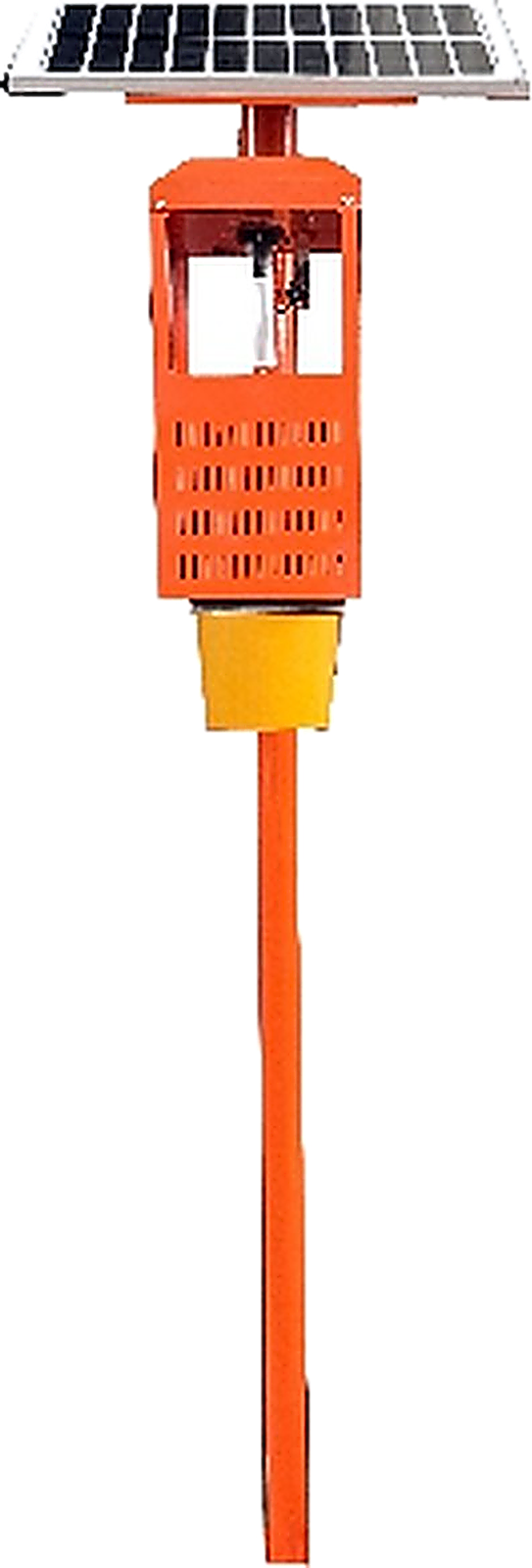
Use this guide alongside the references below to build a complete, defensible programme.
For deeper technical and regulatory context, see the FAO Integrated Pest Management and the EPA safe pest control.
In most regions yes. Because a solar insect killer is chemical-free and solar-powered, it fits “non-chemical IPM” and “renewable agriculture” categories common in government subsidy programs. Confirm the exact eligible-items list with your agency.
Start with your agricultural extension office and the ministry’s IPM or sustainable-farming portal. Search for terms like “non-chemical pest control grant” or “smart agriculture government subsidy.” Local cooperatives often know active calls before individual farmers do.
Keep the supplier quote, tax invoice, payment receipt, installation photos, and a monthly catch or spray-reduction log. Linking each solar bug zapper to a specific field and pest target makes the file audit-ready under most agricultural pest control schemes.
Yes. Extension agents routinely advise on trap spacing, hotspot mapping, and monitoring schedules for a solar insect killer, and their written plan strengthens both your results and your grant application.