
Farmers exploring safer agricultural pest control often weigh two residue-low options: botanical sprays such as neem and pyrethrum, and the solar insect killer that traps flying insects with light. Both reduce synthetic pesticide load, but they work through completely different mechanisms. This guide compares neem botanical products with solar-powered traps across seven practical dimensions so you can choose the right tool — or combine them in one farm pest management plan.
Neem-based and other botanical insecticides have been used for centuries. They are plant-derived, generally short-lived in the environment, and accepted in many organic programs. A solar bug zapper for agriculture, by contrast, uses no chemical at all: it attracts moths, beetles and flies with UV light and removes them physically. Because both claim to be “natural,” buyers legitimately ask which delivers better control, lower cost, and cleaner compliance.
Neem oil and neem-seed extracts contain azadirachtin, a compound that disrupts insect growth, feeding and mating. Botanical options like pyrethrum, spinosad and plant-derived essential oils act on contact or ingestion. These sprays must be mixed, calibrated and applied with equipment, and their activity fades with sunlight and rain. They target a broad range of soft-bodied insects but usually require repeat application during peak pressure.
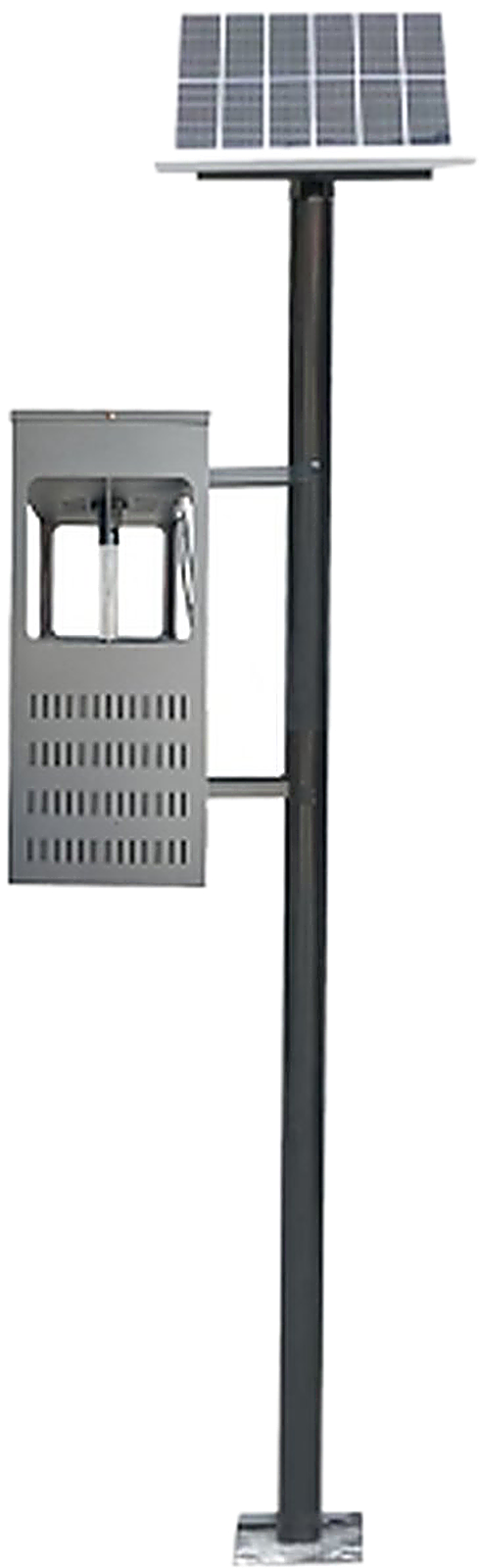
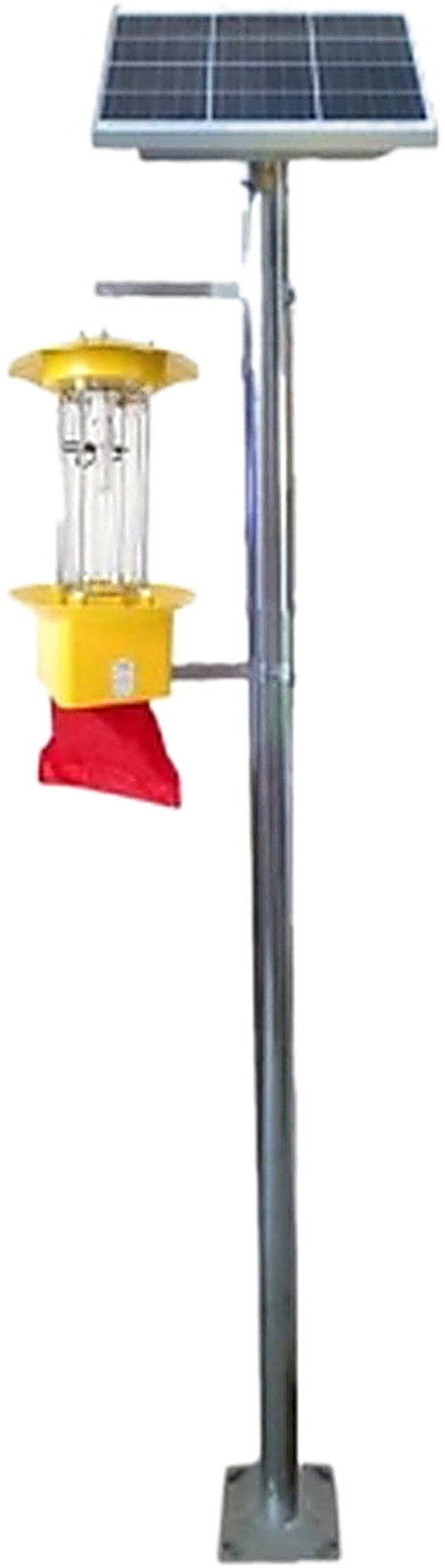
A solar insect killer charges a battery by day and runs a UV LED or fluorescent lure through the night. Flying adults drawn to the light are captured or eliminated before they lay eggs. There is no tank mix, no nozzle, and no re-entry interval. Placed at field edges and hotspots, it works every night automatically, which is why it fits continuous agricultural pest control better than a single spray event.
Neem and botanical sprays are low-residue but not zero-residue; trace amounts can remain on foliage and fruit until they degrade. A solar insect killer leaves no chemical residue at all because it applies no substance. For export crops with strict Maximum Residue Limits, the trap is the cleaner option, while botanicals remain a useful knock-down tool when a population spike demands direct action.
Botanical sprays can hit a wide spectrum on contact, including insects hiding on leaves. A solar bug zapper primarily catches adults that fly to light — moths, beetles, leafhoppers, fruit flies and many mosquitoes. It does less against soil, stem and root pests. The honest answer is that neem botanical sprays and solar traps are complementary: sprays for hidden life stages, light traps for the winged adults that cause the next generation.
Sprays demand labor: mixing, filling, walking rows, and repeating after rain. A solar insect killer is set-and-forget. Once mounted on a pole with the panel angled to the sun, it operates unattended for months. For large or remote fields, the labor saving alone often justifies the device, especially where labor cost or availability is the binding constraint on farm pest management.
Botanical sprays have low up-front cost but recurring expense — you buy product and fuel every season. A solar insect killer costs more initially yet carries near-zero running cost: sunlight is free and the only consumable is occasional cleaning. Over a three-year horizon, the trap frequently wins on total cost per hectare protected, a point many buyers overlook when comparing sticker prices.
Botanical sprays fail in rain and wash off in irrigation; some break down fast under strong sun. A solar insect killer actually benefits from sun (more charge) and keeps working through rain if rated IP65 or higher. Its main weather limit is heavy overcast reducing battery runtime, easily solved with a larger panel or LiFePO4 battery bank sized for your latitude.
The strongest programs do not pick one. Use a solar insect killer for baseline adult suppression every night, and keep neem botanical sprays as a targeted response when scouting shows a threshold breach. This layering reduces total insecticide volume, slows resistance, and keeps residue logs clean — the core promise of modern integrated agricultural pest control.
Choose a solar bug zapper as your default if you manage broad acreage, face flying adult pests, and want minimal labor and zero residue. Choose neem or botanical sprays when you must knock down an active infestation fast or target pests that do not fly to light. Most resilient farms run both, letting the trap carry the daily load while botanicals handle outbreaks.


Use this guide alongside the references below to build a complete, defensible programme.
For deeper technical and regulatory context, see the FAO Integrated Pest Management and the EPA safe pest control.
Neither is automatically “better.” The solar insect killer provides continuous, residue-free adult control with no labor, while neem offers fast knock-down of a broader pest list. Organic programs often use the trap as the backbone and neem as the occasional corrective spray.
Azadirachtin is relatively mild but not harmless to all beneficials, especially if sprayed in bloom. A solar insect killer is more selective because it targets night-flying adults and can be timed to off-peak pollinator hours, reducing unintended impact on bees.
On many flying-insect pests, yes, a solar bug zapper can replace a large share of sprays. For soil, root and leaf-mining pests you will still need targeted tools such as neem botanical treatments as part of a complete farm pest management plan.
Typical guidance is one unit per 0.2–0.5 hectare depending on pest pressure, crop height and trap catch radius. Start at field edges and hotspots, then add units where catch counts stay high after several weeks of operation.