
Modern farms have more technology than ever, and two tools now sit at the center of the pest-control conversation: the solar insect killer and agricultural drones. They are often framed as rivals, but they are really different instruments playing different parts of the same orchestra. One quietly traps flying adults every night; the other broadcasts sprays or inputs from the sky. Understanding where each wins helps any grower build smarter, lower-residue agricultural pest control.
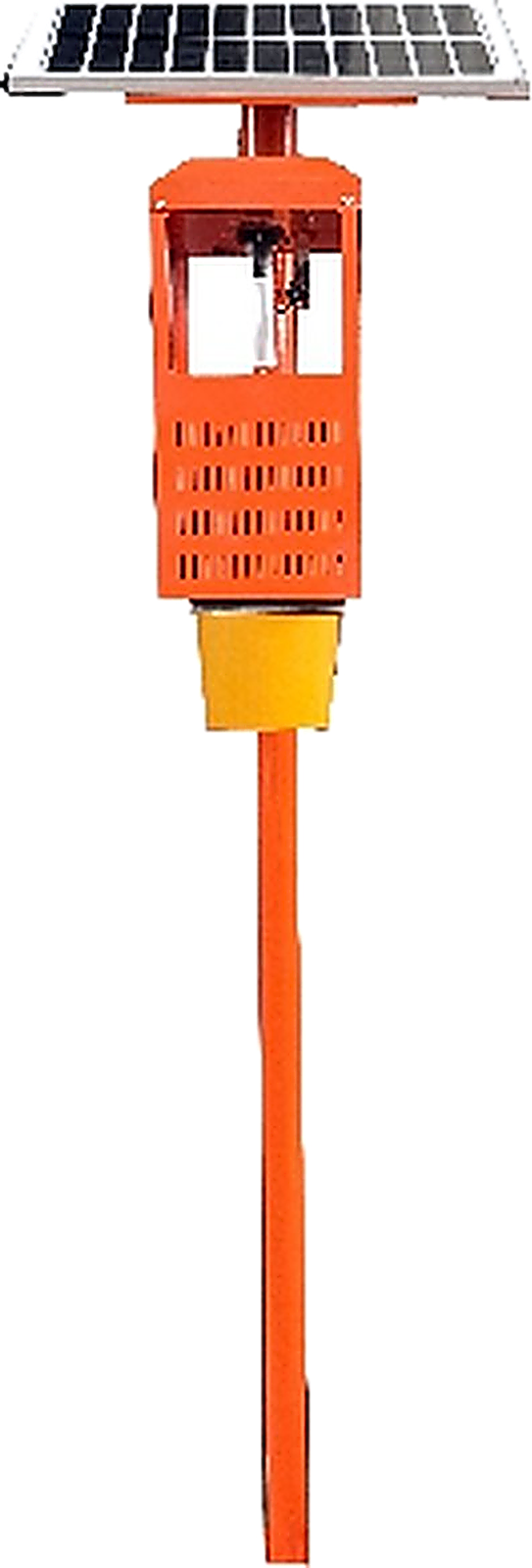
A solar insect killer is a passive, continuous trap. It lures nocturnal, light-attracted adults with a UV-rich lamp and drops them into a collection tray. It runs on sunlight, needs no pilot, and adds nothing to the residue sheet.
An agricultural drone is an active, on-demand platform. Most pest-control drones carry a tank and booms to spray insecticides, fungicides or foliar feeds across fields in minutes. Advanced units also map crops, count plants and capture multispectral imagery.
The trap prevents by removing the pest’s flying adults before they reproduce. The drone treats by delivering a chemical or input to the canopy when an outbreak is already building. One is defense; the other is response.
Best against flying, phototactic adults — moths, weevils, planthoppers, whiteflies, midges and many beetles. It is weakest against pests that do not fly to light or that live inside the plant, such as nematodes, spider mites and soil grubs.
Best against foliar-feeding insects, fungal diseases and nutrient gaps across broad acreage — armyworm on corn, aphids on soybeans, early blight on tomatoes. Drones can also seed cover crops and spread beneficial insects, but they do not selectively remove the night-flying adult pool the way a solar bug zapper does.
A solar trap is a one-time capital cost with near-zero consumables: no fuel, no chemical, no pilot. Labor is limited to tray emptying and occasional cleaning.
Agricultural drones carry higher total cost — the aircraft, batteries, maintenance, licensed pilot and the ongoing expense of chemicals and formulations. They save labor on big fields but add a recurring input bill.
For exporters chasing strict EU, Japanese or organic residue limits, the trap is the clear friend: it adds no chemical residue at all. Drones, even when used precisely, still apply a product that must be recorded, withheld and tested. Many progressive programs use traps to stay residue-low and reserve drone spraying for verified hotspots only.
Works every night, all season, in almost any weather that does not flood the unit. Coverage is local — a few hectares per device — so placement strategy matters more than raw horsepower.
Fast coverage of hundreds of hectares, but grounded by wind, rain and flight-rule limits. They also struggle in tall, dense canopies where the spray must penetrate deep foliage.
The smartest operations do not pick one. They run solar insect killers as the continuous, chemical-free baseline that keeps pest pressure low, then dispatch agricultural drones only at verified hotspots the trap-and-scouting loop identifies. The trap tells you where; the drone treats only there. This observe-then-respond loop cuts total spray volume, lowers residue risk and saves money.



Use this guide alongside the references below to build a complete, defensible programme.
For deeper technical and regulatory context, see the FAO Integrated Pest Management and the EPA safe pest control.
Do I need agricultural drones if I already use solar insect killers? No. Traps alone reduce the flying adult pool and lower spray need. Drones add speed and foliar treatment for outbreaks the trap cannot prevent.
Which is better for residue-free export? The solar trap adds no residue, making it the safer baseline for strict markets. Drones still apply a product, even if used precisely.
Can drones and traps share the same data? Yes. Trap catch counts and drone multispectral maps feed the same IPM dashboard, letting you trigger a drone pass only where pressure spikes.
Is a solar insect killer cheaper than a drone program? Upfront per-unit cost is lower and there are no recurring chemical or pilot costs, so lifetime cost is usually far below a full drone spraying program.
Will drones replace light traps? Unlikely. They solve different problems — broadcast treatment versus continuous adult suppression — so they complement rather than replace each other.
The solar insect killer and agricultural drones are not enemies; they are teammates with different jobs. The trap delivers quiet, residue-free, nightly suppression of flying adults, while the drone delivers fast, targeted treatment when an outbreak demands it. Growers who combine continuous trapping with on-demand drone response get the best of both — lower residues, lower cost and stronger agricultural pest control across the season.